Banana Pancake Trail Itinerary: Our Complete 2026 Route, Budget and Border Guide

The banana pancake trail is the classic Southeast Asia backpacking route through Thailand, Laos, Vietnam and Cambodia. Here is the full stop-by-stop itinerary, with 1, 2 and 3-month route options, honest daily budgets, and the 2026 visa and border rules that changed on 15 September.
The banana pancake trail is the best-known backpacking route in Southeast Asia: a loose, unofficial loop through Thailand, Laos, Vietnam and Cambodia that thousands of travellers stitch together every year. We have travelled it in pieces across four years of slow-mading in the region, and this is the guide we wish we had had on our first trip.
Here is the short answer, before anything else. The classic route runs Bangkok → northern Thailand → Laos → Vietnam → Cambodia → back to Thailand, it takes 4 to 8 weeks to do properly, and it costs £25–£40 ($30–$50) a day as a budget backpacker. You can do it in one month if you cut it to two countries, and you can stretch it to six if you stop rushing.
One thing to know before you book anything: Thailand’s visa exemption dropped from 60 days to 30 days on 15 September 2026, and there is now a cap of two visa-exempt land border entries per calendar year.
That single change reshapes the classic loop, because the old habit of bouncing in and out of Thailand overland no longer works the way it used to. We cover what to do about it in the visa section below, and our two weeks in Laos itinerary shows how the Laos leg fits around it.
Below you will find the stop-by-stop route, a proper banana pancake trail map with transit times, 1, 2 and 3-month itinerary options, the real border-crossing procedure, and what we actually spent. Where we have not been somewhere ourselves, we say so.

Banana Pancake Trail at a Glance
Short on time? This is the whole trail in one box.
| Classic route | Thailand → Laos → Vietnam → Cambodia → Thailand (the loop) |
| Ideal duration | 4 to 8 weeks; 1 month works for two countries, 3 months is the sweet spot |
| Daily budget | £25–£40 / $30–$50 backpacker · £48–£80 / $60–$100 flashpacker or nomad |
| Best time to travel | November to April (dry season across most of the route) |
| Start point | Bangkok (Khao San Road), or Kuala Lumpur / Singapore if flights are cheaper |
| Countries you can add | Malaysia, Singapore, Indonesia, the Philippines |
| Biggest 2026 change | Thailand cut visa-free stays to 30 days on 15 September 2026 |
Quick Navigation

What Is the Banana Pancake Trail? (And Is It Still Worth It in 2026?)
The banana pancake trail is the informal backpacking route that links Thailand, Laos, Vietnam and Cambodia into one continuous Southeast Asia trip. It has no official start or end point, no governing body and no fixed order — just a well-worn path that generations of backpackers have followed since the 1970s.
Is it still worth doing in 2026? Yes — if anything, it is easier than when we first did it. The route now has faster trains, e-visas instead of paper stamps at most borders, and reliable wifi in guest houses that used to have none. What has not changed is the reason people still do it: you can travel for months without repeating a country, and you will not run out of budget-friendly things to see.
The route traces back to backpackers of the 1970s and 80s who took cheap, overland paths in search of authentic, off-the-beaten-track experiences — much of it following old opium and trade routes through the Golden Triangle.
Guest houses along the way noticed what worked for breakfast: a pancake with banana, and peanut butter or chocolate if you were lucky. It was cheap, filling, and easy to make from local ingredients, and travellers hopped from one banana pancake to the next.
It has become something of an initiation ritual for backpackers taking an extended trip through the region, whether that is one month or nine. Some accounts trace the route further back still, to the old Khmer trade roads that ran through the Golden Triangle long before backpackers arrived.
Why Is It Called the Banana Pancake Trail?
We find Banana Pancake a very unusual and weird name, but there is a reason behind it. Actually, very simple. It was one of the first open trails for backpackers, and its safety and accessibility attracted pioneers to remote places with very few accommodations.
So accommodations, guest houses, and hostels started offering pancakes for breakfast, mostly with bananas (easy to source). Hippie travellers were hopping from one pancake to another.
Which Countries Are on the Banana Pancake Trail?
The Banana Pancake Trail is not an official route, so there is no single right order — we found it easiest to travel it overland, only crossing by land wherever we could.
On our own two years travelling the region we did the full Singapore to Bangkok run by land, passing through Malaysia. The countries most backpackers stick to are Thailand, Laos, Cambodia and Vietnam, tracing the old Golden Triangle route through northern Thailand.
As it is more of a shared habit than a fixed itinerary, extending it is easy. See below for how it stretches to Singapore, Malaysia, Indonesia and the Philippines.
Banana Pancake Trail Budget: What It Really Costs in 2026
Budget on £25–£40 ($30–$50) per person per day, or £48–£80 ($60–$100) if you want private rooms, the odd flight and decent coffee. Over a month that is roughly £750–£1,200 ($900–$1,500) backpacking, or £1,450–£2,400 ($1,800–$3,000) at a flashpacker pace.
Daily Costs by Country
| Country | Budget backpacker | Mid-range / nomad | Notes |
|---|---|---|---|
| Thailand | $30–$45 | $60–$100 | Mainland is cheap; the islands are not |
| Laos | $30–$45 | $55–$85 | Prices track the US dollar and inflate in high season |
| Vietnam | $25–$35 | $50–$80 | The cheapest country on the trail — see our Vietnam budget guide |
| Cambodia | $30–$45 | $55–$90 | Dollarised — manage the exchange or it adds up fast |
Money Tips We Would Pass On
- Cambodia and Laos price a lot in US dollars. Carry clean, untorn USD notes for visas and borders, and watch the exchange rate you are given on everything else
- Thailand and Vietnam are card-friendly; Laos is much less so. Draw cash in bigger amounts and accept the ATM fee once rather than paying it five times
- A Pad Thai at a local place still runs about 40–60 THB. If you are paying triple, you are in a tourist restaurant
- Transport is the cheap part. Buses, trains and boats across the region are inexpensive by European standards, which is exactly why overlanding the whole trail is realistic
- Book long-distance buses, trains and boats in advance through 12Go Asia, our long-standing booking partner across the region

Travel Insurance for the Banana Pancake Trail
Safety was the first concern when preparing for our first trip to Southeast Asia, visiting some countries on the trail. That’s why we make a big fuss about having travel insurance for your trip. Not every backpacker thinks about that, which is a big mistake!
I understand that the budget is tight, but believe me, the costs of medical care, or if anything bad happens, out of your control, can disrupt your itinerary or, in extreme cases, completely shut down.
Invest in travel insurance that covers medical, trip cancellation, injuries, loss of luggage and more. For just $1 per day, you are covered in the long run. We use Safety Wing to cover our entire two years to date trip in Southeast Asia, and they never let us down.
Within one week, we had our expenses covered when our flight to Istanbul was cancelled, and no further questions were asked. Check our Safetywing review, or ask for an instant quote here.
Disclosure: we became SafetyWing ambassadors after using their cover ourselves for about a year, and the links in this section are affiliate links — using them costs you nothing extra and supports this site.
We have used it beyond that Istanbul claim too. When a delayed flight out of China cost us our Kuala Lumpur connection, the airline covered our hotel and SafetyWing paid out for our food and coffee while we waited — again, no argument, no drawn-out back-and-forth.
One thing to check before you assume you are covered: engine size. Standard backpacker policies, including SafetyWing’s own Nomad Insurance Essential plan, generally only cover mopeds up to 50cc. The 110–125cc automatic scooters most rental shops in Chiang Mai and Pai actually hand you are over that limit, so you need the paid Adventure Sports add-on for a scooter accident to be covered. We rented 110–125cc bikes ourselves throughout Thailand and only found this out recently — check your own policy’s engine-size cap before you ride, not after.
Our Own Experience on the Banana Pancake Trail
Our first attempt to visit Southeast Asia was along the Banana Pancake backpacking trail. It was fun, cherishing, and one of the best memories of our lives.
We explored all four countries on the trail, not in the correct order, as at some point, we jumped from Vientiane to Bangkok on an open train overnight. It was hard but fun, and now we laugh at that memory.
That same trip we also crammed Vietnam into a rushed fortnight under the 2023 visa-free allowance, which taught us the lesson we lead with further up this guide: don’t plan a trip you will need to repeat.
The Banana Pancake Trail opened up the world we expected, and we gained so much experience, building up this blog focusing more on Southeast Asia.
On our itinerary we met so many people, digital nomads or gap year travellers. We often met them again and again in different, random places, and this is one of the best aspects of travelling in Southeast Asia.
You must account for countless nights on sleeper buses or noisy trains, but the stories you take back from the trip are countless and priceless.

Where Does the Banana Pancake Trail Start?
The port of entry for every Southeast Asia backpacking route is Bangkok, and most of the travellers, us included, start on Khao San Road.
The most budget-friendly area of Bangkok is where you will meet backpackers and bump into them along the trail. We wrote an extensive guide to the best places to stay in Bangkok for first timers, and it can help you decide on the right accommodation.
However, as there are no set rules for the Banana Pancake Trail, you can easily start the trip in Kuala Lumpur or Singapore (pricey ASF). Most budget airlines use these two countries as hubs or have very cheap connections with China, Dubai and Abu Dhabi.
Banana Pancake Trail Map: The Classic Route, Stop by Stop
The banana pancake trail has no official path, but the version below is the one most backpackers actually travel, and the one that flows best by land. It runs anticlockwise from Bangkok so you finish back in Thailand for the islands.
The table is the map in words: every stop, how long to stay, and how you get to the next one.
| # | Stop | Country | Nights | Getting to the next stop |
|---|---|---|---|---|
| 1 | Bangkok | Thailand | 3–4 | Overnight sleeper train to Chiang Mai (~13 hrs) |
| 2 | Chiang Mai | Thailand | 4–5 | Minivan to Pai (~3 hrs, 762 curves) |
| 3 | Pai | Thailand | 3–4 | Back to Chiang Mai, then bus to Chiang Rai (~3 hrs) |
| 4 | Chiang Rai | Thailand | 2 | Bus to Chiang Khong, cross to Huay Xai (Friendship Bridge IV) |
| 5 | Pak Beng | Laos | 1 | Mekong slow boat, second day to Luang Prabang |
| 6 | Luang Prabang | Laos | 3–4 | LCR high-speed train to Vang Vieng (50 min) |
| 7 | Vang Vieng | Laos | 3 | LCR train to Vientiane (55 min) |
| 8 | Vientiane | Laos | 2 | Flight or bus to Hanoi; overland via Nam Phao/Cau Treo |
| 9 | Hanoi | Vietnam | 3 | Train or bus to Ninh Binh (~2.5 hrs) |
| 10 | Ninh Binh | Vietnam | 3 | Reunification Express or sleeper bus to Hue and Hoi An |
| 11 | Hoi An | Vietnam | 3–4 | Sleeper bus or train south, or fly to Ho Chi Minh City |
| 12 | Ho Chi Minh City | Vietnam | 2–3 | Bus to Phnom Penh via Moc Bai/Bavet (~6–7 hrs) |
| 13 | Phnom Penh | Cambodia | 2 | Bus to Siem Reap (~6 hrs) |
| 14 | Siem Reap | Cambodia | 3 | Bus to Bangkok via Poipet/Aranyaprathet (~8–9 hrs) |
| 15 | Thai islands | Thailand | 5–10 | Fly or overnight bus/train south |
Total: roughly 40–50 nights at this pace, which is why we push people towards six to eight weeks rather than three.
The Classic Banana Pancake Trail Itinerary, Stop by Stop
To help you plan the right itinerary for the Southeast Asian backpacking route, we have listed the best and most popular stops along the banana pancake trail.
Thailand
Cambodia
- Phnom Penh
- Siem Reap
- Battambang
- Kampot
- Sihanoukville
Vietnam
- Ho Chi Minh (Saigon)
- Hanoi
- Ninh Binh
- Hoi An
- Sapa (and the Ha Giang Loop, if the weather is with you)
Extending the Banana Pancake Trail to Nearby Countries
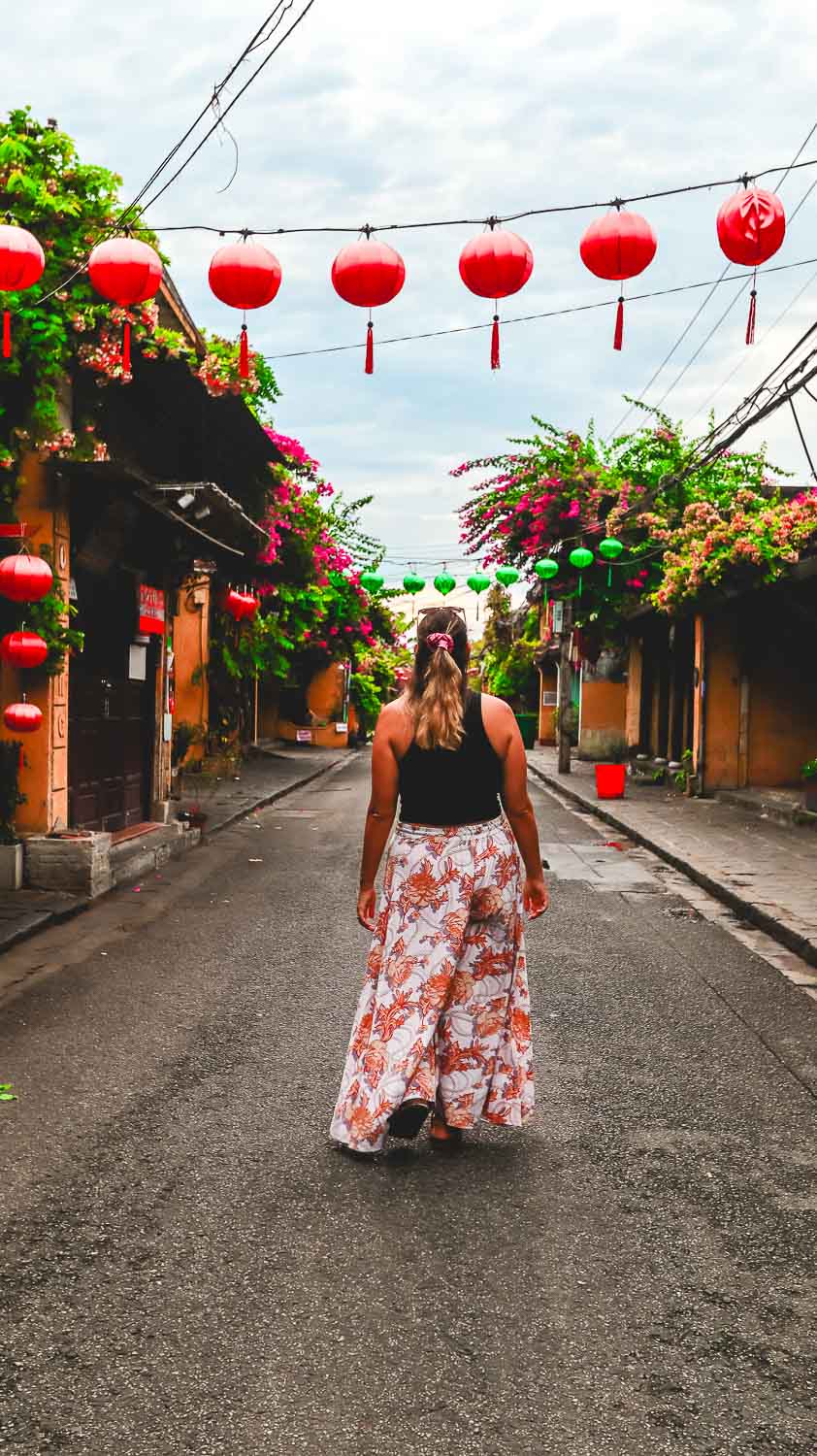

How Long Do You Need for the Banana Pancake Trail?
We have created three possible routes to give you as many details as possible to create your own version of the banana pancake itinerary.
Each of these itineraries takes into consideration 3,6 and 9 months, but not the budget. You can personalise each of them to make them more compelling to your desire to wander.
Four to eight weeks is the honest answer for the classic four-country loop. Three weeks is not enough and we would argue it is actively counterproductive: you will spend a third of your trip on buses and remember almost none of it.
This is the mistake we see most often, and we made a version of it ourselves. On our first trip we had 15 days for the whole of Vietnam (that was the visa-free allowance we got in 2023) and we went Ho Chi Minh City to Hanoi on night buses and night trains to make it fit. It was fun. It was also a blur, and we have been back to Vietnam since precisely because of it. Don’t plan a trip you have to repeat.
Below are four route lengths that actually work.
1 Month on the Banana Pancake Trail (2 Countries)
With four weeks, pick two neighbouring countries and travel them properly. The strongest pairing is Thailand and Laos, because the border at Chiang Khong is straightforward and the Mekong slow boat is one of the best journeys on the whole trail.
- Week 1: Bangkok (3 nights) → overnight train to Chiang Mai (4 nights)
- Week 2: Pai (4 nights) → Chiang Rai (2 nights)
- Week 3: Cross to Huay Xai → slow boat via Pak Beng → Luang Prabang (4 nights)
- Week 4: Vang Vieng (3 nights) → Vientiane (2 nights) → fly home or back to Bangkok
Why this works: one land border, one flight at most, and Thailand’s new 30-day visa exemption covers the Thai portion with room to spare. If you want this leg in more detail, we have written a full fortnight in Laos separately.
The alternative pairing is Vietnam and Cambodia, which suits you better if beaches and ruins matter more to you than mountains.
2 Months on the Banana Pancake Trail (3 Countries)
Eight weeks is where the trail starts to feel like travelling rather than transiting. Add Vietnam to the month above, and give it a full three weeks of its own.
- Weeks 1–2: Thailand — Bangkok, Chiang Mai, Pai, Chiang Rai
- Weeks 3–4: Laos — slow boat, Luang Prabang, Vang Vieng, Vientiane
- Weeks 5–7: Vietnam — Hanoi, Ninh Binh, Hoi An, Ho Chi Minh City
- Week 8: Thai islands, or Cambodia if you would rather have Angkor than a beach
Ninh Binh is the stop we would defend hardest here. We spent more than three days there and it remains one of our favourite places we have travelled anywhere: Tam Coc by boat, the climb up Hang Mua, Bich Dong Pagoda, and limestone karsts in every direction. Most people give it a rushed day trip from Hanoi. Give it three nights, and base yourself near Trang An rather than in Ninh Binh city.
3 Months on the Banana Pancake Trail (the Full Classic Loop)
With only three months for your backpacking trip in Southeast Asia, we suggest keeping it simple and sticking with the original trail. Start the trip in Bangkok, travel to the north, and visit Chiang Mai, Pai, and Chiang Rai. This order should be fine!
Then, cross the border with Laos by land and get the ticket for the slow boat on the Mekong River to reach Luang Prabang (a Unesco World Heritage site). Laos is so beautiful, and we traverse it, exploring Vang Vieng and Vientiane. With more time you can head south to Si Phan Don, the Four Thousand Islands on the Mekong. That is the one stretch of Laos we have not reached ourselves yet.
Again, cross a land border and enter Cambodia. Visit the ruins of Angkor Wat in Siem Reap, the country’s most popular landmark. Then, move south to Phnom Penh, the capital. Sihanoukville has changed beyond recognition in recent years, rebuilt around casino development, and it no longer resembles the sleepy beach town it still appears as in older guides. We have not been ourselves, so we will not tell you what it is like now — but if you want the Cambodian coast, most travellers we have met point towards Kampot, Kep or the islands instead.
It’s then time to explore Vietnam. We suggest spending as long as possible here; we love Vietnam. There are two options: again, border crossing by land or flight direct to Hanoi.
So, your backpacking adventure will be from North to South or vice versa. Remember to write down places like Sapa, Ninh Binh and Hoi An, unmissable for every backpacker.

6 Months: The Slow Travel Version
With 6 months to travel through Southeast Asia, you can do all the above without rushing. Also, you must consider adding some destinations to your trip. Our favourite countries in Southeast Asia are also Indonesia and the Philippines.
Make room to add Bali or East Java to the itinerary. In Bali, we spent a total of 2 months exploring also the nearby Nusa Islands. However, suppose you are in the Philippines and want to enjoy the beaches more than just rushing from place to place.
In that case, you must take into account that transportation is pricey. Between the islands, you must take ferries and flights, which add to the overall budget.

9 Months: The Gap Year Route
With nine months to travel in Southeast Asia, you can add more to your trip. We suggest visiting all the countries in the continent, including Malaysia and Singapore, and looking also for options for Nepal and India.
Within the nine months, one of the cool places to visit at a relatively short distance (flight from Bangkok) is Sri Lanka, one of our beloved destinations.
Going back to our original Banana Pancake trail, think about adding the following places to your itinerary:
Philippines
- Siquijor
- Moalboal
Malaysia
- Kuala Lumpur
- Malacca
- Cameron Highlands
Transport on the Banana Pancake Trail: Trains, Slow Boats and Sleeper Buses
Almost the entire trail can be done overland. We have done Singapore to Bangkok without a single flight, so we can say with some confidence that you do not need internal flights unless you are short on time or heading to the Philippines.
The Mekong Slow Boat vs the LCR Train: Which to Take
We have done both, and they suit completely different parts of the same trip.
The slow boat (Huay Xai → Pak Beng → Luang Prabang) is two full days on a wooden boat down the Mekong, with an overnight stop in Pak Beng. It is slow, the seats are old minivan seats, and it is still one of the best things on the trail. You watch northern Laos go past at walking pace. Take a cushion and take snacks.
The LCR high-speed train (the Laos–China Railway) is the opposite experience, and the biggest practical change to this route in years. It runs at up to 160 km/h and turns what used to be a punishing all-day minibus over mountain roads into under an hour between stops.
| Route | Journey time | 2nd class fare |
|---|---|---|
| Luang Prabang → Vang Vieng | 50 minutes | ~$10 |
| Vang Vieng → Vientiane | 55 minutes | ~$12 |
| Luang Prabang → Vientiane | 1 hr 50 minutes | ~$20 |
Our advice: take the slow boat southbound into Luang Prabang, then use the LCR train for everything after it. You get the iconic journey once, then you stop losing whole days to Laotian mountain roads. If you would rather take the road down to Vang Vieng, we have covered that route too.
- The booking window is short — only a few days before departure for domestic services, through the official LCR Ticket app. Sources disagree on whether it is four or seven days, so check as soon as you have dates
- You need your passport to book and to board
- The stations are a long way out of town. Vientiane’s is roughly 45–60 minutes from the centre and Luang Prabang’s around 30–45 minutes — budget for that transfer
Vietnam: Sleeper Buses and the Reunification Express
We have taken both, extensively, on our Ho Chi Minh City to Hanoi run.
Sleeper buses are lie-flat berths, cheap, and they run everywhere. They are also noisy, the driving can be alarming, and you should expect to sleep badly. Bring earplugs, and keep your bag physically attached to you rather than in the hold.
The Reunification Express is slower and more expensive than the bus, and worth it anyway. A soft-sleeper four-berth cabin is a far more civilised way to cover the country, and the coastal stretch over the Hai Van Pass between Hue and Da Nang is widely rated one of the great rail journeys in Asia. You can book the south to north route the same way you would book any other train on the trail.
Where we would split it: train for the long hauls where the scenery earns it, bus for the short hops where it does not. For the northern leg, the Hanoi to Sapa bus is the standard run.
Thailand: The Bangkok to Chiang Mai Sleeper Train
Take the train. We have done it from both the old Hua Lamphong station and the newer Krung Thep Aphiwat Central Terminal (reachable on the MRT Blue Line to Bang Sue), and we have slept in both upper and lower berths.
Book the lower berth if you can — it is wider, it has a window, and it costs only a little more. The upper is perfectly fine, but you are sleeping in a shelf with no view.
Border Crossings on the Banana Pancake Trail
Thailand to Laos at Chiang Khong and Huay Xai
This is the one we have done, and it is the gentlest border on the trail. You take a bus from Chiang Rai to Chiang Khong, cross the Friendship Bridge IV by shuttle bus, and clear Lao immigration on the far side at Huay Xai. It is the standard start for the Mekong slow boat.
Bring US dollars in clean, unmarked notes and a passport photo. That is true at every Lao land border, not just this one.
The Other Trail Borders
We have not crossed these ourselves, so what follows is researched rather than lived — treat it as a starting point and check current conditions before you travel.
Laos to Vietnam (Nam Phao/Cau Treo, Nam Can/Nam Soi): the mountain crossings have a long-standing reputation for slow processing and for operators collecting informal fees. The Lao eVisa is largely not accepted at Vietnam–Laos crossings — only Dansavanh/Lao Bao issues visa on arrival — so arrange your Vietnamese e-visa in advance rather than relying on sorting it at the border.
Vietnam to Cambodia (Moc Bai/Bavet): the standard Ho Chi Minh City to Phnom Penh bus route, roughly six to seven hours including the crossing. The recurring complaint is staff asking for an informal processing fee on top of the official visa cost. A Cambodian e-visa obtained in advance removes most of that friction. Book the Phnom Penh to Ho Chi Minh City bus in advance rather than turning up on the day.
Cambodia to Thailand (Poipet/Aranyaprathet): the most scam-prone crossing on the trail by reputation. The pattern to know is a fake visa office or Thai consulate set up before the real border. There is no Thai visa office at Poipet — if you are visa-exempt you need nothing, and anyone selling you a Thai visa there is running a scam.
Banana Pancake Trail Visas: What Changed in 2026
Every country on this route has changed something in the last two years. Here is where it stands — but check the official government sites before you book, because these rules move.
Thailand: 30 Days from 15 September 2026
This is the big one. Published in the Royal Gazette on 31 August 2026 and effective 15 September 2026:
- Visa-free stays cut from 60 days to 30 days for around 60 nationalities, including the UK, US, Australia, Canada, France, Germany, Japan, New Zealand, Singapore and South Korea
- One 30-day extension is still available at an immigration office for 1,900 THB
- New: a cap of two visa-exempt entries per calendar year at land borders. Air arrivals are not affected, and Malaysian, Bruneian, Indonesian and Singaporean citizens are exempt from the cap
- Visa on arrival now covers only Azerbaijan, Belarus and Serbia (2,000 THB)
- The TDAC (Thailand Digital Arrival Card) is mandatory for every arrival and must be submitted before you board
- Overstay is 500 THB a day, capped at 20,000 THB
What this means for the trail: the classic loop enters Thailand twice — once at the start, once coming back from Cambodia. That is both of your land entries used if you arrive overland both times. If you fly into Bangkok at the start, only the Poipet return counts against the cap. Work this out before you book flights, not after.
For longer stays, the DTV (Destination Thailand Visa) is a separate route aimed at remote workers and long-stay visitors.
Vietnam: 90-Day E-Visa, 45-Day Exemption
- E-visa valid 90 days, single entry US$25 or multiple entry US$50, issued in 3–5 working days
- 45 days visa-free until 14 March 2028 for the UK, France, Germany, Italy and Spain, plus Russia, Japan, South Korea and the Nordic countries
- 30 days visa-free for ASEAN nationals, Chile and Panama
- Phu Quoc is 30 days visa-free on direct entry
Worth noting how far this has moved: on our first trip in 2023 we got 15 days. It is now 45 for most of our readers, which changes how long you should spend in Vietnam entirely.
Laos: eVisa or Visa on Arrival, 30 Days
- eVisa roughly US$40–50 depending on nationality, 30 days, extendable once for another 30
- Apply through the official Lao government eVisa portal (laoevisa.gov.la) rather than an agent
- Visa on arrival at Vientiane, Luang Prabang and Pakse airports and at selected land borders — US$40–50 in cash plus a passport photo
- The Lao Digital Immigration Form (LDIF) must be completed online up to three days before you arrive
- Overstay is around US$10 a day
If you are building the Laos leg properly, our two weeks in Laos itinerary and our guide to the best time to visit Laos cover the timing in more depth.
Cambodia: E-Visa US$36, 30 Days
- E-visa about US$36 (a $30 fee plus $6 processing), single entry, 30 days, around three business days
- Use the official government site only. Search results are full of look-alike sites charging US$70–90 for exactly the same document
- Visa on arrival US$30 at the main airports and primary land borders — clean US dollar cash and a passport photo
- The e-Arrival Card is mandatory and free, submitted within seven days of arrival
Best Time to Travel the Banana Pancake Trail
Every country in Asia has its seasonality, which mostly goes from wet to dry season. Do not underestimate the rainy season, as it’s mostly a tropical storm, which sometimes takes days to clear the sky.
Below, we have created a standard, overall overview of the best time to visit each country.
| Places | Months |
|---|---|
| Northern Thailand | November to May |
| Southern Thailand West Coast (Phuket, Phi Phi, Khao Sok) | November to April |
| Southern Thailand East Coast (Koh Samui, Koh Tao, Koh Phangan, Koh Chang) | December to June |
| Southern Vietnam | November to April |
| Central Vietnam | February to August |
| Northern Vietnam | March to April or November to February |
| Cambodia | November to May |
| Laos | October and April (Slow boat on the Mekong River – November and January) |
Packing for the Banana Pancake Trail
You need less than you think, and you can buy almost anything you forget. A few things that genuinely matter on this route:
- A 40–50 litre backpack, not a suitcase. Half this trail involves stairs, unpaved streets and boat gangplanks
- A padlock and a bag you can lock. Hostel lockers and sleeper buses both want one
- Earplugs and an eye mask. Non-negotiable on sleeper buses and night trains
- A light layer, genuinely. The Lao mountains get properly chilly on cool-season nights. We travelled Laos between November and February, and it is the detail we think gets left out of most packing lists
- Motion sickness tablets. The Chiang Mai to Pai minivan has 762 curves. Ale is very sensitive to motion sickness and picks up anti-nausea pills from 7-Eleven for about 14 THB before that road — they have saved us on rough ferry crossings too
- A cushion or inflatable seat pad for the slow boat. Two days on old minivan seats bolted to a wooden deck
- Clean, unmarked US dollar notes for visas and land borders
- An eSIM, sorted before you land, so you are not hunting for a SIM counter at 2am
A Few Honest Things We Would Tell a Friend
Nothing here is a warning against doing the trail — we would do all of it again tomorrow. But these are the small, unglamorous things that would have saved us a bit of hassle if someone had mentioned them first.
- Pai is busier than it used to be. We first visited about three years before we came back to ride the Mae Hong Son Loop, and the crowd had more than doubled — younger, louder, and the canyon itself was greener the second time round. It is still worth going. Just don’t expect the quiet version you may have seen in old blog posts
- Chiang Rai’s Blue Temple is worth timing properly. We turned up at lunchtime on our first visit and it was uncomfortably hot with a crowd to match. Going back at 7:30am or after 5pm made it a completely different, much calmer experience
- The humidity catches people out at Hang Mua in Ninh Binh. We climbed it in the afternoon and it was brutal. With hindsight, before 10am or right at opening beats both the heat and the day-tripper crowds
- Sleeper buses are noisy and the driving can be alarming. You will not sleep as well as the name promises. Earplugs help more than anything else you can pack