Is Sri Lanka Worth Visiting in 2026? Our Honest Verdict After Three Trips

Yes — Sri Lanka is worth visiting in 2026. Here’s our honest, three-trip verdict: who it’s for, who should skip it, real costs, safety today, and the 2026 visa change that just made it cheaper to find out for yourself.
Yes, Sri Lanka is worth visiting, and this is valid for holidaymakers, seasoned travellers, couples, and even backpackers. We love the country for many reasons and returned five years later to see how it has changed over time.
Sri Lanka is a place where unspoiled nature meets budget-friendly activities, unique landscapes, blue turquoise water, and a blend of cultures visible in its landmarks.
This guide to Sri Lanka will help you decide whether it is for you and provide tips and advice on how to have the best time there.
To give you a few highlights, which we will get into detail after that, Sri Lanka has been named the best safari outside of Africa and recently made the newspaper headlines for a surge in tourists.
Those are just two of the many reasons why we suggest you consider Sri Lanka for your next holiday. Now, it’s time to get through this unique guide about Sri Lanka.
Quick Decision Box: Is Sri Lanka Worth Visiting?
- The Verdict: Yes — worth visiting in 2026, especially if you love nature, wildlife, hiking and slower cultural travel. Less of a fit if you want a polished, all-inclusive beach-resort holiday.
- Best for: Wildlife safaris, tea-country hikes, surf towns, culture and ancient cities, digital nomads/slow travellers, budget-conscious backpackers and couples
- Skip if: You want Bali/Phuket-style beach clubs and nonstop nightlife, or you only have 4-5 days and want to see the whole island without rushing
- Average daily budget: ~$35-$60/day backpacker, ~$80-$150/day mid-range (excludes international flights)
Pros vs Cons of Visiting Sri Lanka
| Pros | Cons |
| Still one of Asia’s most affordable destinations, even against Thailand and Bali | Foreign-visitor entry fees at Sigiriya and the national parks are steep next to local prices |
| Wildlife safaris that genuinely rival Africa’s, with elephants easy to spot | Internal transport is slow, and the hill country rail line has had disruption after 2025 cyclone damage |
| Genuinely warm, welcoming locals | |

Is Sri Lanka worth visiting?
Absolutely, Sri Lanka is worth visiting. With its breathtaking landscapes, rich cultural heritage, and warm hospitality, it offers an unforgettable travel experience on a very low budget.
The country is still one of the most affordable places to visit in Asia, even more affordable than Thailand, Bali, and the Philippines. Sri Lanka excels in ancient ruins, pristine beaches, and lush tea plantations. Visiting the country, you must indulge in flavorful cuisine and encounter diverse wildlife. Don’t miss this gem of the Indian Ocean.
Is it worth travelling to Sri Lanka now?
Yes, Sri Lanka is safe to visit. Even though the country has a controversial recent history, it is very safe. We actually visited Sri Lanka as the first group of bloggers and content creators to testify about the safety of the country after the Easter bomb attack in 2019.
Today, like yesterday, we have never felt unsafe. Actually, locals’ warm hearts are something we keep with us all the time, making them some of the best-smiling people on earth.
Why is Sri Lanka worth visiting? Our personal experience!
We travelled to Sri Lanka twice, exploring every inch and having some of the most meaningful experiences of our lives. We Love Sri Lanka because the locals are friendly and make you feel at home away from home. Like every country, it has its ups and downs, but overall, it is a fantastic destination, even for first-time travellers.
When we we first visited back in 2019, it was our first trip outside of Europe, and so it might be the reason why our love is so profound. If it’s your first trip to Asia, prepare for culture shock, as it was for us. However, we gradually adapted to the climate and way of life and embraced the adventure.
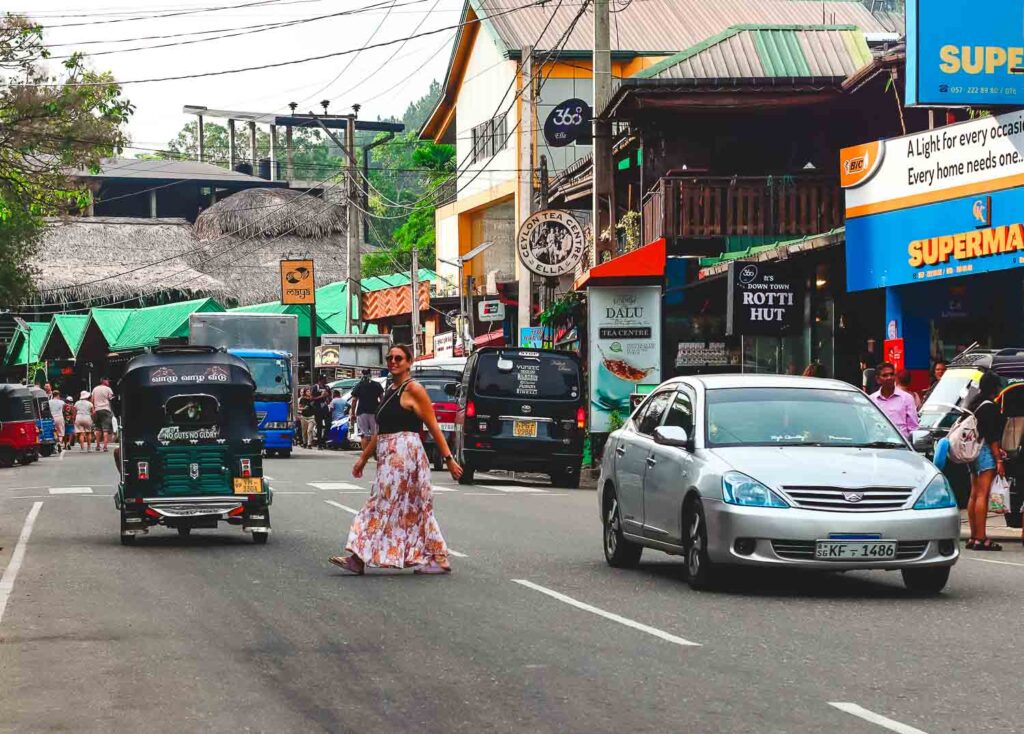
While Colombo looks like any other metropolis in Asia, the countryside is still unspoiled, and many places are untouched by tourists yet. Also, in our recent visit, five years apart from the first, we noticed a great uplift in tourists in terms of cafes, restaurants, hotels, and general offerings.
We are sure to support the idea that Sri Lanka might be the next destination booming for Digital Nomads and long-term slow travellers like us.
We’ve put together a full Sri Lanka digital nomad guide — and if you want a specific base, Hiriketiya has become one of the island’s best-known nomad hubs.

20 Reasons to Visit in Sri Lanka
Incredible nature
One of the most impressive attractions of Sri Lanka is the unspoiled Nature and over 24 National Parks that preserve the local plants and animal species.
We have been to three National Parks and some reservoirs, and we, the local government and tourist office, are doing our best to make the experience life-worthy.
The most interesting National parks and wildlife reserves to visit in Sri Lanka are Yala National Park (the most famous and crowded), Udawalawe National Park, Minneriya National Park, and Hurulu Eco Park.
All those offer incredible encounters with wildlife in their natural habitat. We witnessed Elephants, exotic birds, and water buffalos but were not lucky enough to see leopards.
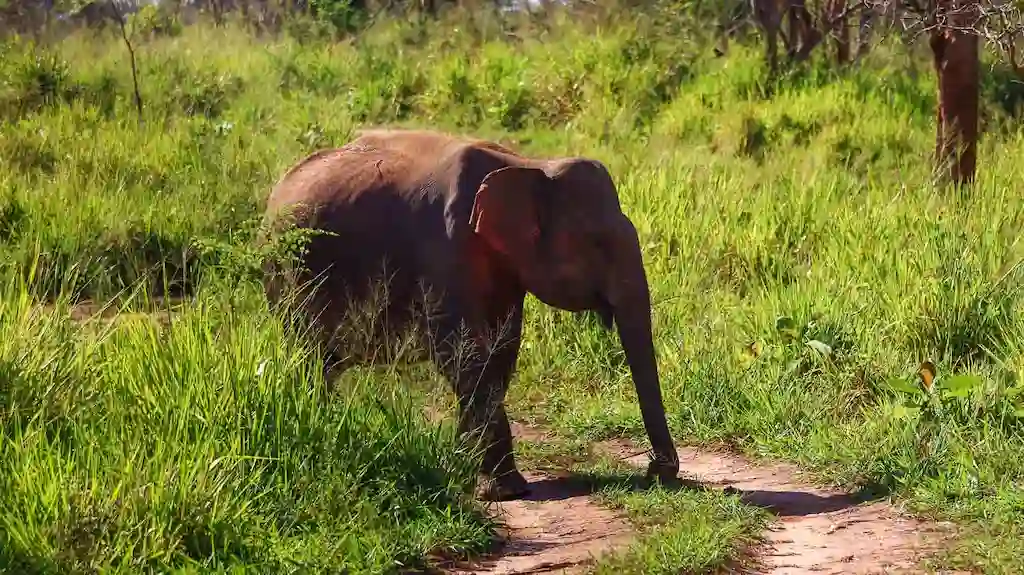
You can get closer to Elephants
As said above, Sri Lanka is great for wildlife safaris. So far we have already won three, and are definitely planning to go back and visit another national park. You can get very close to elephants. On our last visit, we were just a few feet away from this giant, and they were very friendly.
So far, apart from an Elephant sanctuary in Khao Sok National Park in Thailand, the safaris we have done in Sri Lanka are the best memories we have of elephants, which still makes us cry with joy when witnessing them.
Micro-climate in the centre
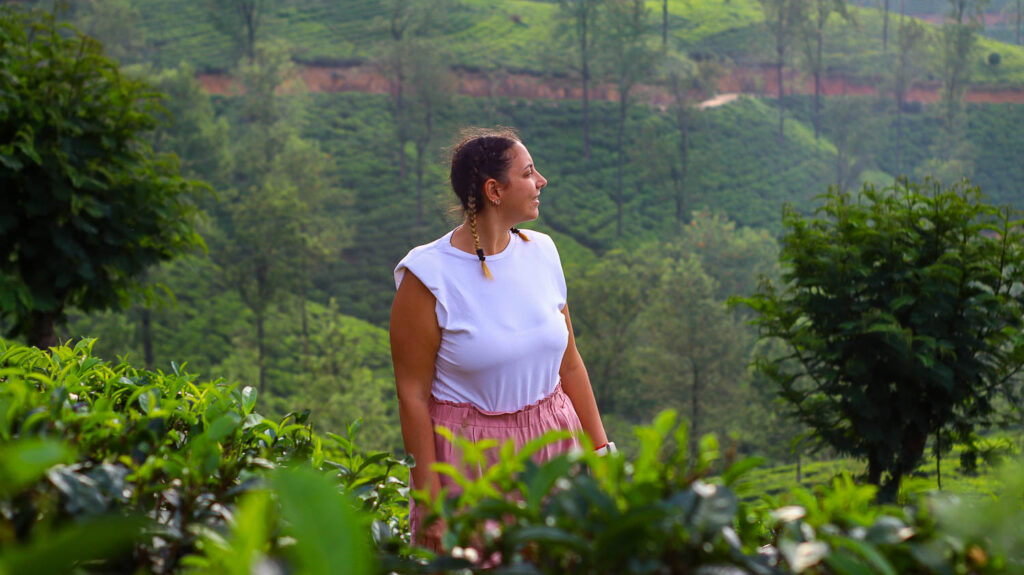
You will be impressed by the quick change in temperature and weather between the centre of Sri Lanka and the rest of the country. A dot in the tea fields region contributes to creating premium tea leaves, which are the main source of income of the country.
Sri Lanka is, in fact, often identified as Ceylon, as its tea. Nuwara Eliya primarily, but also Ella and Kandy countryside is where there is the most concentration of tea fields and factories.
On our first visit, we went from Kandy to Nuwara Eliya, and the temperature dropped about 10 degrees within minutes. It was a clear day when we arrived at our lunch spot with Lake Gregory view, but after lunch, it was raining heavily. We were urging us to light up the fireplace after sunset to keep the hotel room warm.
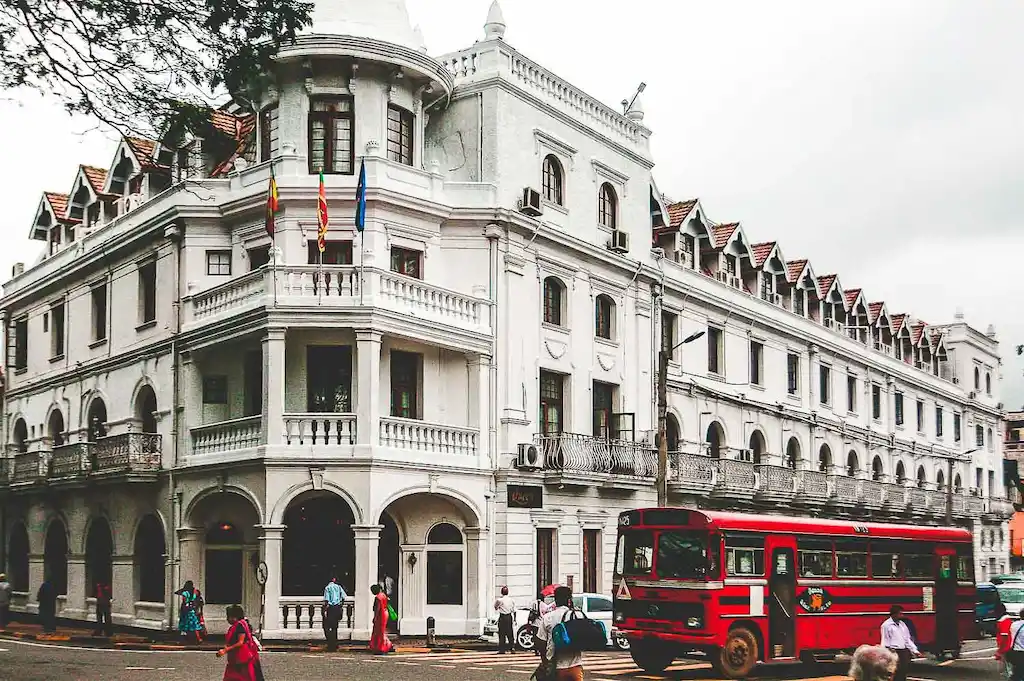
Kandy is charming
We couldn’t miss talking about Kandy, one of the most touristy places in Sri Lanka. This city has been the Capital of Sri Lanka for over 200 years; today, it is the second-largest city after Colombo. It is a sacred city, and the most impressive attraction is the Kandy white temple, where the tooth remains.
You should also consider including in your Kandy guide the beautiful botanical garden; we found it so inspiring and photogenic. If you are a backpacker, you can’t miss Kandy, as it is the departing point for the popular train ride across the Nine Arches Bridge.
See Buddha Relics
Kandy is fantastic itself, but we want to enhance one of the best things to do while in the city. The White Temple of Kandy is particularly worshipped because it is enshrined within a golden casket, a relic believed to be a tooth of Lord Buddha. We visited the temple and can testify that the mystic aura surrounding the temple is real.
We explored the ground on a weekday, and it was full of devotees, paying homage not only to the relic shrine (which is enclosed to preserve it) but also to the rest of the sacred temple.
I was particularly lucky to witness the Kandy Esala Perahera, or known as The Festival of the Tooth, with a replica of the relic taken around the city in procession.

Kandy Esala Perahera
When it comes to festivals, Esala Perahera is the most interesting event in Sri Lanka. The procession, which interests the whole of Kandy, is also known as the Sacred Tooth Festival and is held in August.
All tribes come to Kandy, one of the oldest capitals in the country, to pay homage and demonstrate their power with the use of Elephants and fire. The festival takes to the main road a parade, which is still vivid in my mind.
Ella is perfect for nature lovers and backpackers
If you are considering Sri Lanka as your next destination, chances are that you have seen photos of the famous Kandy to Ella blue train. It is one of the main covers of Sri Lanka merchandise. However, away from the simple ride on the blue train, you can witness even more in Ella.
We were surprised about how active the little town is, and how many activities you can do around. Ella is a theme park for backpackers in Sri Lanka and budget travellers. From Little Adam’s Peak and the Ella Rock hike to Nine Arches Bridge, passing by Diyaluma Falls, a stay in Ella is suggested for every Sri Lanka itinerary.
Best sunrise
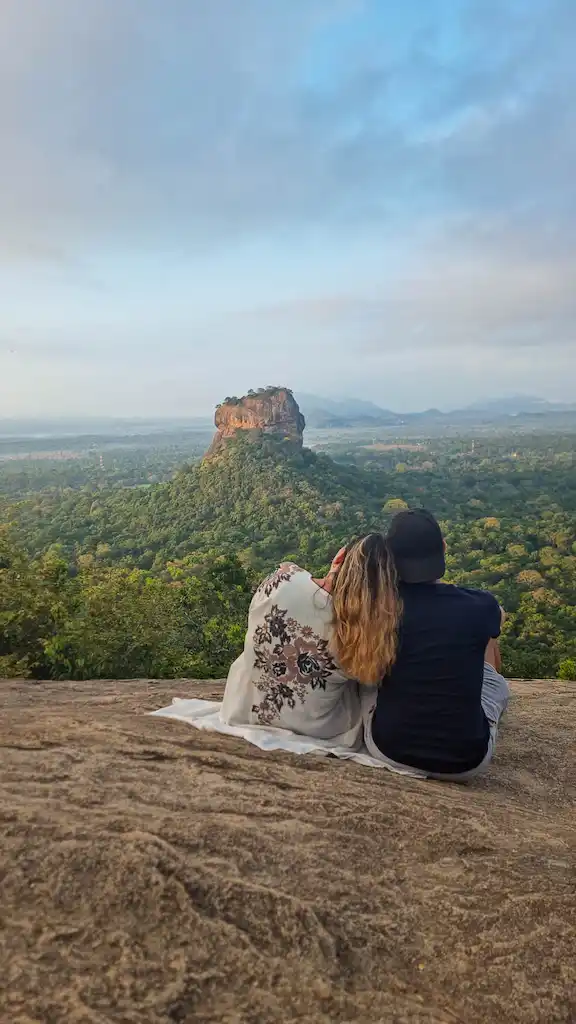
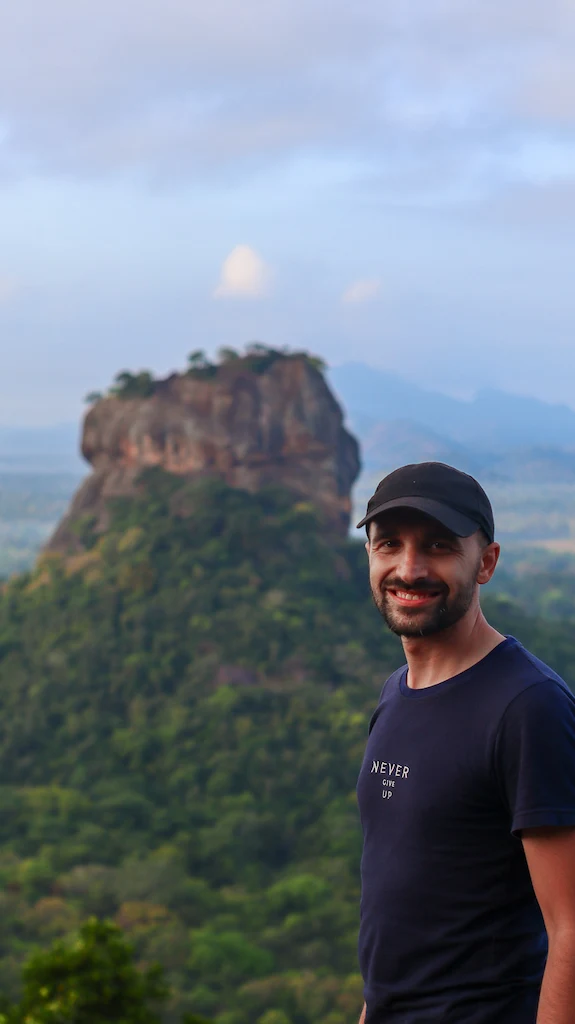
Definitely among the highlights of our first and last trip to Sri Lanka, there is the Pidurangala hike. It is one of the best sunrises in the world. Pidurangala isn’t hard, and you can hike early in the morning (when it’s still dark) to avoid the heat and witness the first day’s lights.
Pidurangala is a sacred rock that stands out from the tropical jungle over 200 metres. Witness the best view of Sigiriya rock fortress ruins. The hike takes only 30 minutes, passing by a temple and a red brick Buddha Statue in a reclined position. If you want to know more about Pidurangala Rock Hike, read our guide.

Ancient civilizations (Sigiriya)
In the heart of Sri Lanka lies the awe-inspiring Sigiriya, a UNESCO World Heritage site. We have introduced this rock fortress already, talking about Pidurangala. The truth is that many backpackers avoid the hike to Sigiriya because it is too expensive.
The entrance ticket to the 182m tall rock in the middle of the jungle costs about $30. Sigiriya is worth visiting, as it is one of the most unusual fortresses in the world. Today in ruins, it was built around the fifth century and is often referred to as Lion Rock or the Fortress in the Clouds.
We still prefer the view of Sigiriya from Pidurangala. However, the frescoes protected at mid-stage of ascending to the top are some of the most impressive things you will witness in Sri Lanka. It is not possible to take photos, though, which makes the mystery around more intriguing.
You can watch whales
Sri Lanka’s wildlife goes beyond imagination; in fact, you can witness the sea giants in a closeup. Trincomalee, on Sri Lanka’s east Coast, and Mirissa, on the south, are the best places to witness whales and dolphins.
There are many packages available, and surprisingly, it costs less than $60 per person for a morning Whale Watching Tour in Mirissa.

Beaches are unspoiled
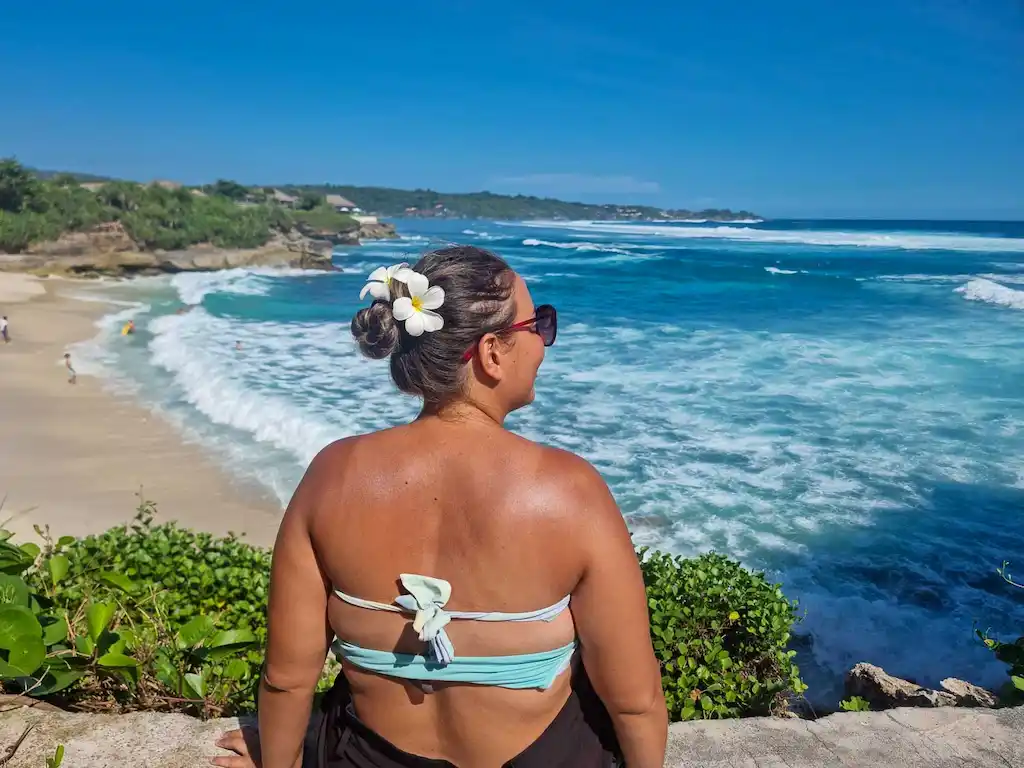
We haven’t been to the east coast, which is well known for the best beaches in Sri Lanka. However, we have experienced Sri Lankan beaches in the south (Galle is fantastic) and Negombo.
One thing is for sure: You will find way fewer people than on beaches in Thailand or the Philippines. Sri Lanka is still relatively unknown for its beaches but doesn’t have anything to envoy to the most popular destinations in Southeast Asia.
Among the best beaches in Sri Lanka you should consider visiting:
Food is tasty
Talking about Sri Lanka without mentioning their food is impossible. You will be impressed by the culinary richness of the country, with diversity depending on the region.
We warn you that food is spicy, and you must learn to ask restaurants and places where to eat to make it less spicy. Locals use many spices and chilli in their food, but for us, most of the cases were too much.
Apart from being spicy you can taste many dishes based on coconut milk. Don’t miss out on iconic dishes like kottu roti, a satisfying medley of chopped roti, vegetables, and spices, or the refreshing sweetness of king coconut water straight from the husk.
Like everywhere in Asia, street food is the best way to touch and taste local products. However, we also suggest booking a food tour or, even better, a cooking class to get the best experience.
Unique train rides
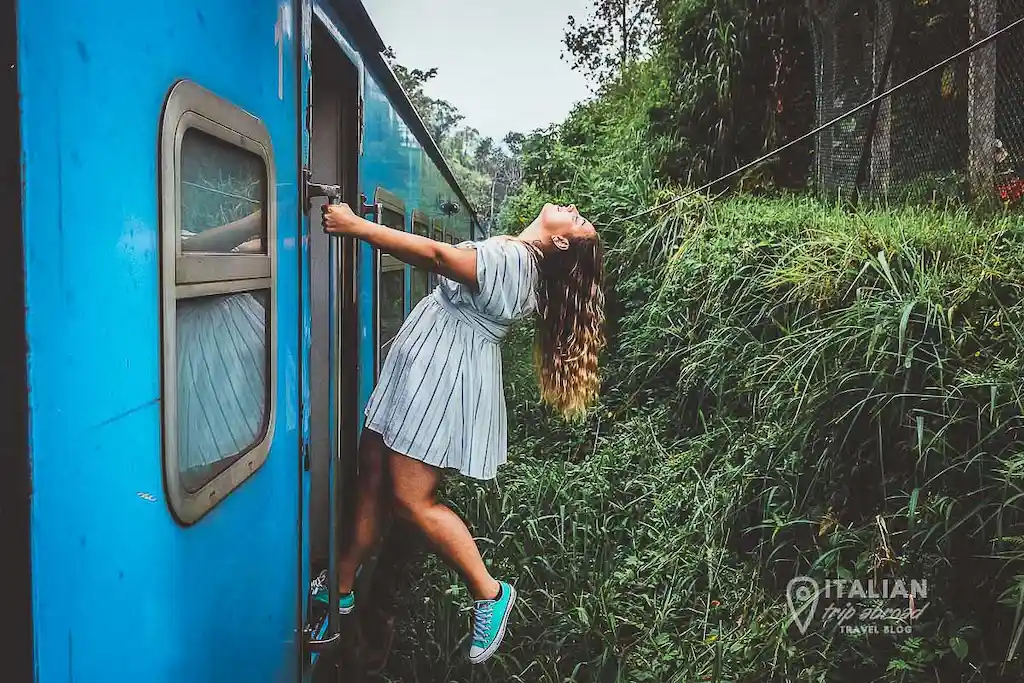
The blue train isn’t the only iconic train ride in Sri Lanka. On our second visit, we went back to the bridge twice to watch it cross and walked along the railway ourselves, then rode the Dunhinda Odyssey — the newest tourist train on the line, introduced to ease pressure off the increasingly popular Blue Train. You might have seen many photos of the fantastic blue train that covers the route from Kandy to Ella and back.
It’s a good option if you can’t get a seat on the Blue Train, though it’s not quite the same experience — check current Sri Lanka Railways timetables before you go, since schedules on this route do change. Worth knowing too: the Colombo–Kandy–Nuwara Eliya–Ella–Badulla line was still showing some disruption from 2025 cyclone damage as of mid-2026, so check current status and book reserved seats well in advance regardless — the 2nd class reserved carriages on this route sell out fast.
Nine Arches Bridge is a masterpiece
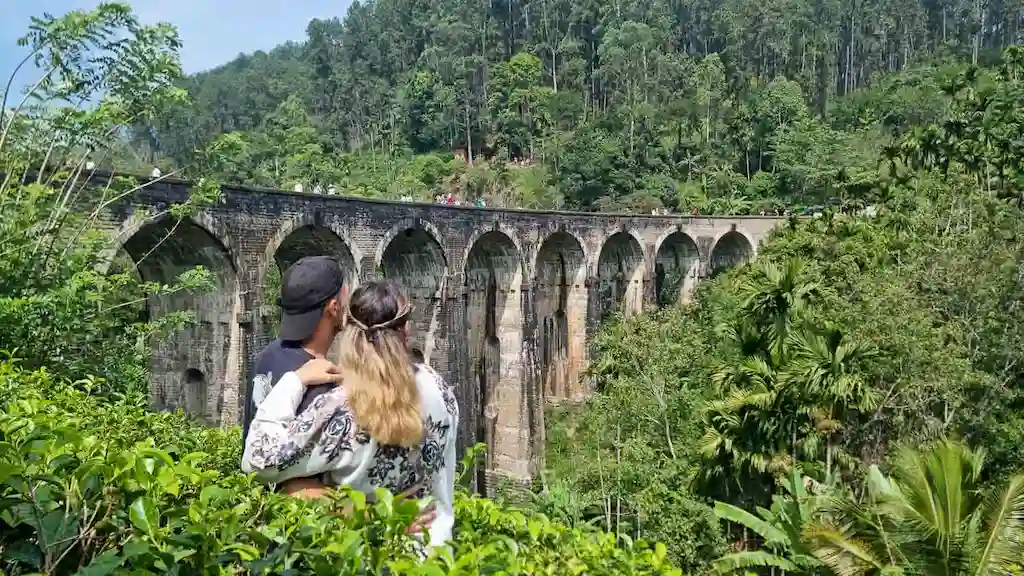
It is impossible to visit Ella without passing by Nine Arches bridges and snapping a few photos. We experienced the blue train from Kandy to Ella five years ago but stopped our ride midway to explore Nuwara Elya, so we didn’t pass on the iconic viaduct.
Well, in our recent visit, we filled this gap and also set up our drone for the best view. It is a masterpiece constructed entirely of bricks and cement without any steel, offering a glimpse into Sri Lanka’s rich colonial heritage.
The journey to Nine Arches Bridge is incredible itself. In fact, it is possible to reach the area only by tuk-tuk or walking (dangerous because tuk-tuks go really fast). It was already crowded at 9 a.m., so early is better. A train will pass on top around 9.10/9.15 a.m., so we were a little late for snapping proper photos of the train passing by.
Colombo cultural heritage
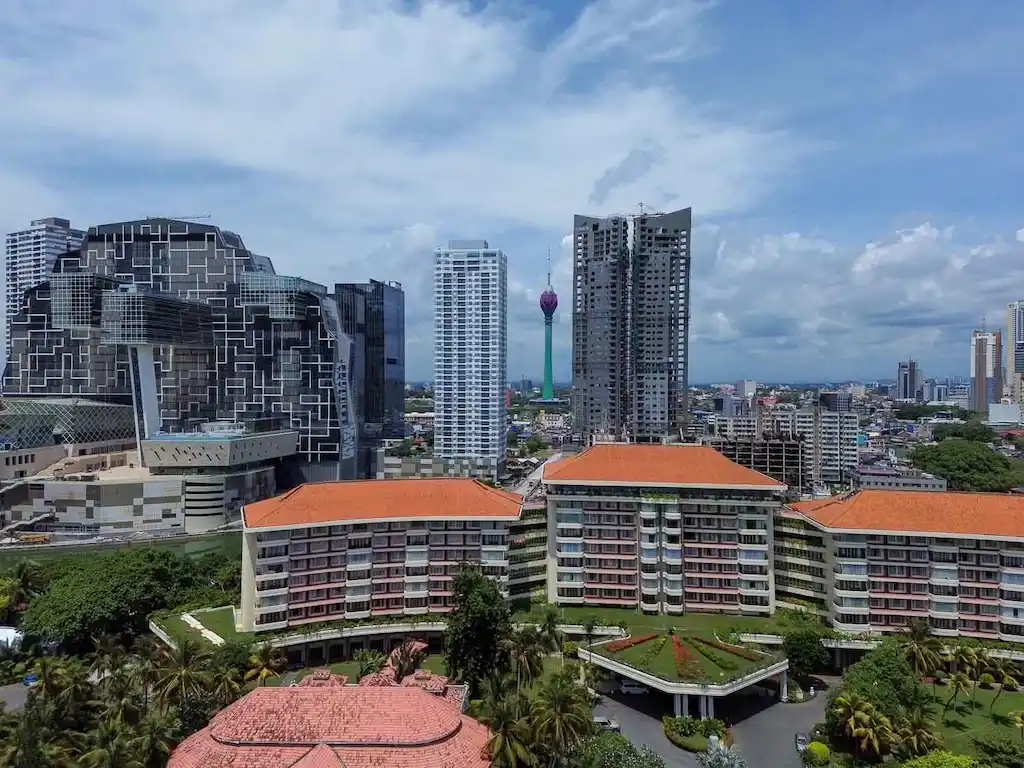
Colombo is the capital of Sri Lanka and impossible to miss while exploring the country. Spend a couple of days roaming around modern and colonial architecture, which seamlessly blend into a unique city. Among the many things to explore in Colombo, these are the most important:
- Gangaramaya Temple
- Galle Face Green (Colombo promenade)
- National Museum of Colombo
- Pettah Market
- Old Parliament Building
- Independence Square
- Colombo National Museum
- Lotus Tower
- Red Mosque of Colombo
Lotus Tower is one of the tallest buildings in Southeast Asia
The Lotus Tower is today the symbol of Colombo and Sri Lanka. At 351.5 m tall, it is the sixth-highest building in Southeast Asia and is finally placing Sri Lanka into the chart.
The first time we visited in 2019, it was still closed, and work was going on. In 2023, it finally opened to the public, and you can even dine at the rotating restaurant at the top.
You can’t miss visiting the Lotus Tower while in Colombo, even for a short visit. It is a landmark that shows how vast the city is and where the boundaries are with the jungle.
The Lotus Tower also offers an outdoor balcony, which you can walk around to spot every landmark of the city, from the Ocean promenade to the train station and a few temples scattered around.
Warm culture and friendly locals
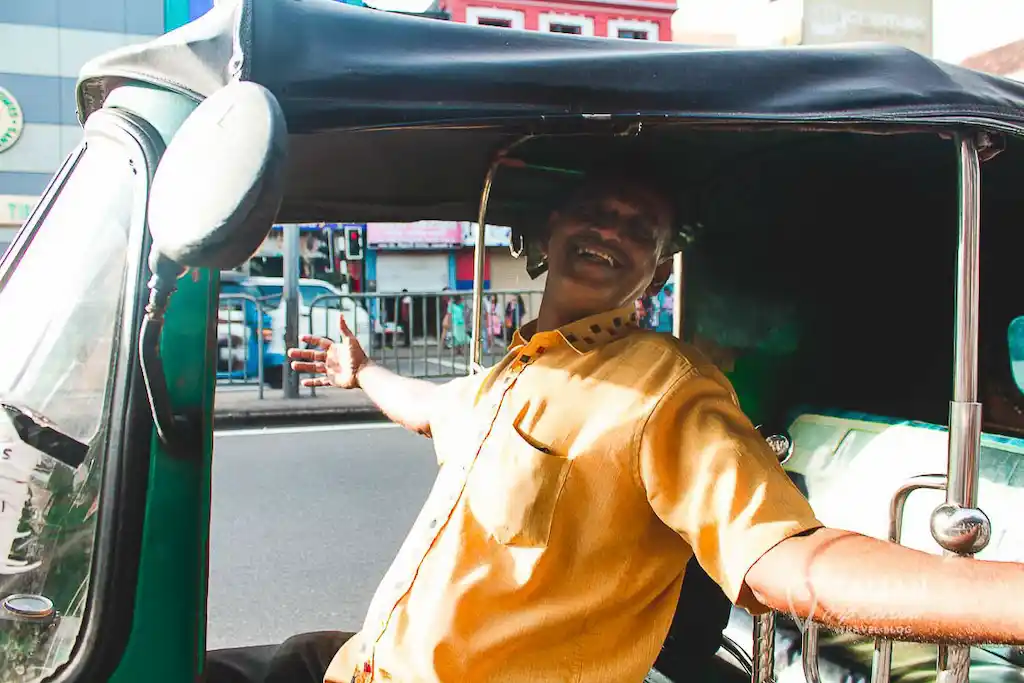
We learned that Sri Lankan people see guests as gifts from the divine. This characteristic is present in many cultures, but Sri Lankans elevate this welcome touch with genuine friendliness.
We have experienced such culture everywhere, but the smiles of people from Sri Lanka are something that is always present in our memories.
This kindness is deeply rooted in their cultural norms and traditions. If you are visiting Sri Lanka soon, it is good to learn at least a few words; start with “Ayubowan”, a respectful greeting when you see someone, or “Stuti”, to say thank you.
Perfect for budget travellers
Sri Lanka is perfect for backpackers and money-savvy travellers, and it holds its own as one of the best first-time backpacking countries. We experienced it recently and can see much potential in the coming years. Sri Lanka got even more budget-friendly in 2026: since 25 May, the tourist ETA is completely free for 40 nationalities (the UK included) for a 30-day double-entry stay — you’ll still need to apply for the ETA before you fly, but the old visa fee is gone. If you’re not on that list, or want to stay longer, the standard ETA and extension fees still apply, though the rest of the expenses remain cheaper than in nearby countries.
We have been travelling through Thailand and Indonesia, but Sri Lanka is definitely less costly. You can get an apartment by the beach at Arugam Bay (surfing paradise) for about $300 per month, all included. Also, basic meals come to about $1/2 in a local restaurant and $3/5 for more westernised places.
We toured all the Barista coffee shops on the island (a newly opened coffee chain) to check the prices for regular coffee. Our beloved Iced caramel macchiato (yes, I know how much sugar!) only costs about $2 in Sigiriya and Galle, the most touristy places.
Compared to five years ago, Sri Lanka is more modern, with less traffic and a nice place where you can work from your laptop. That’s why we proudly include Sri Lanka in our list of perfect countries for Digital Nomads.
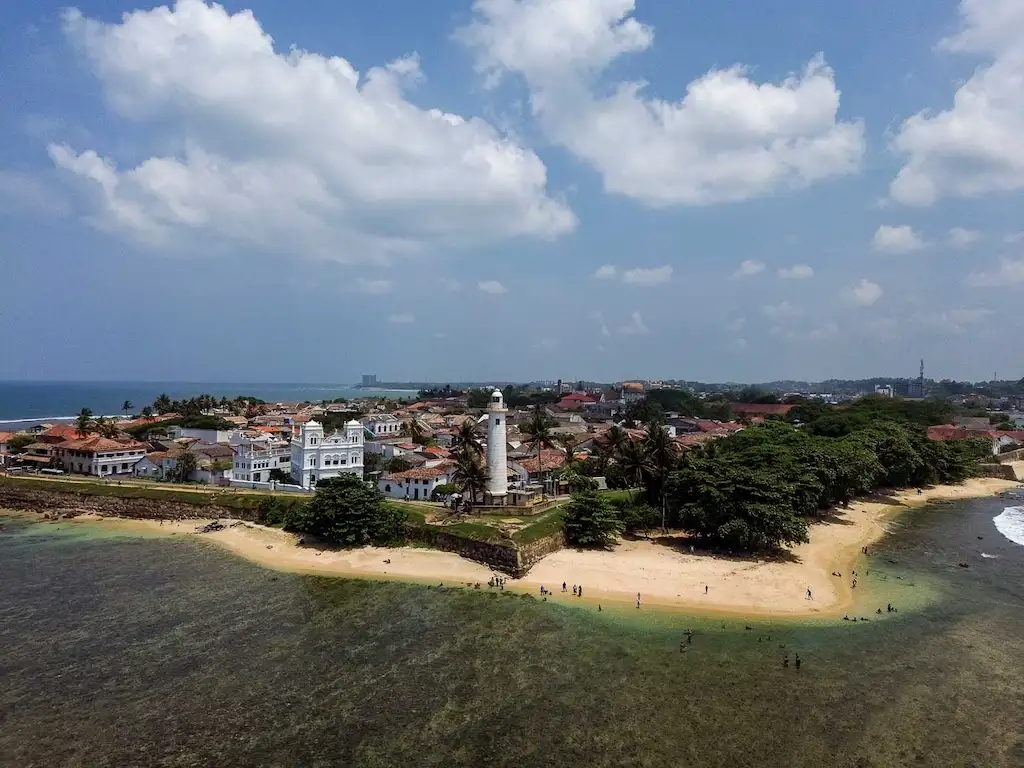
Witness British influence in Galle
Galle was the last stop on our itinerary of Sri Lanka for nearly two weeks. Unfortunately, we didn’t spend as much time as we wanted, but it was enough to understand that we have to go back soon.
The city proudly displays old-fashioned colonial style and keeps it, renewing the atmosphere with modern cafes, boutique shops, gem stores, and restaurants.
The main attractions of Galle are its fort and lighthouse. Wander through the cobblestone walls of the UNESCO-listed Galle Fort or jump into the blue, turquoise water of the Indian Ocean.
All around the walls are dreamy, tropical sand beaches. Apart from the fort, we suggest also popping into the Dutch Reformed Church, an 18th-century masterpiece.
3 Reasons You Might Want to Skip Sri Lanka
- The pace can catch you out. The highway network has cut travel times dramatically since our first visit in 2019, but once you’re off the main routes — heading into the hill country or between national parks — journeys are still slow. If you’re only giving Sri Lanka a long weekend, you’ll spend a disproportionate amount of it in transit.
- The monsoon system is genuinely confusing to plan around. Sri Lanka effectively has two monsoons — the Yala monsoon affecting the south-west coast and hill country (roughly May–September) and the Maha monsoon affecting the north-east coast (roughly October–January) — so “best time to visit” depends entirely on which coast you’re headed to. Get it wrong and you can lose days to rain, as we did on parts of our own trip.
- Pricing friction is real. Entry to major sites like Sigiriya is priced far higher for foreign visitors than locals, and some national park fees are tiered by nationality, group size and vehicle. In tourist hubs like Bentota, we also noticed real tension between local tuk-tuk drivers and app-based drivers (PickMe) undercutting their prices — it doesn’t affect your safety, but it’s worth knowing the dynamic exists.
How Sri Lanka Compares to Southeast Asia
We’ve spent months living and working across Thailand, Bali and Vietnam as well as Sri Lanka, so we’re often asked how they compare. The honest answer is: it depends what you’re optimising for.
Thailand — Bangkok especially — is still our benchmark for ease in Southeast Asia: the internet, transport, cafes and food delivery all just work, and you can build a routine quickly. Sri Lanka is more varied and more adventurous, but the infrastructure lags behind. Wi-Fi in particular tested our patience more than once, and we wouldn’t travel there now without an eSIM as backup.
Against Bali, it’s more a trade of convenience for atmosphere. Bali has more established travel infrastructure, more coworking and coliving options, and a bigger international crowd. Sri Lanka is quieter — fewer tourists, less traffic, and far quicker access to wildlife, beaches and rural landscapes within a single trip.
Cost depends on how you’re travelling. As backpackers moving quickly between guesthouses and local restaurants, Sri Lanka comfortably undercuts Thailand and Bali on the basics — which is why it’s still one of the cheapest ways to see this part of the world. Settle in for weeks at a time wanting a private apartment, reliable Wi-Fi and Western-style cafes, though, and the gap narrows: in our experience, accommodation and coworking spaces in Sri Lanka were often pricier than equivalent options in Bali.
Where Sri Lanka pulls ahead of all three is variety packed into a small island — beaches, hill country, ancient cities, wildlife safaris and surf towns within a few hours of each other. Where Thailand and Bali still win is polish: more mature tourist infrastructure, more nightlife, and for now a bigger, more established travel and remote-work community. We go into this in a lot more depth in our Sri Lanka digital nomad guide.
Things to know about Sri Lanka
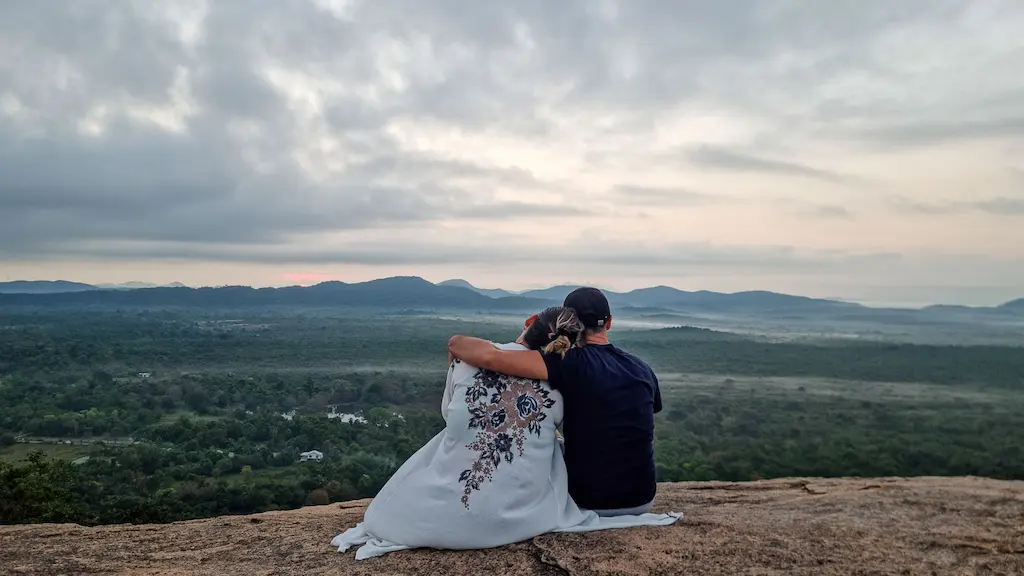
Best time to visit Sri Lanka
The best time to visit Sri Lanka depends on the regions you plan to explore. Generally, the dry season from December to March is ideal for visiting the west and south coasts, hill country, and cultural sites.
The east coast is best visited from April to September when it experiences dry and sunny weather, perfect for beach activities and water sports.
The best time to visit Sri Lanka is from December to March, when the weather is generally sunny and dry. However, if you are looking to visit the east coast, the best time is from April to September. It is also important to consider any monsoon seasons and plan accordingly.
Where to go in Sri Lanka
Sri Lanka is beautiful and diverse, and definitely, you will have a lot to do during your stay. Among the best cultural wonders, Kandy is the most beautiful, but you should also make plans to visit Sigiriya, Ella and Nuwara Eliya for outdoor activities and tea plantations.
Also, don’t forget that Sri Lanka is an island, so boost some of the most incredible beaches. Go to Mirissa and Galle for it.
For wildlife enthusiasts with over 24 National Parks and conservation areas, it is perfect to encounter animals in their natural habitat. For the best safaris, don’t miss visiting Yala National Park, Minneriya National Park and some smaller sites.
Surely, planning a trip to Sri Lanka will land you at the only international airport on the island, so stay in Colombo for a few days to enjoy the vibrant atmosphere and local culture. If you have extra time, head north for the things to do in Jaffna — a completely different, less-visited side of the island.
Book your travel insurance

How much does it cost to visit Sri Lanka for two weeks?
Most of the cost for a two-week trip to Sri Lanka comes from the flights, of course, depending on the departure location. We learned that some cheap flights are from Southeast Asia locations such as Kuala Lumpur and Bangkok, for a two weeks itinerary in Sri Lanka budget for $1200 to $2000 per person.
If you are staying on a budget or are a backpacker, you can tour the country for two weeks for as low as $500, all included meals and accommodations.
Decent guest houses and dorms in a hostel come cheap at less than $5 per night. Also transportation is cheap, to move around, and increase the fee if you want to rent a scooter. Apart from Sigiriya, where the entrance ticket is steep, costing over $30, the rest of the activities are below $10.
How many days is enough to visit Sri Lanka?
Sri Lanka might look very small compared to other countries, but it is filled with diversity that makes everything unmissable. You can experience the main highlights of Sri Lanka in as short as one week. However, keep in mind that you will be running.
To travel more efficiently, organise the itinerary around 10 to 14 days. Within those time frames, you can experience the essence of the country through cultural activities, hikes, wildlife safaris, and scenic train rides and return home happy.
Where to stay in Sri Lanka
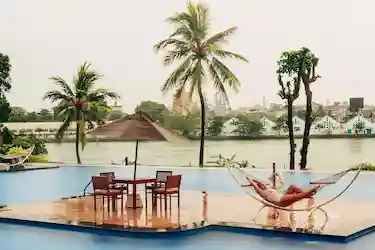
CINNAMON LAKESIDE

REST INN

SUN DOVE SUITE

WINDY GARDEN
Want more specific picks? Our in-depth reviews cover Nyne Hotels in Bentota, the Lantern Boutique Hotel in Mirissa, and the Taj Samudra in Colombo.