Digital Nomad in Hiriketiya: Costs, Chaos and Coconut Wi‑Fi

We lived as digital nomads in Hiriketiya in 2026, tracking every rupee, power cut and Wi‑Fi drop. This is our raw cost breakdown, where we actually worked from, and why Hiriketiya can be both a dream and a nightmare for remote workers.
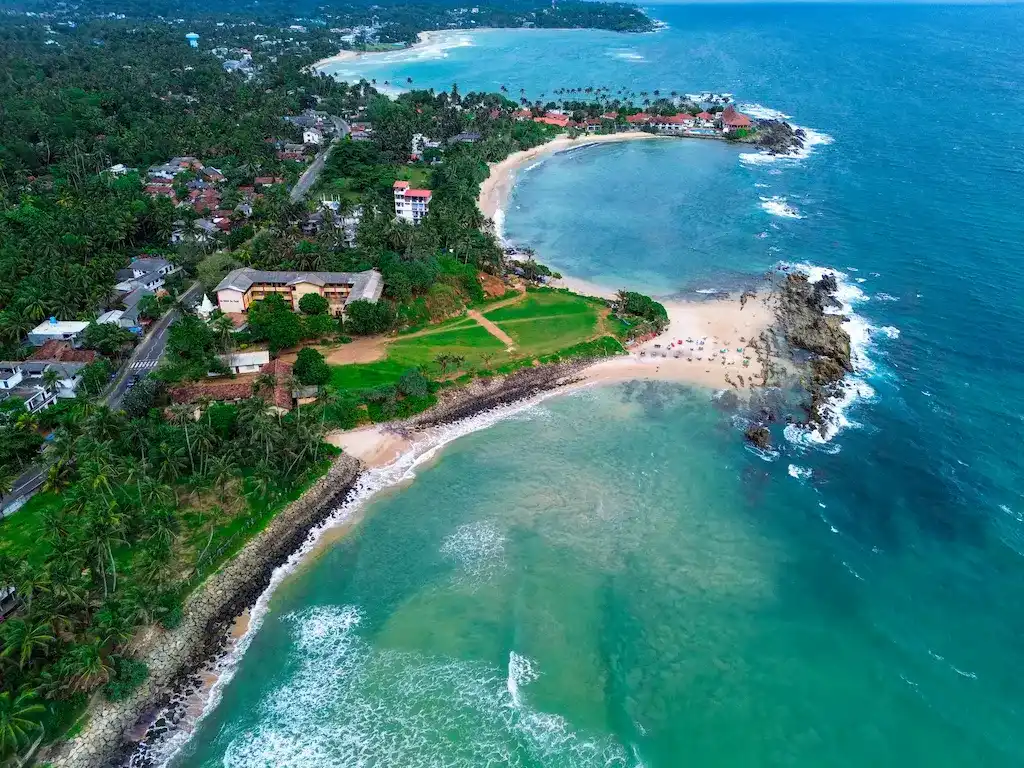
We packed our bags, loaded up our rented scooter, left Mirissa and drove down the south coast. It was liberating, but also frustrating sometimes. We had big expectations to set up our laptops in what everyone called the next big remote work hub – a bay we break down fully in our guide on whether Hiriketiya is worth visiting.
Being a Digital Nomad in Hiriketiya is not your standard desk setup. It is raw, sweaty, and often frustrating, but we loved it anyway. Our life as Digital Nomads in Sri Lanka changed completely going from Mirissa to Hiriketiya.
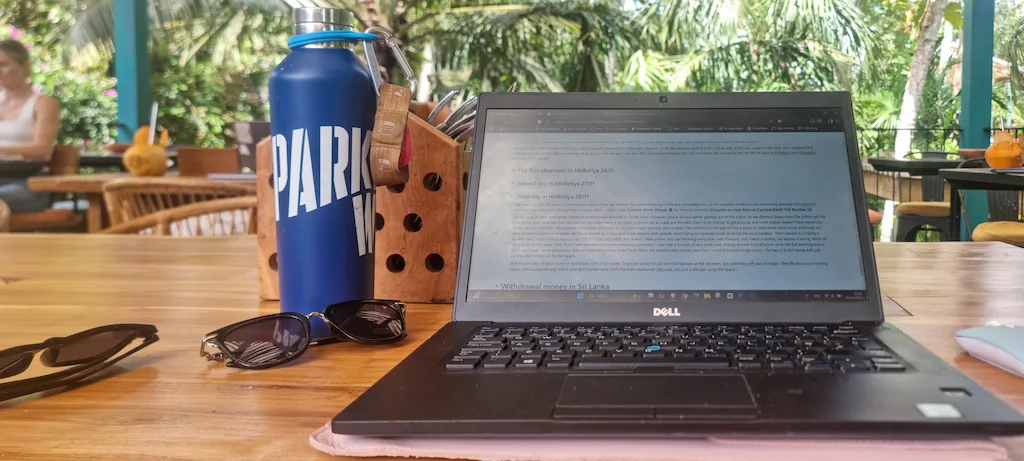
On our recent trip, in the overall 3 months in Sri Lanka, we spent our days balancing tight deadlines with surf breaks. While in Hiriketiya we tried to ignore the 30-degree heat, indulging in cheap yellow king coconut, and constantly hunting for a stable Wi-Fi connection in every coffee spot.
If you are thinking about moving your remote office to this horseshoe-shaped bay, we have some real talk for you. Our Hiriketiya digital nomads guide breaks down exactly what we spent, where we worked, and why the constant power outage and lack of stable internet almost made us pack up and leave early.
This post includes affiliate links. We may earn a small commission at no cost to you. You can also buy us a coffee to support the site directly. Learn more in our Cookie Policy.

👋Toti & Ale here
London couple, 45+ countries, 300+ guides. We are full-time content creators, travelling as slowmads, spending quality time in places we love the most. We run this and several other blogs from the best places in the world. We have been on the road for over three years, working from cafes across Southeast Asia. Sri Lanka tested our patience in entirely new ways, but it also gave us some of our best travel memories.
September 11, 2026 Update reflects the latest ground realities. We verified all daily scooter rental prices (still Rs 1,500) and updated cafe Wi-Fi realities based on our recent motorbike run down the south coast. We also added a reality check regarding the “coworking myth” that many influencers still push about this bay.
Is Hiriketiya good for digital nomads in 2026?
Let’s get straight to the biggest question: Can you work remotely from Hiriketiya?
Well, we did! But it wasn’t easy. As usual connection in Sri Lanka is the weakest we found in the last four years travelling. However, somehow, Hiriketiya, was the least problematic one as Digital nomads on the South Coast of Sri Lanka.
Definitely we had to adjust our expectations. Connection goes max up to 20 Mbps, heat, humidity and lack of co-working spaces with AC will make you slow down.
Before arriving to Hiriketiya, we were pumped by the claims that it was the “new Bali” for digital nomads. Well, it’s not, the infrastructure completely lags behind. We arrived expecting decent speeds, but our accommodation’s Wi-Fi dropped constantly, powercut are routine, cafes were unreliable, and the only places we had work done were actually Dot’s Bay and Slow Life Coliving.
Best time to visit Hiriketiya for remote work
Timing your trip to Sri Lanka matters more here than almost anywhere else we’ve worked from. November to April is high season: surf is consistent, cafes are full, and there is a recurring community coming back in these months. However, with the influx you’ll find that Wi-Fi gets stretched thin and prices creep up fast.
We came during shoulder season and had cafes to ourselves, cheaper guesthouses, and way faster internet on the same connections that choke in peak months.
The trade-off is a quieter social scene and a higher chance of rain disrupting power. If you need reliable Wi-Fi over vibes, aim for May to October.
Do You Need a Digital Nomad Visa for Sri Lanka?
We’ve been asking for updates for Digital Nomads Visa to Sri Lanka to local authorities since our first land in the country in 2019. Well, glad in 2026 is reality, but is shockingly so different compared to other visas you’ll find elsewhere.
We were in Sri Lanka with a regular visa. First of all because didn’t expect to spend three months there, but secondly, because simply there was no other way. No body seems to bother if you do so.
The new regulated Digital Nomad Visa in Sri Lanka costs $500 per year, only assure 12 months and you must prove a foreign remote income of at least $2000 per month.
Still, you can’t work for local business. Also the requirement got deeper, asking for the last three months background check with clean police records. Besides that you must also have a valid health insurance valid for Sri Lanka. Which by the way is perfect with safetywing.
Entering with a local visa is fine, as far you don’t break the law. We extended ours after the first month in Sri Lanka. It was painful as bureaucracy is slow, is expensive and tedious, but works fine for about three months. There’s no income proof requirement tied to remote work specifically, so don’t stress about “qualifying.” Just treat it like any other tourist extension.
Pros and cons: What the Instagram reels conveniently crop out
Honestly, as much as we think about Hiriketiya, we found the perfect balance working from here. The pros outrank and by far the cons. There is a small community building up here, the vibes are there, perhaps not yet shaped.
The biggest con is the slow, painful upload speed. Some cafes are nicer, and ready for digital nomads more than others, but within a week you’ll get your favourite spot easily.
Before coming here, our friends told us about Hiriketiya, and it truly stands out from what social media tries to sell you. The bay was our tropical, flawless office for nearly two weeks. Even though the struggles are real – lack of stable internet, constant power cuts and the whole town that turns into a giant muddy pool, when it rains a bit more.
We built this comparison chart based on our firsthand experience living here, so you know exactly what you are getting into.
| 🟢 The Good (Pros) | 🔴 The Bad (Cons) |
| Incredible surf breaks just steps from your laptop. | Painfully slow upload speeds (terrible for video editors). |
| Intimate, walkable bay—no scooter needed unless leaving town. | Unpredictable power cuts without generator backups. |
| Fast community building; easy to make friends on day one. | Aggressive mosquitoes require constant citronella use. |
| Beautiful, raw jungle aesthetics. | Very few truly ergonomic chairs for deep work. |
Are there actual Coworking spaces in Hiriketiya?
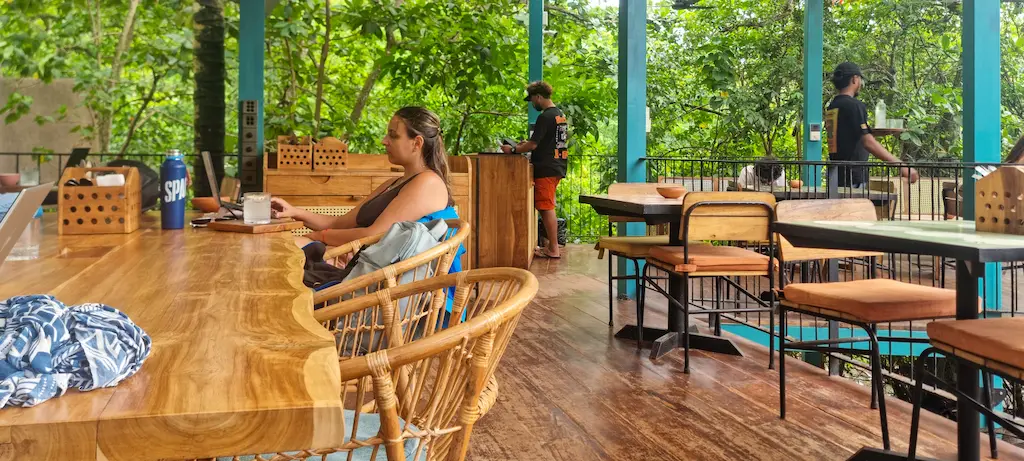
While we were already burned out by the high fees at Outpost in Weligama (it costs more than a Bali coworking day pass), we gave Hiriketiya a shot. However, dedicated, climate-controlled coworking spaces do not exist here yet. You will work from open-air cafes and fight the humidity. Some cafes have AC, but it was too strong for us to handle, even wearing a jumper.
Here’s exactly what we found, tested with our own devices.
| Space | Wi-Fi speed | Day pass | Monthly | AC |
|---|---|---|---|---|
| Dots Bay House | 20–30 Mbps download (shared cafe Wi-Fi) | No formal pass — buy coffee to hold a desk | Not offered | No (fans only) |
| Slow Life Nomadico | Reliable, rarely dropped for us | Free coworking Thursdays; otherwise cafe purchase | Ask on-site | Yes, comfortable |
Many guides online aren’t update and list Verse Collective, Clics Coliving and Coworking – but these spaces as 2026 are closed and you can check easily on google map.
The only space that truly exceeded our expectations was our weekly free coworking at Nomdadico on Thursday. Wifi was perfect, a little community with lunch together and AC at the right level. We actually had so much work done there.
If you are interested in Hiriketiya, you should read these:
– How to get to Hiriketiya: Rental scooter, bus, train and tuk tuk
– Best cafes in Hiriketiya: Where we brunch, have work done and chill!
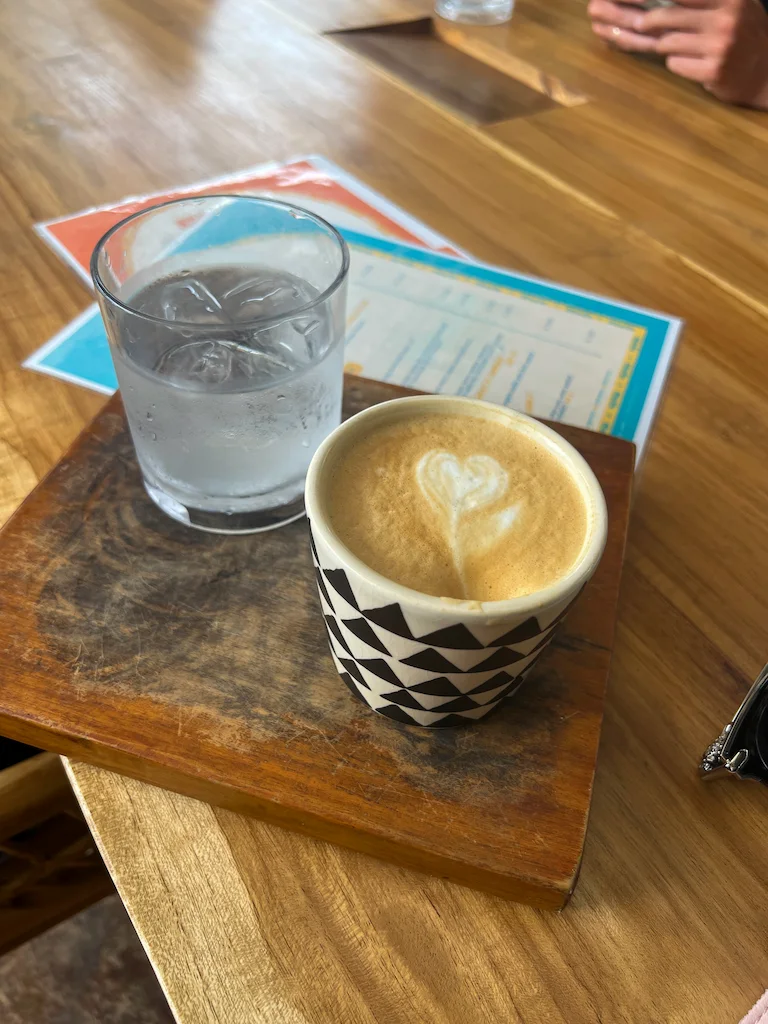
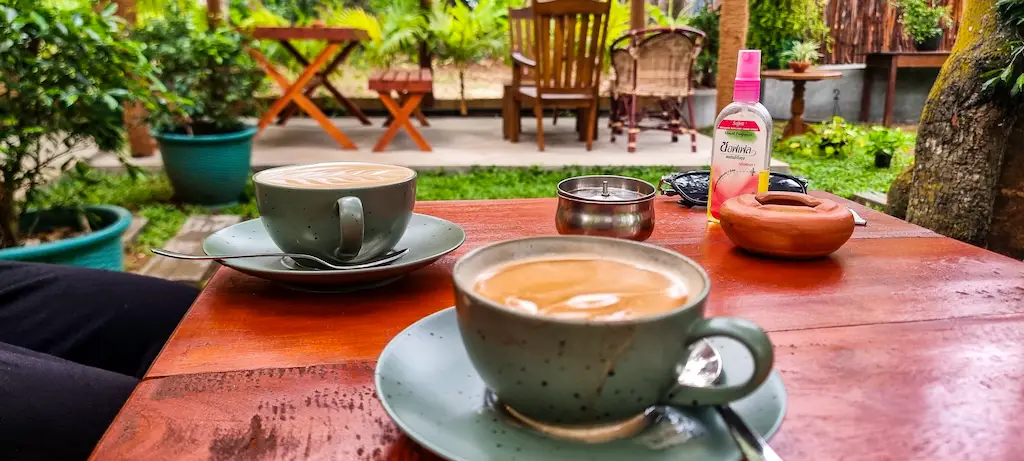
These two are where we got actual work done in Hiriketiya.
Dots Bay House has the social vibe and backup generator, but you’re paying in coffee, not cash, and the Wi-Fi maxes out fast if you’re uploading video.
Slow Life Nomadico is the quieter, more serious option — better seating, proper AC, and staff who don’t mind you camping out for hours, as long as you order enough to justify the seat.
We spent Rs 1,980 on coffees just to secure a decent desk for the morning at Dots Bay House . The vibe there is great, but the Wi-Fi usually maxes out around 20 to 30 Mbps on the download. If we had a heavy video to upload, we left the laptop running overnight using our mobile data.
We also found some solid alternative spots by driving our scooter around the bay. We had a great work session at Bunch, where our iced coffee cost Rs 1,800. Less productive, but still nice place for a couple of hours is Salt house. We’ve been working from the outside, near the pool. The fan weren’t enough to keep us longer.
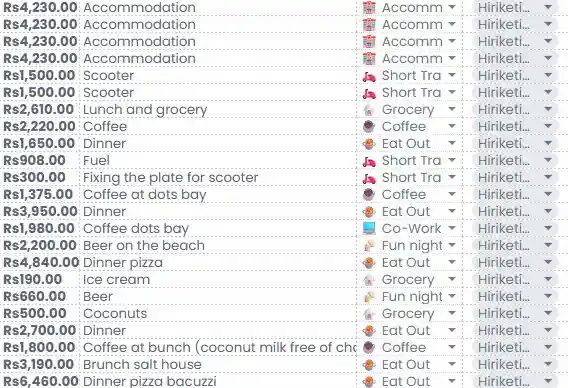
Cost of Living in Hiriketiya as Digital Nomads
Here’s the number every nomad actually wants before landing: what does a month in Hiriketiya really cost?
We tracked every rupee during our stay, so here’s the honest range, converted to USD at current rates (~335 LKR/USD)
| Budget level | Monthly cost (USD) | What you get |
|---|---|---|
| Budget | ~$600 | Shared guesthouse, fan only, local food, scooter, basic SIM |
| Mid-range | ~$900–950 | Private AC room, mixed local + cafe meals, regular coffee/coworking |
| Comfortable | ~$1,500+ | Nicer AC guesthouse, cafe meals most days, occasional Western dinners |
We landed squarely in mid-range, and honestly, that’s the sweet spot. Below that, you’re skipping the cafes that make Hiriketiya worth visiting; above it, you’re paying near-London prices for a beach town.
What We Actually Spent (Our Daily Transaction Log)
Numbers are nice, but receipts don’t lie. Here’s our real spending log from a typical day, so you know exactly what these budget bands are built on.
| Expense | Item | Cost (LKR) |
|---|---|---|
| Accommodation | Basic guesthouse room (per night) | Rs 4,230 |
| Transport | Daily scooter rental | Rs 1,500 |
| Coffee | Iced latte, Dots Bay House | Rs 1,375 |
| Dining (high) | Pizza dinner at Bacuzzi | Rs 6,460 |
| Dining (low) | Quick cheese roti lunch | Rs 1,500 |
We paid Rs 4,230/night for a basic AC room, right beside the main bay strip. But it was only when we already knew the area. By the way, that’s why we travel slowly, to know it better and find authenticity.
Before that, we stayed uphill; the accommodation was perfect with a garden, slightly cheaper, but the scooter was necessary for everything. In addition, you need to include the necessity of having a scooter, which costs on average Rs 1,500/day.
We rented in Weligama for about 2 months, cutting a good deal. Weligama is notoriously cheaper than Hiriketiya, and scooter rental in the bay can cost 20% more.
Where to stay: Dikwella vs Hiriketiya for remote work
Stay in Hiriketiya for surf and cafe access; choose neighbouring Dikwella for cheaper rent and uninterrupted sleep.
We stayed in two different accommodations in Hiriketiya, once up on the hills, and then within walking distance from the bay. We assure you, you’ll not get this wrong. Dickwella is a good alternative if you want some privacy and don’t mind being constantly on the scooter.
When we stayed in Hiriketiya, we loved it because we were in the centre of the action. Cafes and surfers gather here. We paid for a local guesthouse with AC and wifi connection, Rs 4,000 to Rs 4,230 a night.
To be fair, we were a bit worried about the night noises of bars, but Hiriketiya is pretty dead after 10 PM, not like Mirissa.
Dikwella is just the next bay over and offers a much quieter, local vibe. If you want uninterrupted sleep and cheaper rent, look for a guesthouse on the Dikwella side. You can easily hop on your scooter to commute between the two bays in less than five minutes.
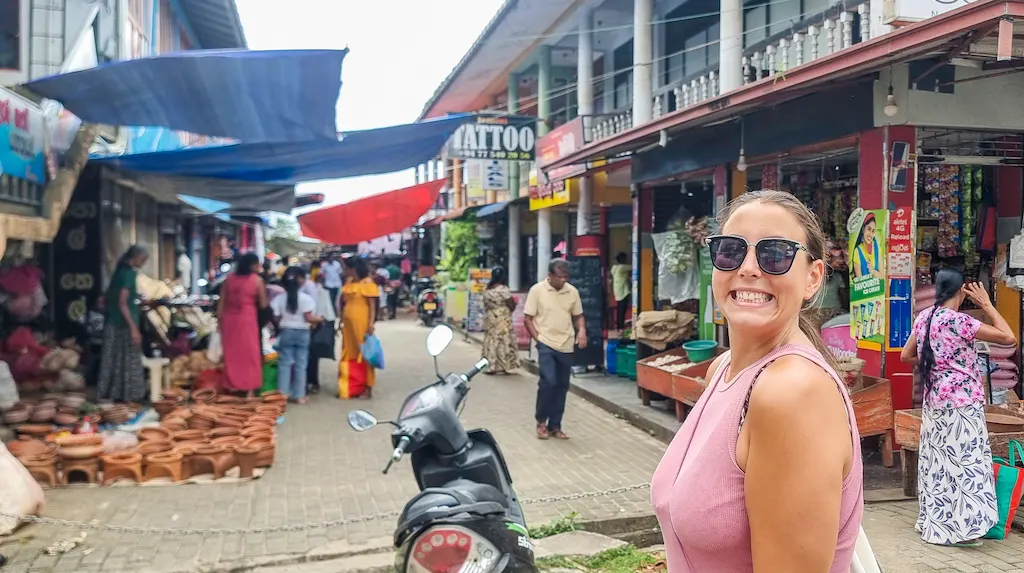
Our “Wallet Zone” hack: What actually saved us money
We travel slowly for many reasons, one of which is that you can actually save money, dealing with accommodation, rentals and knowing where to eat. Skip the Rs 3,000+ Western branches. Eat Rs 1,500 cheese roti and buy Rs 500 grocery runs to make your own snacks.
Trendy smoothie bowls every day will wreck your budget faster than anything else on this list — trust us, we learned that one the hard way.
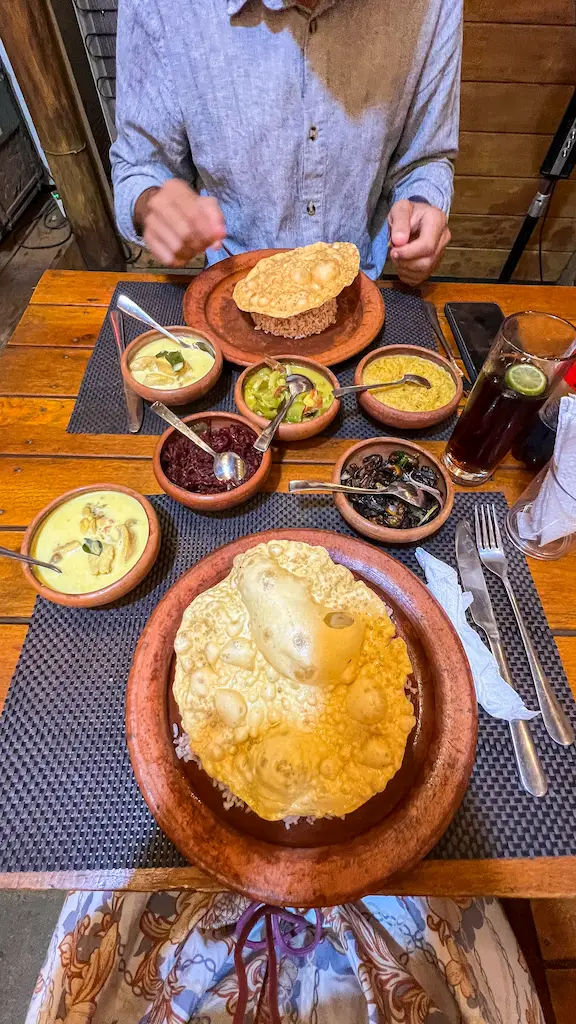
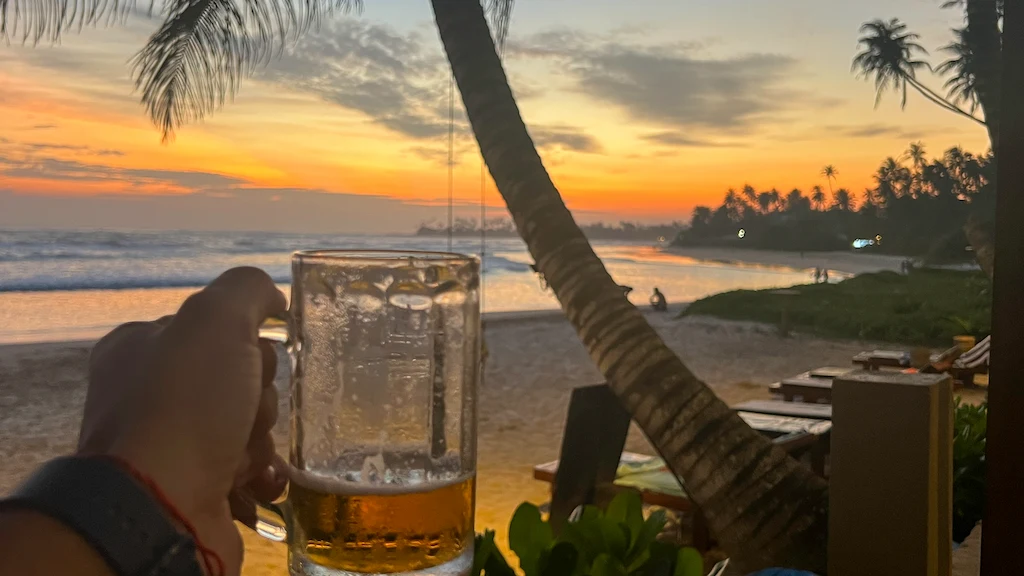
Where to eat without paying Western prices
The food scene in Hiriketiya ranges from cheap local eats to pricey western-style plates. We had good alternate days, with cheap local eats and a nice dinner by the beach.
However, it was hard to find food alternatives in Sri Lanka, but that’s a problem we faced everywhere, not just in Hiriketiya. If you want a fancy dinner, you will pay standard Western prices. We grabbed an epic seafood meal at Beach Bus for Rs 5,830 when we wanted to treat ourselves.
But when we wanted to save, we hit up the local joints. In between the shops, we were always able to find heavy local Kottu from a street-side cart for just a few dollars. Of course, these aren’t on Google Maps, and you need to go with the flow.
A quick lunch of cheese roti is the perfect fuel between work blocks. Grab a cheap coconut from a street vendor for just Rs. 150 and stick to simple rice and curry to keep your wallet happy. Read our other Sri Lanka travel tips for a deeper dive into the best local dishes.
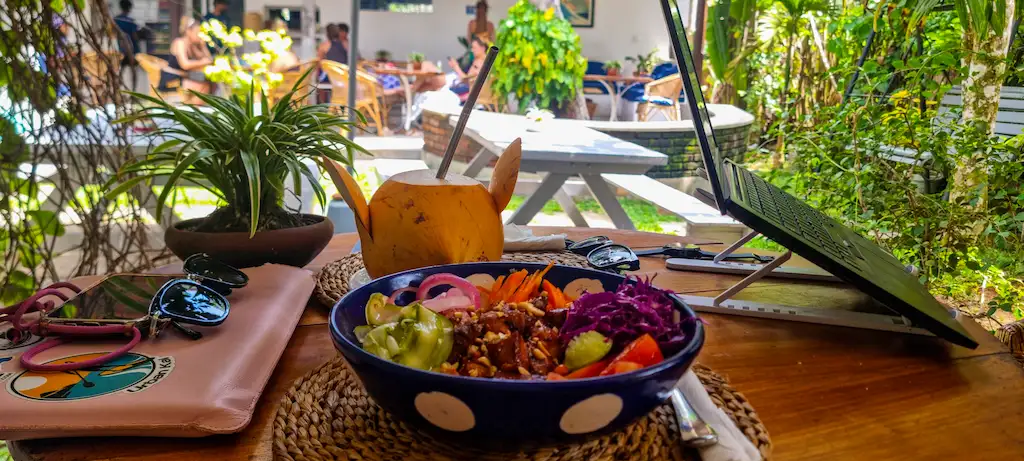
Data, transport and life admin in Hiriketiya
If you are thinking of Hiriketiya as your next digital Nomad base in Sri Lanka, this is information you’ll love to know.
We never adapted to the lack of a reliable internet connection. We were in the constant frustration of not loading stuff or slow load.
We quickly adapted to not to rely solely on hotel Wi-Fi. We installed an Airalo e-sim and it worked better than the local Dialog Sim card. We got a massive 125 GB local sim data and teetered connection regularly, but was never enough.
For more – Read things to do in Hiriketiya beyond the laptop
Transportation was a pain, until we rented our own scooter. The tuk-tuk mafia is real in Sri Lanka, and we’ve lost count of the number of times our PickMe drivers have been threatened by local tuk-tuk drivers.
We actually spoke to one PickMe driver who was visibly shaking, terrified to pick us up near the main junction because of the local tuk-tuk mafia. We then used the hack to treat him as our personal driver, getting his WhatsApp number and calling him out loud by name when approaching to arrange rides directly.
Surfing from Hiriketiya was fun, but we got problems with local schools while going solo. If you aren’t a pro, the space for beginners in the bay is limited. One beach away from the crowded bay filled with surf schools is Kudawella beach. Very unspoiled.
Rent a longboard there for 1,000 LKR per hour and have the waves all for yourself.
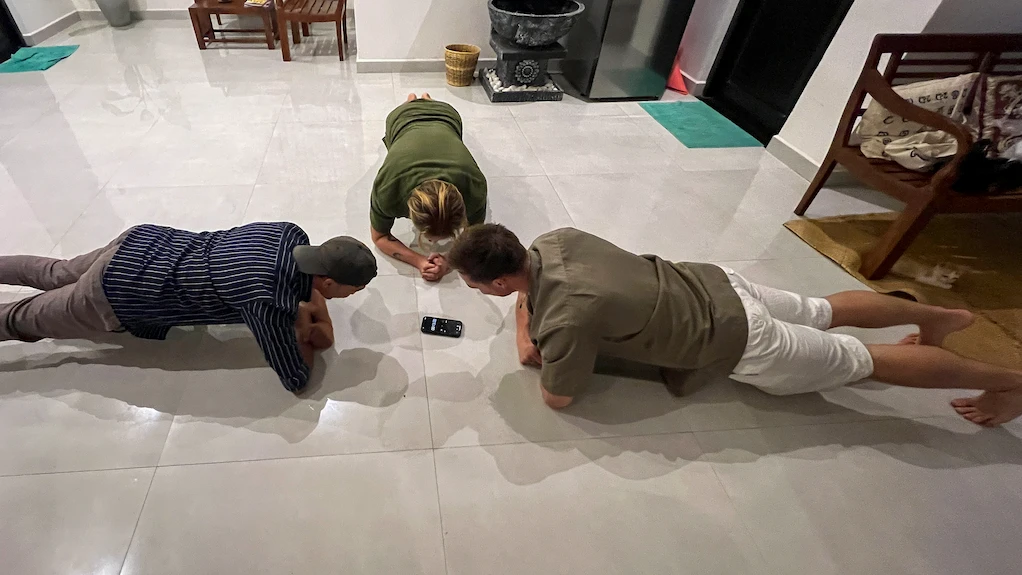
Hiriketiya Works for You If… (And You’ll Hate It If…)
Perfect for flexible creatives who surf; terrible for corporate workers needing 9-to-5 high-speed video calls.
If you love the slow, beachside lifestyle and don’t mind working in board shorts, you’ll thrive here — we know coders and programmers with flexible hours who close the laptop the second the connection drops and go for a swim, no stress attached.
But if your job depends on reliable Zoom calls or fast uploads, this bay will test your patience daily. Even Ale, uploading a single Instagram reel, once watched it crawl for two hours straight — cue the swearing. Come here for the lifestyle, not for deadlines that can’t slip.
The bay was our tropical, flawless office for nearly two weeks — if that sounds long, our guide on how many days to spend in Hiriketiya covers shorter stays too.

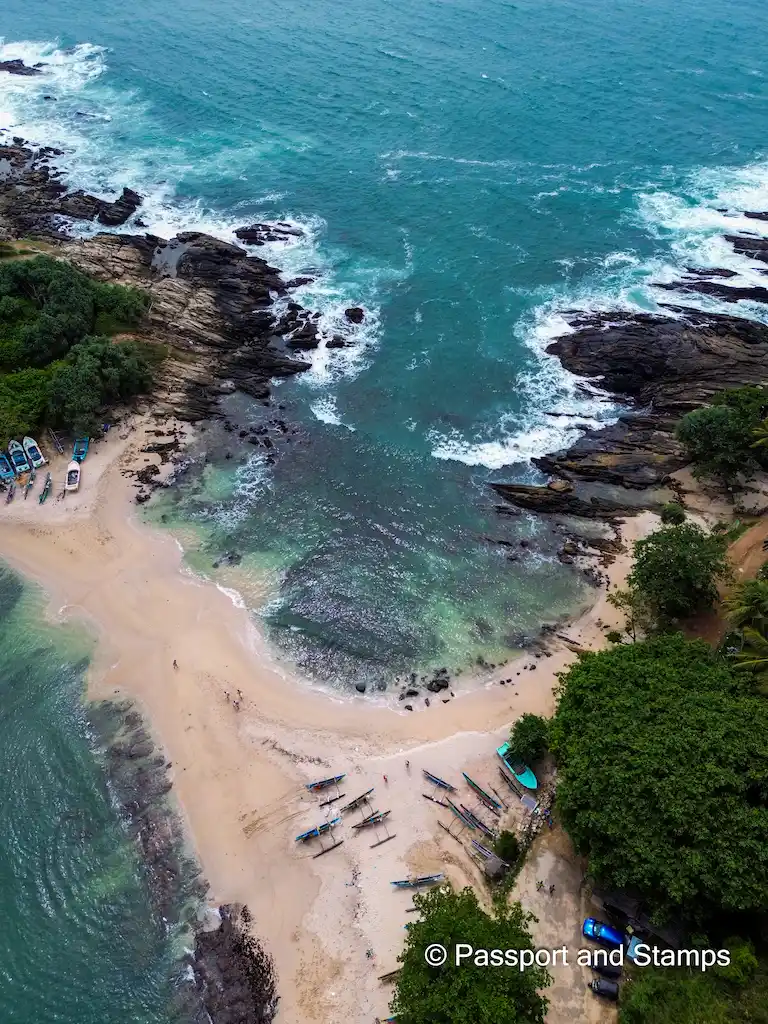
Finding your community in Hiriketiya
There isn’t a good digital nomad group on Facebook in Hiriketiya. The lack of a community and events is the major pain point we encountered.
Hiriketiya is small, so you can walk from one end of the bay to the other in ten minutes. This tight-knit geography makes it incredibly easy to find community, talk to strangers next to your table at Bunch, or find the people you’ve worked with at Nomadico Coworking space the other day and become friends. We swapped travel stories with surfers from the UK and remote workers from Poland just by sitting at shared tables.
Finding people you’ll hang out with in Hiriketiya if you are shy might be complicated. Facebook groups (like many other places in Sri Lanka) are flooded with locals offering their services. Definitely not digital nomads ready to hang out.
Staying safe in Hiriketiya
There are no big threats in Hiriketiya. However, the constant power cuts were causing some concern about my weak laptop battery failing. I am afraid of Dengue (as I had in Thailand 3 years ago), and so spray mosquito repellent like eau de parfum every five minutes.
Actually, we had a big threat, but at the beginning we laughed at staying in Hiriketiya. The devastating Cyclonic Storm Ditwah hit hard, and we had some floods. Because our accommodation was up on the hill, we felt nothing, apart from the cable connection being down for a whole week and strong winds.
Luckily, we always have our insurance, and they were in touch during the bad times in the bay. SafetyWing insurance literally covered our ass many times before, and we can’t travel without it. If you want to know more about them, check out the full review with pros and cons about Safetywing.
FAQ | Hiriketiya Digital Nomad Guide
Is there a coworking space in Hiriketiya?
Not in the polished, air-conditioned sense — that’s the myth we came here to bust. What you’ll find instead is cafes that tolerate laptops, like Dots Bay House, plus Slow Life Nomadico, which runs free weekly coworking on Thursdays with solid Wi-Fi and AC.
What’s the internet speed like in Hiriketiya?
Expect around 20–30 Mbps download on a good day, with regular power cuts and latency spikes. It’s workable, but bring a power bank and an e-SIM (we used Airalo) as backup — you will drop a Zoom call eventually.
Is Hiriketiya safe?
Yes, there are no major threats. Our real concerns were mosquitoes (dengue risk) and our laptop battery during power cuts, plus the occasional cyclone — Storm Ditwah knocked out our cable connection for a week.
Hiriketiya or Dikwella — where should I stay?
Stay in Hiriketiya for surf and cafe access right on your doorstep. Choose Dikwella, the next bay over, for cheaper rent and uninterrupted sleep — it’s a five-minute scooter ride between the two.
Do I need a visa to work remotely from Sri Lanka?
Yes — Sri Lanka launched a dedicated Digital Nomad Visa in February 2026, requiring $2,000/month income proof and a $500 annual fee. Most short-stay nomads (like use too) still enter on a standard 30-day ETA, extendable up to 270 days, since the DNV’s income and paperwork requirements are steep for shorter trips.
How much does it cost to live in Hiriketiya as a digital nomad?
Budget around $600/month for a bare-bones setup, $900–950 for mid-range comfort (our sweet spot), or $1,500+ if you want cafe meals daily and a nicer AC room.