
Is Sri Lanka Better Than Bali or Thailand for Digital Nomads?

We spent three months living and working across Sri Lanka in 2026, from Hiriketiya and Weligama to Mirissa, Ahangama and Ella. This honest digital nomad guide covers real costs, WiFi, coworking, lifestyle trade-offs and whether Sri Lanka beats Bali or Thailand.
We spent three months living and working across Sri Lanka on our third visit to the country. We ran our travel blog, managed our marketing business and tried to answer one question properly: can Sri Lanka genuinely compete with Bali, Thailand and Vietnam as a digital nomad destination?
The short answer is yes, but not in the way you might expect.
Sri Lanka is not easier than Thailand. It is not cheaper than Bali. It does not have Bangkok’s infrastructure, and the Wi-Fi tested our patience almost every day.
But it is quieter, less crowded and packed with more variety than most places we have lived as digital nomads. We could work beside the beach, ride a scooter into the countryside, visit a tea plantation, go on safari or reach Ella within a few hours.
After three months, we left Sri Lanka with mixed feelings. We loved the lifestyle, but we also had plenty of moments asking ourselves why we had chosen a country where even opening a website could sometimes become a battle.
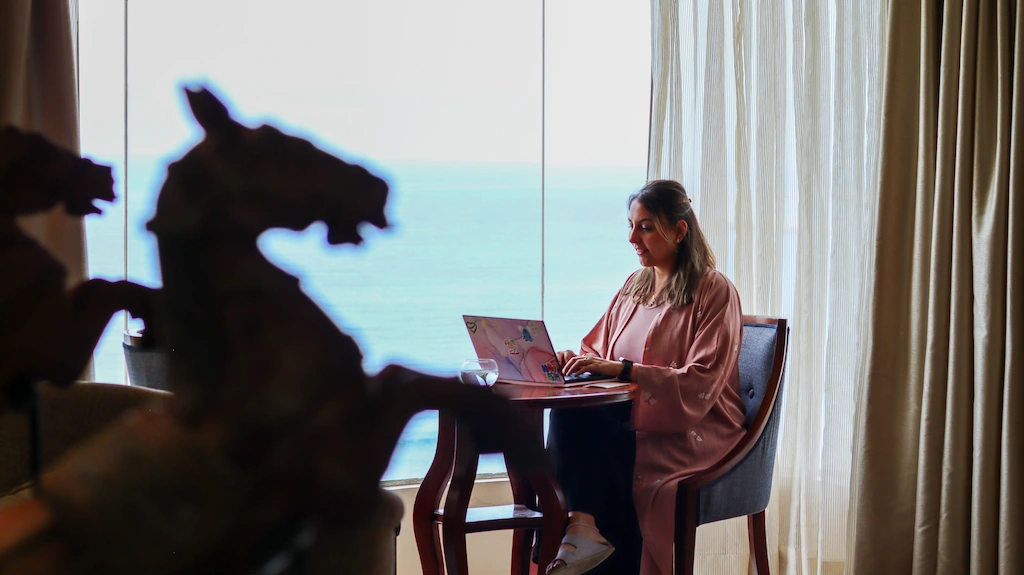
Why we chose Sri Lanka
We had already spent serious time travelling through Sri Lanka across two visits, but never for longer than 10 days, and definitely never using our laptops to carry out work and stick to a routine.
We have our fair share of experience working remotely through Thailand, Bali, and Vietnam, among others. Bangkok became one of our highest standards in Southeast Asia because everything works: fast internet, excellent cafés, easy transport, food delivery, and plenty of comfortable places to work.
At the same time, Bali was becoming more expensive, more crowded and more heavily built around Instagram tourism. We wanted somewhere with fewer tourists, less traffic and more natural space, but without giving up every basic part of remote work.
Sri Lanka seemed to fit that gap.
It was still rough around the edges, but that was part of the appeal. The island offered beaches, safaris, hikes, tea plantations, historic cities and cooler mountain areas without forcing us to spend days travelling between them.
Our spreadsheet recorded Rs756,886 in total tracked spending, with an average daily spend of Rs10,228.19, although that included accommodation, transport, cafés, activities and plenty of eating out.
Sri Lanka for Digital Nomads: At a Glance
| Visa | Digital Nomad Visa, $500 fee, $2,000/month income minimum, 12 months (renewable) |
| Best time to go | December to March (driest, coolest on south coast); avoid Oct–Nov monsoon on the south/west coast |
| Best bases for nomads | Hiriketiya, Weligama (most reliable), Ella (surprisingly solid), Ahangama (emerging) |
| Avoid as a long-term base | Colombo (traffic, heat, pollution outweigh short-term convenience) |
| Internet reliability | Inconsistent — carry an eSIM + Dialog backup; video calls are the biggest risk |
| Monthly budget (couple) | Approx. $840 / £655 (excludes flights) |
| Monthly budget (solo, estimate) | Approx. $500–650 / £390–510 |
| Vs Bali | Quieter, less developed, less community — but far less crowded and cheaper on activities |
| Vs Thailand | Thailand wins on infrastructure; Sri Lanka wins on variety and adventure |
| Who it suits | Experienced nomads comfortable with unreliable Wi-Fi and fewer community hubs |
| Who should skip it | Anyone needing daily video calls, fast uploads, or a large ready-made nomad scene |
Sri Lanka Digital Nomad Visa: The Real Numbers (2026)
Sri Lanka officially launched its Digital Nomad Visa in February 2026, run through the Department of Immigration and Emigration’s Residence Visa Division. Here’s what it actually requires, since we’ve seen a few blogs circulating outdated or incorrect figures:
- Minimum income: $2,000 USD/month (rising by $500 for each dependant beyond two)
- Application fee: $500 USD per applicant, paid during the online application
- Duration: Issued for 12 months, renewable annually — after year one, you’ll need proof of Sri Lankan tax registration to renew
- Requirements: Proof of income, health insurance, suitable accommodation for your stay, a clean criminal record, and no local political or disruptive activity
- What it allows: Opening a personal bank account, enrolling dependent children in local international or private schools, and joining co-working spaces and tourism events run by government or private partners
- What it doesn’t allow: Any local employment — this visa is strictly for remote work serving clients or employers based outside Sri Lanka
You apply directly through the Department of Immigration and Emigration online portal; approval is endorsed onto your passport. If your income, employer, or dependants change after approval, you’re required to notify the department within 30 days.
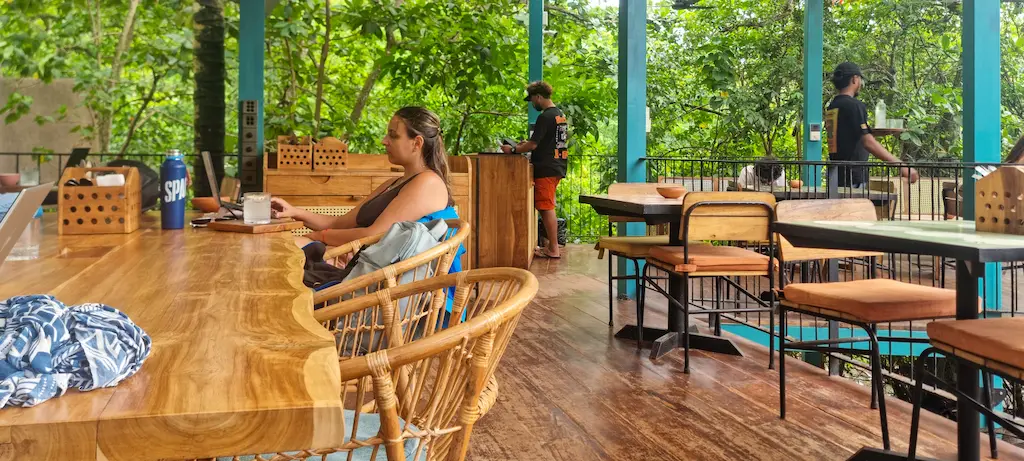
Living in Sri Lanka as digital nomads
We worked remotely throughout the entire three-month stay. Our days included writing articles, managing the website, editing videos, uploading Instagram content and running marketing work for clients.
We spent most of our time on the south coast, moving between Hiriketiya, Weligama, Mirissa and Ahangama. We also worked from Ella and tried Colombo, although we quickly decided that Colombo was not the right long-term base for us.
Colombo is interesting for a few days. We enjoyed exploring Pettah Market, Gangaramaya Temple, Seema Malaka and the waterfront, but the traffic, heat and pollution made working there much harder. After seeing the main sights, we would rather head south.
The south coast gave us more freedom. We could work in the morning, jump on a scooter and be surrounded by palms, beaches, jungle or countryside shortly afterwards.
That balance is what kept us in Sri Lanka. We did not love every part of the working experience, but we loved what happened when we closed the laptop.
Our 3-Month Spend, Converted (Couple, Combined)
Figures below convert our tracked LKR spend at approximate 2026 exchange rates (~300 LKR/USD, ~385 LKR/GBP). These reflect spend for two people over three months — halve roughly for a solo nomad estimate, though solo travellers typically pay a bit more per person for accommodation.
| Category | LKR (3 months) | USD | GBP |
|---|---|---|---|
| Accommodation | 248,016 | $827 | £644 |
| Eating out | 217,702 | $726 | £565 |
| Short transport | 90,437 | $301 | £235 |
| Coffee | 69,028 | $230 | £179 |
| Groceries | 58,973 | $197 | £153 |
| Coworking | 13,070 | $44 | £34 |
| SIM card | 1,399 | $5 | £4 |
| Total (3 months) | 756,886 | $2,523 | £1,966 |
| Average per month | 252,295 | $841 | £655 |
| Average per day | 10,228 | $34 | £27 |
For comparison, a solo digital nomad budgeting carefully could expect to spend roughly $500–650 (£390–510) per month on the south coast, excluding coworking splurges — noticeably above Bali or Vietnam, but still well below Western living costs.
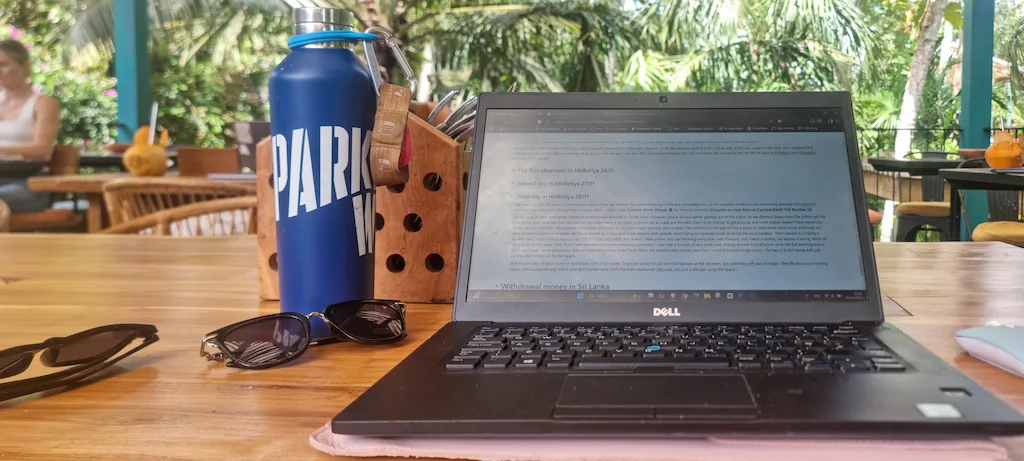
Internet isn’t the fastest and definitely not stable!
Let us get straight to the biggest problem: Sri Lanka digital nomad internet can be extremely frustrating.
During our first month, we seriously questioned why we had chosen Sri Lanka. We struggled with website loading, video uploads and video calls, even when staying in places that advertised Wi-Fi as a major feature.
We relied heavily on an eSIM and Dialog backup. Dialog is one of the biggest providers in Sri Lanka, but even its most powerful package did not completely solve the problem. Some days the connection was usable; on others, uploading a video felt like a full afternoon project.
Video calls were especially difficult. If your work depends on constant meetings, live presentations or large file transfers, you need a backup plan before arriving.
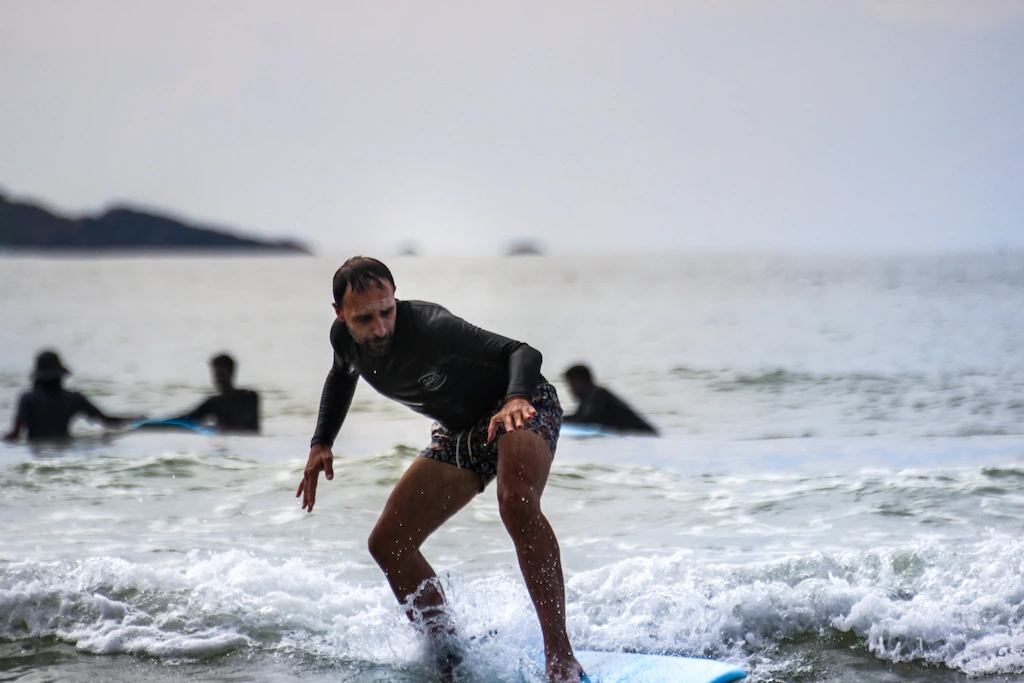
The situation improved in Hiriketiya and Weligama. Those were our best locations for reliable internet, laptop-friendly cafés and work-friendly spaces. Ella was also better than expected because our accommodation had good internet, although it was not perfect.
Power cuts happened, but they were never long enough to stop us working completely. Some places had generators, including Dots Bay House in Hiriketiya, which meant we could continue working when the electricity went off.
- Our favourite digital nomad bases in Sri Lanka
- Hiriketiya
- Weligama
- Mirissa
- Ahangama
Hiriketiya
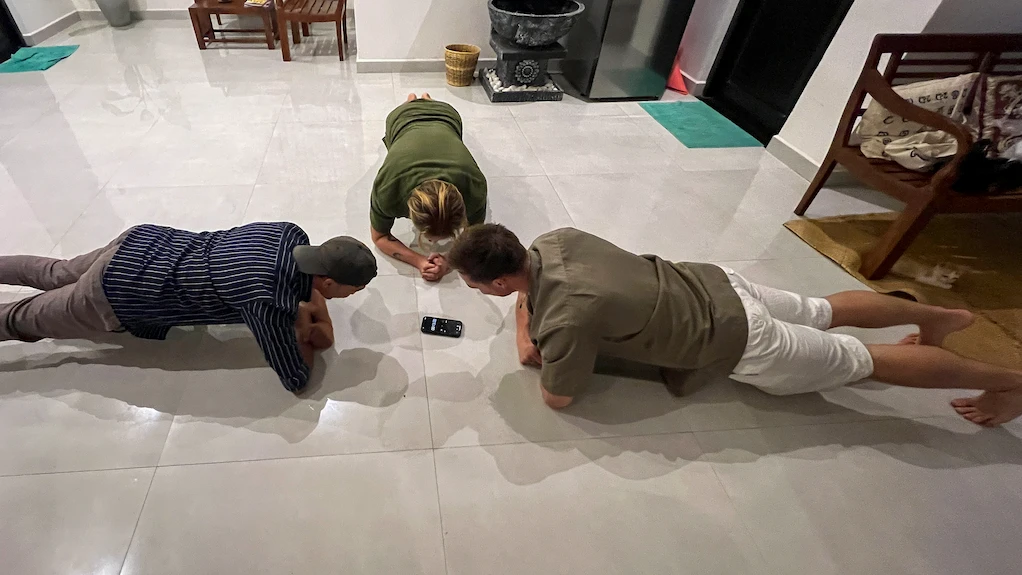
Hiriketiya was our favourite place to work in Sri Lanka. It was not only about the cafés. The Wi-Fi was more reliable, the cafés were more laptop-friendly, and the atmosphere attracted backpackers and digital nomads naturally.
There was only one coworking space operating when we stayed there. The other two spaces we kept seeing listed online were closed, so always check recent reviews before planning your stay around a coworking space.
We also liked the social side of Hiriketiya. It felt easygoing, lively and international without feeling as busy as Bali. After a short spell in Tangalle, we returned to Hiriketiya for another week because we enjoyed it so much.
Dots Bay House was particularly useful because it had a rooftop restaurant and café, plus an events floor that also worked as a casual workspace. It hosted live music, DJ sets, readings and other events, so it became one of the easiest places to meet people.
Weligama
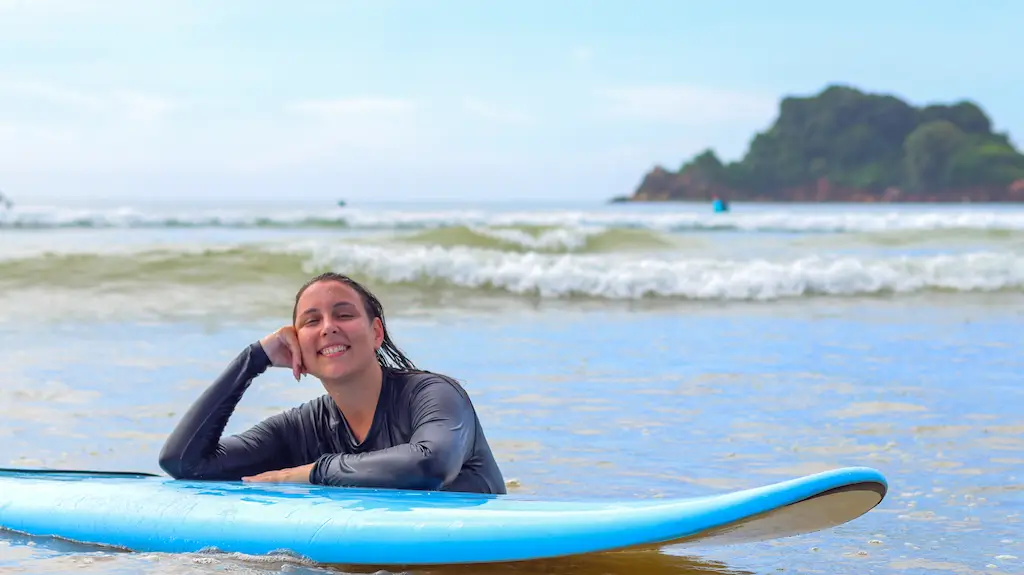
Weligama was more relaxed and much bigger than Hiriketiya.
We enjoyed using our scooter to explore the area, visit the beach and travel easily towards Mirissa. The drive between Weligama and Mirissa took around 15 minutes, even in heavy rain.
Weligama also had a strong social atmosphere. Hangten Rooftop is part of the hostel, but it was the most brilliant venue we came across in Sri Lanka. It easily became our central meeting point, with food, coffee, live music, DJ nights and occasional events. We used its middle floor as a coworking space because the Wi-Fi was extremely fast by Sri Lankan standards.
The downside was price. The coworking space we used in Weligama cost almost three times what we were used to paying for a comparable space in Bali.
Mirissa
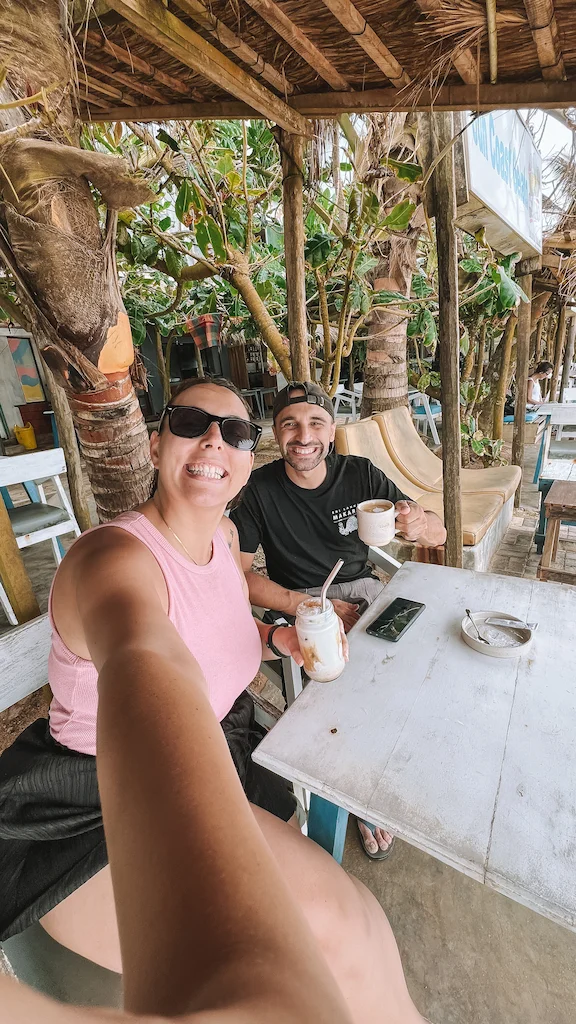
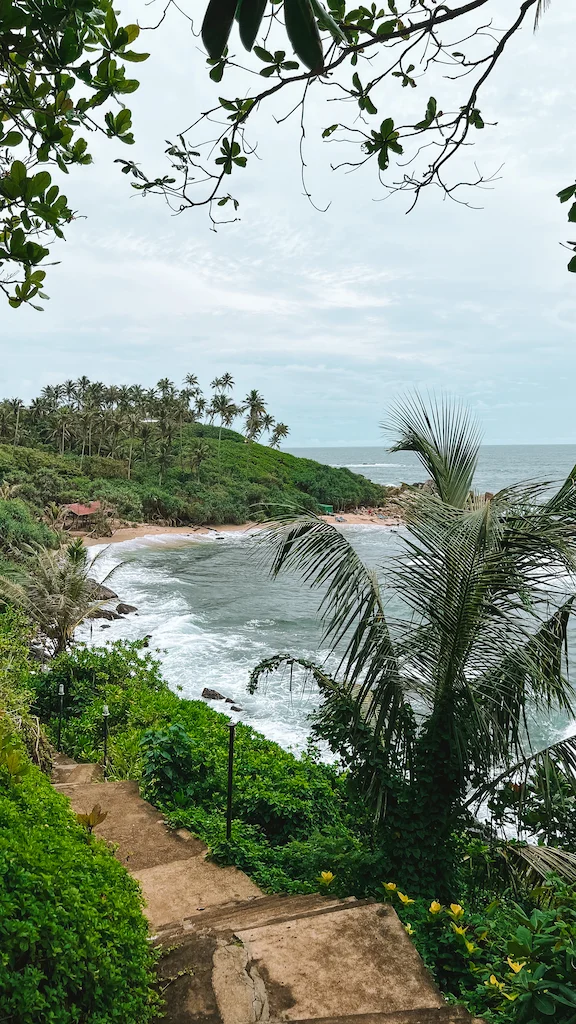
We spent around three or four weeks in Mirissa, and it gave us some of our best coastal moments.
There were plenty of cafés, and it was easy to move between Mirissa, Weligama and the surrounding beaches. However, we did not enjoy working from Mirissa’s cafés as much as we expected.
The bigger problem was the weather. November brought heavy rain, and Mirissa was one of the places where we felt it most. The rain did not completely disrupt our work because we had an apartment with a kitchen and indoor workspace, but it did affect day trips and outdoor plans.
Mirissa is still a good base if you want beach life, restaurants and easy scooter trips. We would simply choose our accommodation carefully and avoid relying on café Wi-Fi alone.
Ahangama
Ahangama is the place we think could become one of Sri Lanka’s best digital nomad bases.
It is still developing, with plenty of construction behind the main road, but it has attractive cafés, a growing food scene and a more polished feel than some other south-coast towns. It is also easier to reach from Galle.
Ahangama currently feels like Sri Lanka’s version of “the next Bali”, but we hope it keeps some of its character. If development continues at the current pace, it may eventually become more expensive and more crowded than the places we loved most.
Sri Lanka digital nomad cost of living
Sri Lanka is not automatically cheap for digital nomads.
Accommodation was often more expensive than Bali, Thailand or Vietnam, especially when we wanted a private apartment, a kitchen, reliable Wi-Fi and a comfortable place to work. We regularly felt that Sri Lankan accommodation offered lower standards for the same price.
Eating out was also more expensive than we expected. Thailand and Bali have a much stronger culture of eating outside, so cheap street food and local restaurants are easier to find everywhere. Sri Lanka has affordable local food, but the price rises quickly when you want Western meals, cafés or nicer restaurants.
Coworking was another surprise. We found that Outpost Weligama coworking space, the same one we use in Bali, actually charges three times the price we were used to paying here, without drinks, coffee, or complimentary activities. That made it difficult to justify coworking as a regular monthly expense.
Our tracked expenses included:
- Accommodation: Rs 248,016.
- Eating out: Rs 217,702.
- Short transport: Rs 90,437.
- Coffee: Rs 69,028.
- Groceries: Rs 58,973.
- Coworking: Rs13,070.
- SIM card: Rs1,399.
These figures relate to our tracked trip and lifestyle as a travelling couple. They are not a fixed monthly budget, but they show where the money actually went.
Sri Lanka versus Bali and Thailand
Sri Lanka vs Bali digital nomad
The Sri Lanka vs Bali digital nomad debate is really a choice between convenience and atmosphere.
Bali is easier. It has more coworking spaces, more coliving options, better-established remote-work communities and a wider choice of cafés designed for laptops.
Sri Lanka is quieter. There are fewer scooters, fewer tourists and much less traffic in the places we stayed. We also had far quicker access to wildlife, beaches and rural landscapes.
Bali is better if you want a smooth nomad routine. Sri Lanka is better if you want adventure outside working hours and do not mind solving problems as they appear.
For us, the only place we would prefer over Sri Lanka for a similar lifestyle is Lombok in Indonesia. Lombok gives us the quieter island feeling we like, while still offering some of the infrastructure and lifestyle benefits associated with Bali.
Sri Lanka vs Thailand digital nomad
Thailand remains stronger for remote work.
Bangkok is still our benchmark in Southeast Asia because the internet, transport, cafés, apartments and food delivery are so reliable. You can build a routine quickly, and you rarely need to think about whether your next video call will work.
Sri Lanka is more varied and more adventurous, but the infrastructure falls behind. We had to plan around Wi-Fi, carry backup data and accept that some days would not run smoothly.
We would also choose Koh Lanta over many parts of Sri Lanka for a relaxed island base. Koh Lanta offers a slower atmosphere but still feels easier for digital nomads.
If your work comes first, choose Thailand. If your lifestyle outside work matters more, Sri Lanka becomes much more tempting.
Is Sri Lanka worth it for digital nomads?
Yes, but we would not recommend it to everyone.
Sri Lanka is best for experienced digital nomads who can work independently, carry backup data and tolerate unreliable infrastructure. It is not ideal for someone who needs constant video calls, fast uploads and a large professional nomad community.
We met other remote workers mainly through co-living spaces. Outside those spaces, meeting digital nomads was surprisingly difficult because most people we encountered were backpackers, short-term travellers or luxury travellers. Some of the longer-term people we met were already starting local businesses, such as cafés, restaurants, Airbnb properties or other projects.
The new digital nomad visa in Sri Lanka makes longer stays more realistic in 2026, but to be honest, we don’t believe that the current program reflects what Digital Nomads really need. One year in Sri Lanka as a digital nomad is a big commitment, with infrastructure that isn’t reliable for the long term.
Even so, Sri Lanka is one of the most exciting digital nomad destinations in Asia if you are experienced enough to handle its weaknesses.
We had to fight with the internet, pay more than expected for accommodation and accept that coworking was not always good value. But we also had three months of beaches, safaris, tea plantations, hikes, rainstorms, scooter rides and incredible freedom.
If we returned tomorrow, we would start in Hiriketiya or Weligama, use Mirissa for a slower coastal stay, and keep Ahangama on our radar for the future. Sri Lanka is not Bangkok. It is not Bali. That is precisely why we loved it.
Ready to Start Your Sri Lankan Adventure?
Closing your laptop to catch a sunset surf in Weligama or riding a scooter through palm-fringed backroads is a feeling that’s hard to beat. Sri Lanka isn’t the easiest remote work destination, but if you’re willing to embrace the occasional Wi-Fi challenge for a life packed with safaris, tea plantations, and genuine warmth, it might just steal your heart.
