Backpacking in Morocco as a couple: Budget, Routes & Essential Tips (2026 Updated!)

Backpacking Morocco isn’t like Southeast Asia—it’s dustier, louder, and more expensive. We spent 6 weeks on the road, from the Atlas Mountains to the coast. Here’s our route, what we packed (bring a hoodie!), and why buses beat trains for budget travelers.
We went backpacking in Morocco full of expectation. Travelled around the country for 40 days, passing through chilled coastal hangouts on the Atlantic Ocean, chaotic cities, quiet mountains and endless desert dunes.
Taking a cheap flight from London, we were in the resort town of Agadir. We were ready to explore one of the most beautiful, budget-friendly, and warm countries a stone’s throw from Europe.
We’ll take you through our route, budget, where we stayed, what we loved (and the bits we could’ve skipped), plus some couple-specific tips we learned along the way.
This guide to Morocco for backpackers will help you plan the trip, choose the right itinerary, make the right turns and book the best places to stay. We analyse it as a travel couple backpacking in Morocco, with tips for solo travellers too.


👋Toti & Ale here
London couple, 45+ countries, 300+ guides. We are full-time content creators, travelling as slowmads, spending quality time in places we love the most. We run this and several other blogs from the best places in the world. This guide is all about living out of our backpacks. We navigated CTM buses, stayed in coliving hostels, and washed our clothes in riad sinks. We learned the hard way that “winter” in the desert is freezing and that hospitality is Morocco’s best currency.
May 10, 2026 This guide is all about living out of our backpacks. We navigated CTM buses, stayed in coliving hostels, and washed our clothes in riad sinks. We learned the hard way that “winter” in the desert is freezing and that hospitality is Morocco’s best currency.
Is Morocco a backpacker’s destination?
Yes, Morocco has been a backpacker destination for a very long time. As much as the Banana pancake trail in Southeast Asia, backpackers have been going through the Atlantic Coast on the Bedouin route to the Sahara.
You must understand that Morocco is very easy to reach from mainland Europe, in just 3 to 4 hours’ flight. Life is cheap compared to the old continent, and most European (and UK, yes we’re covered) passports allow long stays up to 3 months.
Morocco itineraries for backpackers
After 40 days in Morocco, travelling all around on the backpackers and digital nomads routes, we know where to go. That’s why we have crafted five easy to follow itineraries for backpackers in Morocco:
- Morocco backpacking 10 days
- 2 weeks in Morocco backpacking
- One month backpacking itinerary in Morocco
- Backpacking only major hotspots
- Our Couple-Friendly Morocco Route
This post includes affiliate links. We may earn a small commission at no cost to you. You can also buy us a coffee to support the site directly. Learn more in our Cookie Policy.
☕ Buy us a coffee!
Our travel guides are free and made with love to help you explore more, spend less, and travel better. If you’ve found them useful, you can buy us a coffee to keep the adventures going and support more content like this. Cheers!! ☕🌍

10 Days Morocco Itinerary for Backpackers
Experience Morocco’s essential highlights in just 10 days. It might be rushed, but the transport network is easy, allowing you to cover a lot in such a short time. We suggest starting in Marrakech for two nights—explore Jemaa el-Fnaa, souks, and try authentic tagine.
Journey east to the Atlas Mountains (Imlil or Ait Ben Haddou) for hiking and Berber village stays. The biggest city here is Ourzazate, a good place to base yourself for a day trip exploring. Then the loop will take you to Merzouga for a desert adventure: camel trek and overnight in a Sahara camp.
Most of the backpackers then embrace an 8 to 9-hour overnight bus to Fez, the Royal City. Fez is unmissable in any itinerary of Morocco, so make sure you don’t skip it. Spend two days, then move over.
Visit Chefchaouen—the “Blue City”—for stunning views, hikes and more village vibes. We did travel to Tetouan, but most of the travellers prefer Tangier, on the same coast.
The choice is yours; we preferred a quieter city than a touristy one. Use CTM and Supratours buses; for accommodation, budget hostels are the deal, and riads in small cities are still affordable. This circuit will give a complete overview of Morocco, but it is exhausting. Heat and distances will drain your energy.
2 Weeks Backpacking in Morocco Itinerary
Within two weeks, expand the adventure. Kick off in Marrakech, then slow travel through Essaouira and Taghazout for surfing and coastal vibes. Return to Marrakech (just 3 hours by bus from Essaouira – Read our guide about that) and depart to explore inland Morocco. This was the most impressive part of our trip. We stayed in the Anti-Atlas for hiking and quiet landscapes.
Then continue your trip to visit Ain Ben Haiddou, Ourzazate (mid-point to the desert). Staying one night in the desert of Merzouga, sunrise and sunset over the dunes are hard to forget. The next stops are Fez and Meknes. Here you will find traditional Medina, Souk, great viewpoints and a few day trips around (Ifrane).
If time is short, keep it simple, just exploring those two cities. Head north, Chefchaouen isn’t far, and spend at least two days (three if you want to relax a bit). If you don’t have any particular reason to explore the Mediterranean coast of Morocco, skip heading north and go to the Coast.
Rabat surprised us. It’s compact, the medina is wonderful, and the beaches are unspoiled. Enjoy more flexibility for day trips, festival stops, and food tours. Mix budget hostels and family-run guesthouses for richer local experiences.


1 Month Backpacking in Morocco
A month lets you deep-dive into Morocco. Start in Marrakech (If you find a cheap flight to Agadir, even better), then wander south to surf towns (Tamraght and Taghazout). You can skip Agadir as it’s more of a resort town, and prices are high for accommodation.
Move to the centre of the country, to the beautiful mountains. Explore Toukbal (a beautiful peak with snow), pass by Telouet, Achahoud, Ait Ben Haddou and recover in Ouarzazate. This is part of the High Atlas Mountains, one of the most suggestive parts of our Morocco trip.
Expect nature, high mountain passes, hikes and small villages. Long trip ahead, and going to the desert. Merzouga is our best pick. The doors to the Sahara Desert. You can see dunes for miles before actually arriving in town. On the way, you can stop at Skoura, Dades Gorges, Tinghir, Todra Gorges and Rissani Market.
The next stop on the month itinerary backpacking through Morocco, gets intense. Explore Fez and Meknes’s historic medinas, sample street food, and learn local crafts at the tanneries. Journey up the northern coast: Chefchaouen, Tetouan, Tangier, and lesser-known gems like El Jadida and Al Hoceima.
If your planning has a gap, we suggest you spend the extra days visiting Casablanca and Rabat, before returning to Marrakech. One month gives you the possibility to space out trips, spend a bit more in your favourite places, and take it slow on the Morocco coast.
READ ALSO | Unique things to do in Marrakech
Backpacking Morocco Hotspots
If you have limited time in Morocco, like two weeks, and you want only to explore the major hotspots, we suggest arriving in Marrakech or Fez. These are two of the cheapest airports in Morocco. Following the route from Marrakech to Fez, you will only see the hotspots, without small villages.
In Marrakech, you can have a glimpse of the desert without travelling to Merzouga. Take Marrakech as a base and explore Agafay for a day trip. We went on an all-organised group and had a great adventure in the afternoon for just £17 (€20 | $23) – Check this out.
After Marrakech, taking a Supratour or CTM bus to Fes is the most budget-friendly solution. While you can also take the train for 6 hours – 440 MAD (£36 | €42
| $49). Using Fez as a base, you can go for day trips to Meknes, Ifrane or the quiet countryside in Azrou (we had so much fun at the Monkey Park).
Travel further north for the unmissable Chefchouen. This place isn’t just pretty; it is made for outdoor adventure enthusiasts, with plenty of hikes. The easiest one is to the Spanish Mosque, right in the village. T
he most scenic one is at Akchour Waterfall. Keeping this itinerary tight, you will make sure you don’t miss anything. Also, a tight trip, with a few accommodations for more than 3 days each, will assure you the best rates. Check our Morocco budget Guide for more details on this.

Our Couple-Friendly Morocco Route
We sketched out a loose loop, starting in Marrakech, heading down the coast, dipping into cities, and wrapping with Fez before flying out.
Itinerary snapshot:
- Marrakech – sensory overload starts.
- Tamraght & Taghazout – surf, slow mornings, and cheaper than staying in a full-on surf town.
- Essaouira – windy but beautiful coastal medina.
- Rabat – calmer capital break.
- Fes – a historic maze of tanneries and tight alleyways.
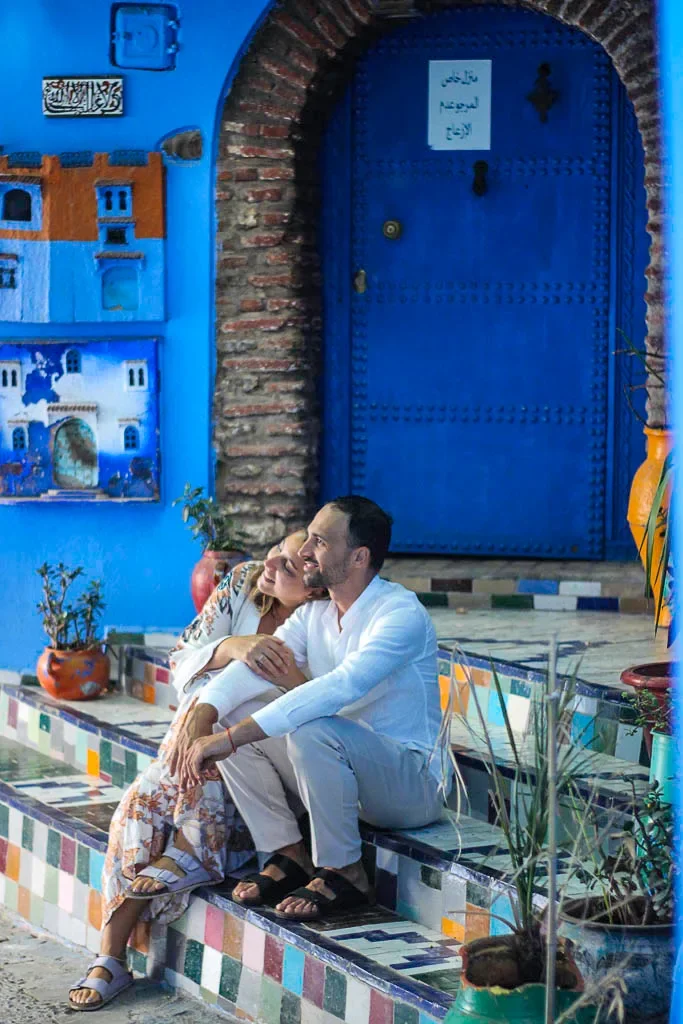
- Chefchouen – Romantic and cute corners.
You can add the desert for a one-of-a-kind adventure, but on this loop, we skipped that for a more ordinary Chefchouen. The desert is more pricey for couples on a budget and needs at least 3 days.
Three Routes We’d Recommend for Couples
1. Classic Circuit – 10 days (Cities, Culture & Sahara)
Marrakech → Ait Benhaddou → Merzouga Desert Camp → Fez → Chefchaouen → Tangier.
Great for first-timers who want the postcard stuff: medinas, desert sunsets, blue city photos.
2. Atlantic Coast Adventure – 10 days (Surf, Sun & Cafés)
Essaouira → Taghazout → Tamraght → Agadir.
Think lazy beach days, sunsets over the Atlantic, and smoothie bowls next to salty fish grills.
3. Slow Circuit – 2–3 weeks (Mountains, Medinas & Hidden Gems)
Mix the coast, cities, and a High Atlas trek, with days for doing nothing in between.

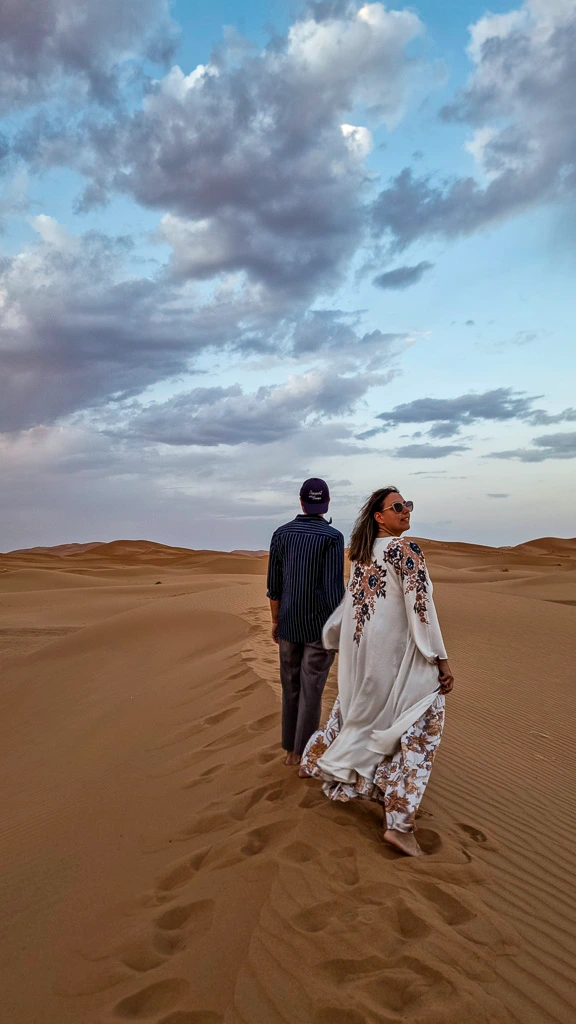
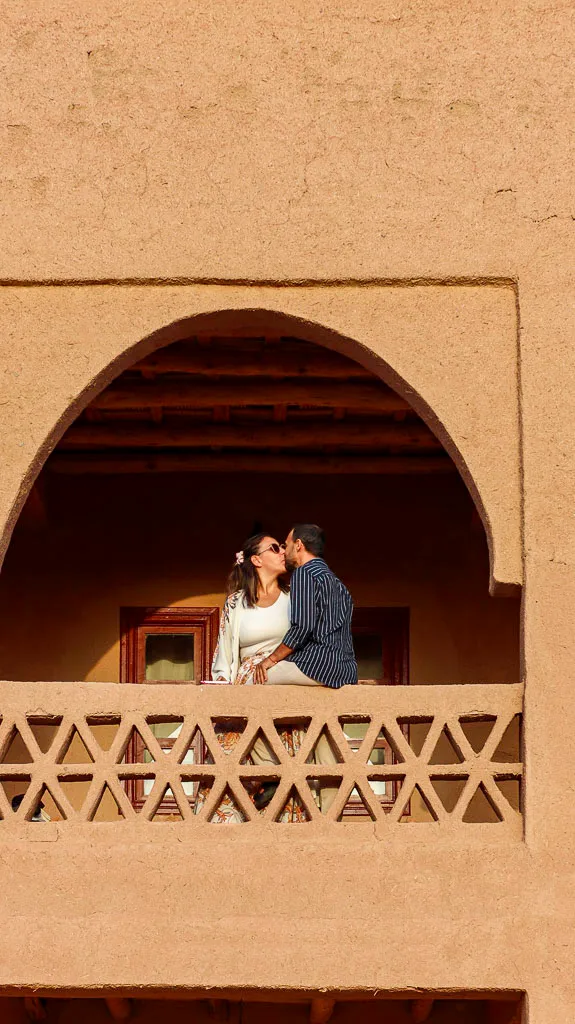
Why we loved backpacking Morocco as a couple
Travelling in Morocco together was a sweet spot between adventure and comfort. We had unique morning routines, either with sea views in Tamraght, or charming riad breakfasts.
But we also had sweaty, exhausting treks through markets and long hours driving. Sometimes too early in the morning. We could take turns haggling when one of us got “medina burnout” and keep costs tight by having a private room instead of a dorm.
We balanced our trip so that for every hectic city day, we’d get a slower coastal or mountain stop. One night, we were figuring out buses from Tamraght to Essaouira over mint tea, the next, we were clinking tiny teacups in a rooftop riad in Marrakech. Overall, the diversity of the country makes Morocco one of the best for travelling on a budget and backpack for couples.
Where to go backpacking in Morocco
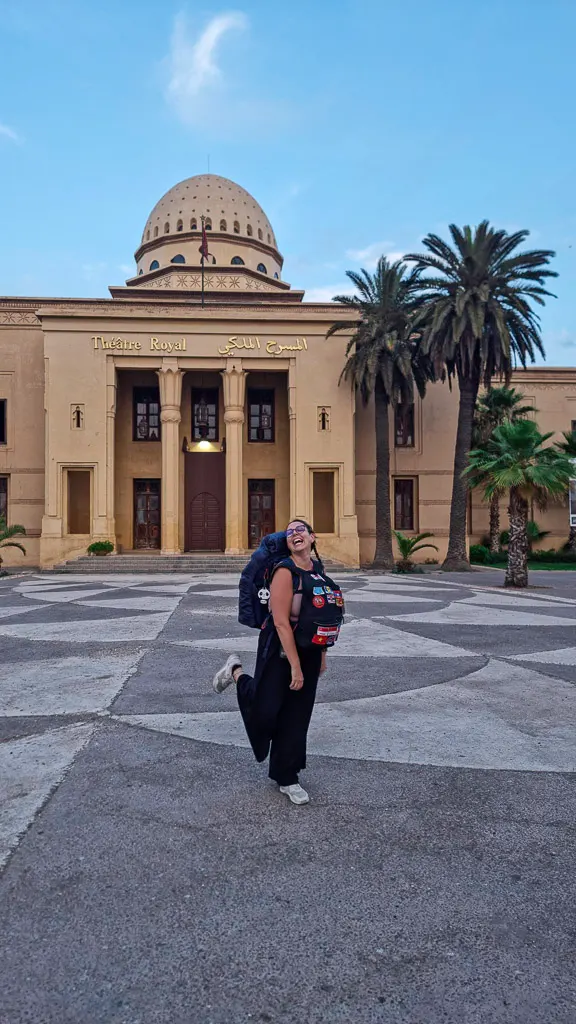
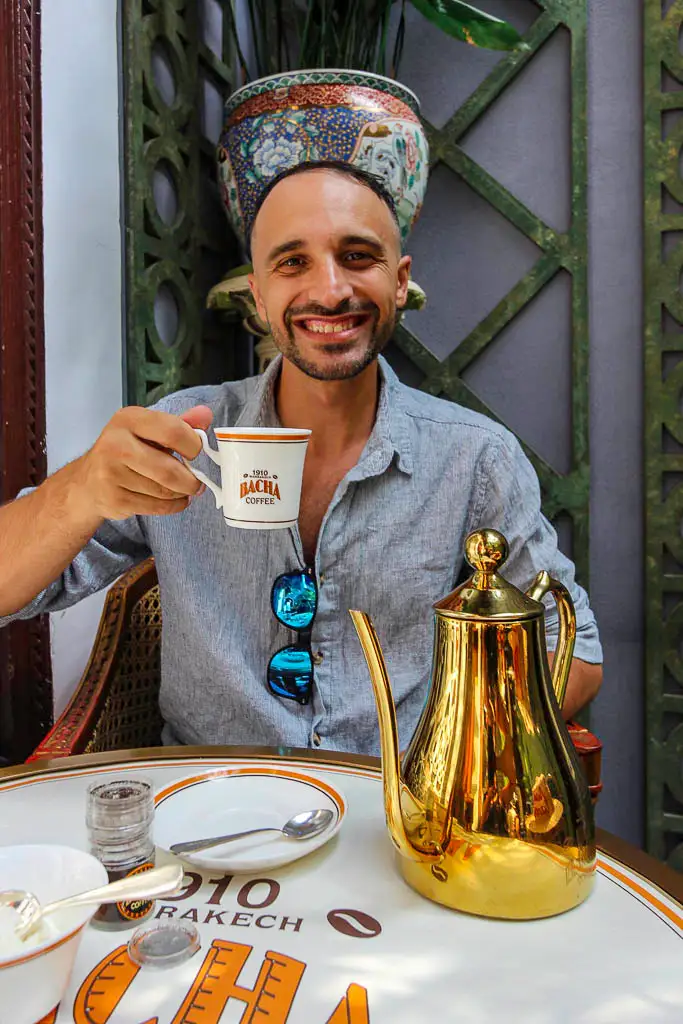
Marrakech Backpacking Kickoff
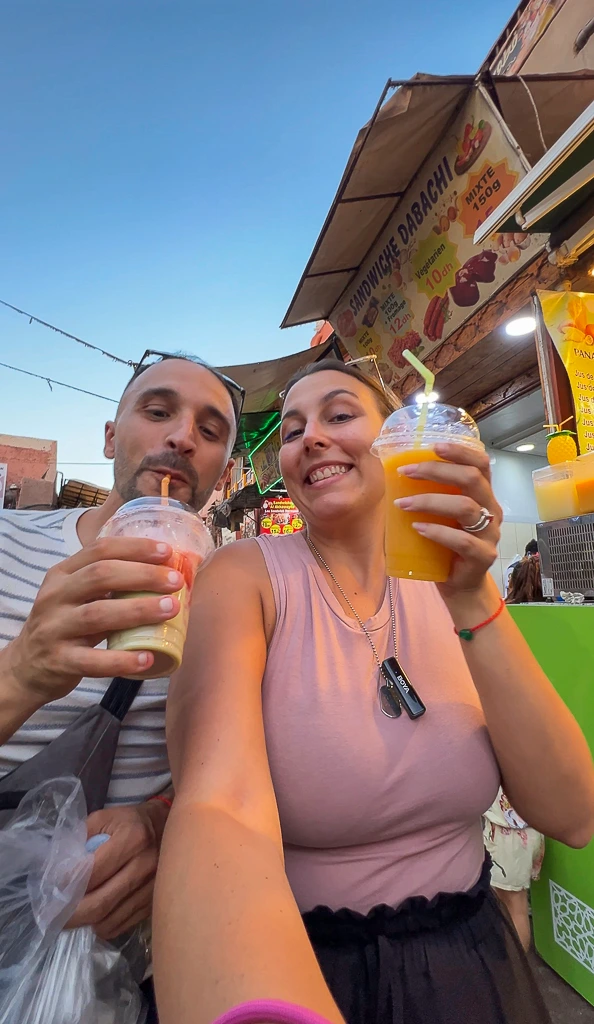
We arrived in Marrakech after our long stay on the Atlantic Coast, and the chaotic environment was shocking at first. Marrakech, it’s not just overrated tourist chaos—it’s a sensory overload in the best way if you know where to go.
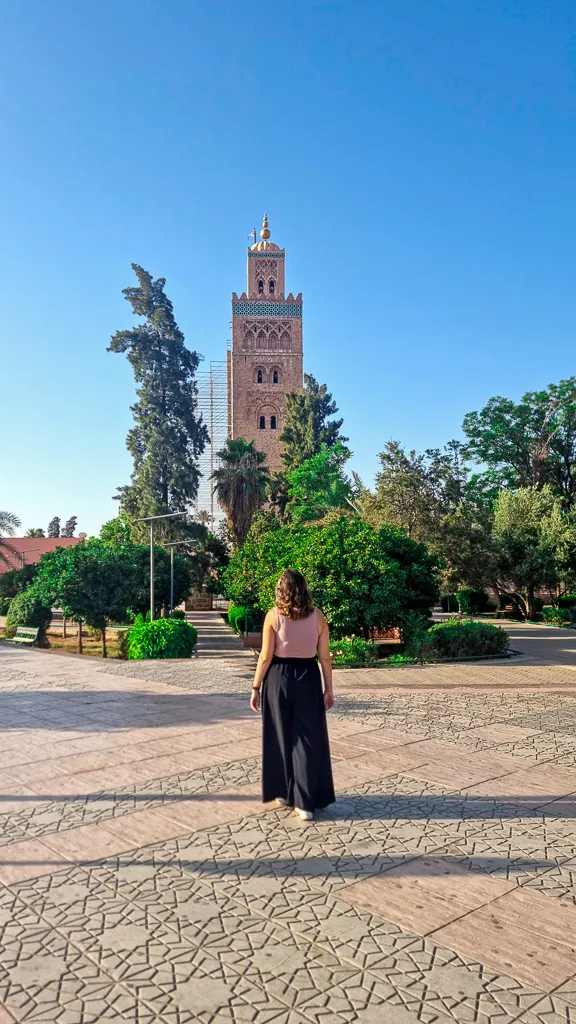
Dive into the medina early to beat the crowds. We woke up at sunrise for some photos and explored the Ben Youssef Madrasa, which remains one of our best memories. In Marrakech, you should get lost, explore hidden alleys, and sip mint tea at local cafés.
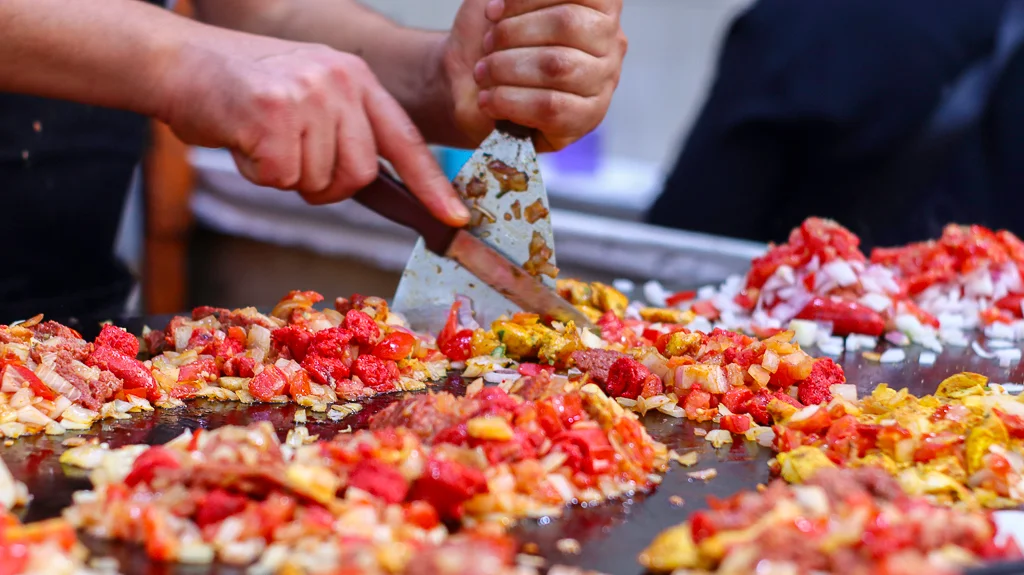
Skip pricey tourist traps, stick to street food stalls (a tagine for around 40 MAD/$4-5 ). For a real meal, try places near the spice souks or the busy Derb Debachi alley. Don’t forget to book in advance a day trip or two, and squeeze a Marrakech food tour in between. We loved it!!
READ ALSO | Unique things to do in Marrakech
Backpacking in Taghazout and Tamraght
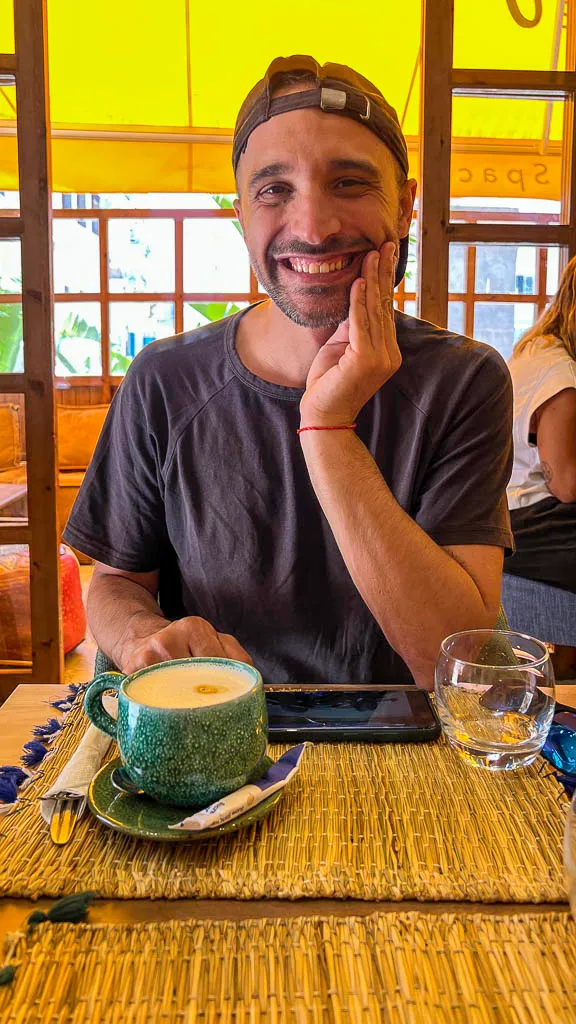
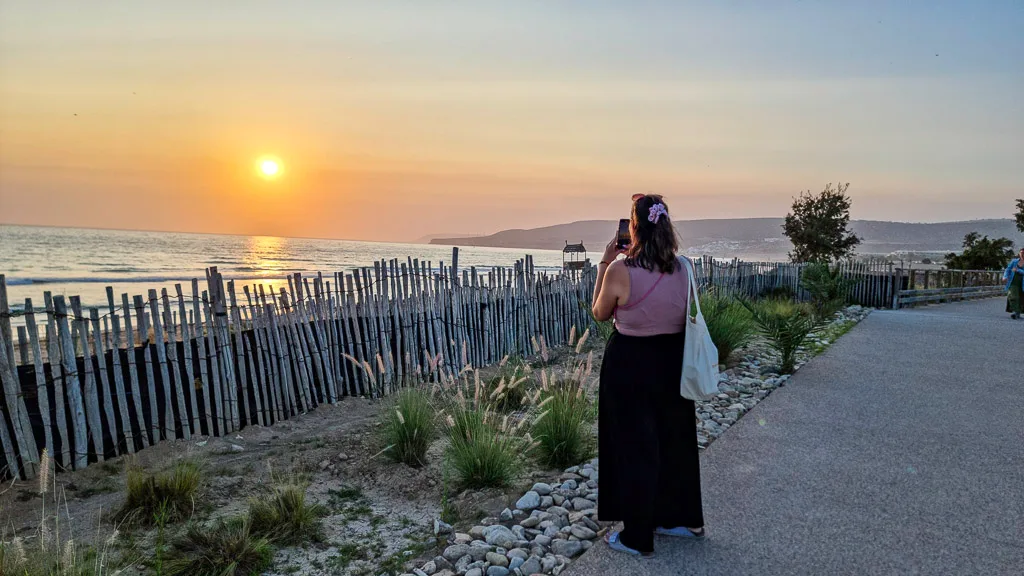
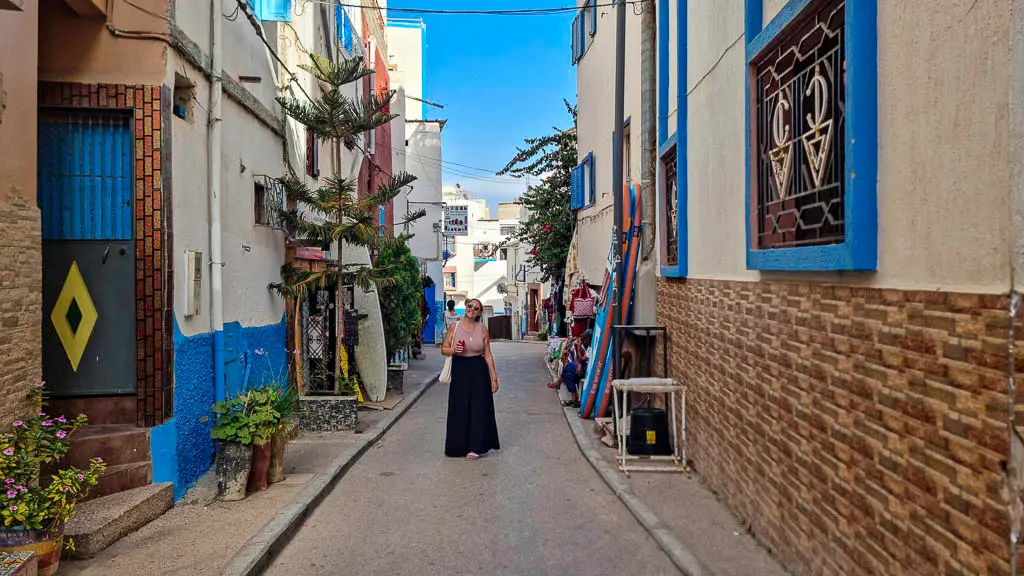
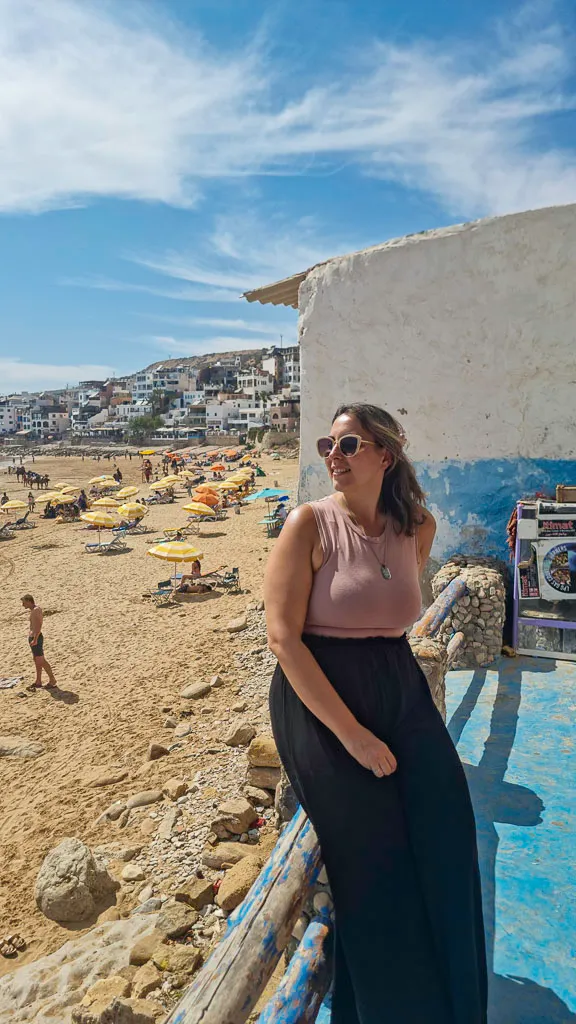
We spent a good week in the Tamraght surf haven. Taghazout is the lively, colourful cousin, buzzing with surfers, cafés sporting Instagrammable power bowls, and a beach culture that’s hard to beat. But Taghazout’s vibrancy comes at a price—expect about 30-50% higher costs for food and accommodation than in Tamraght.
We preferred Tamraght for its laid-back village vibe, affordable stays (doubles for under 200 DH/$20), and calmer streets where we became regulars at the coffee shops.
The beach requires a bit of a hike, but that means fewer crowds. Perfect for budget backpackers and digital nomads craving peace without sacrificing surf and beach access. It lacks a bit of nightlife that you can comfortably find in Taghazout.
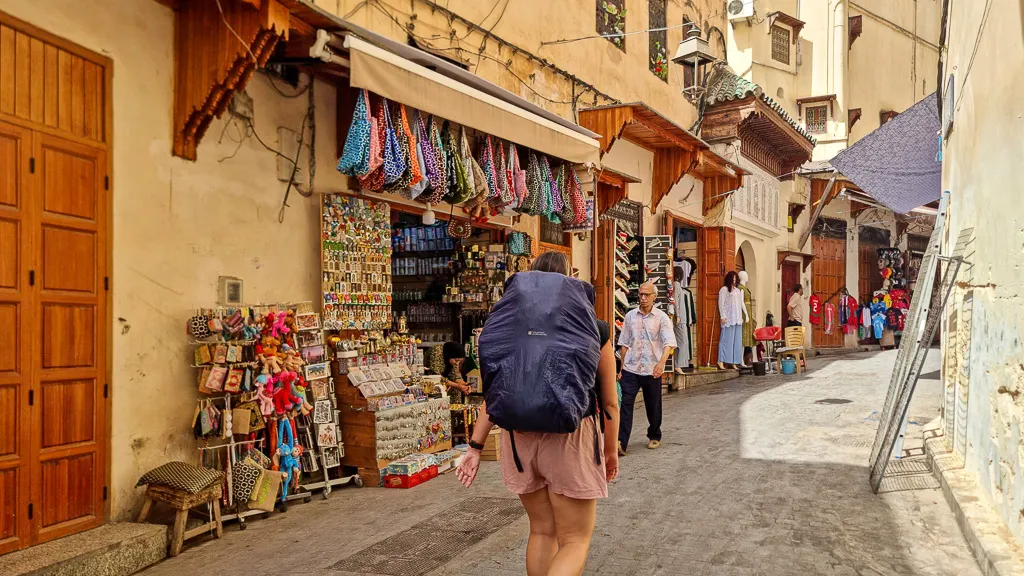
If you are tight on time, you can comfortably backpack Morocco in 10 days by following a structured route from Marrakech to Fes.
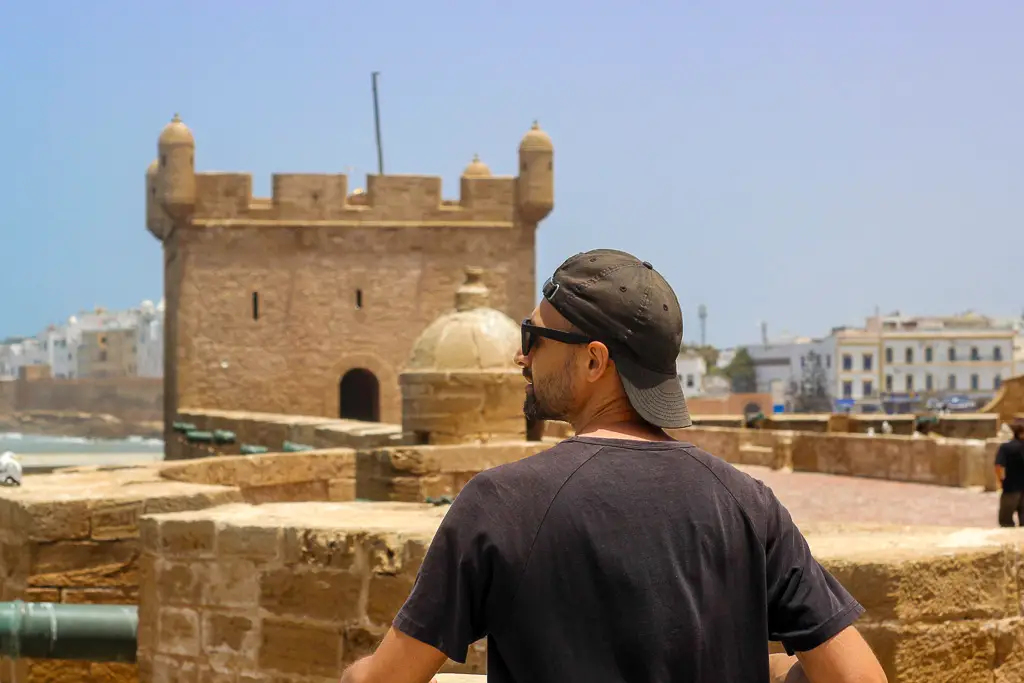
Essaouira backpacking
Essaouira was a surprising favourite. The Atlantic wind is relentless but invigorating. The medina here is smaller and less chaotic than Marrakech’s, with a white-washed charm and blue doors.
We stayed in budget riads and hostels like Moga Hostel or the Welkam Inn, with prices ranging from €5-15 for dorms or private rooms. The medina souks are friendlier, and haggling feels like a game rather than a battle.
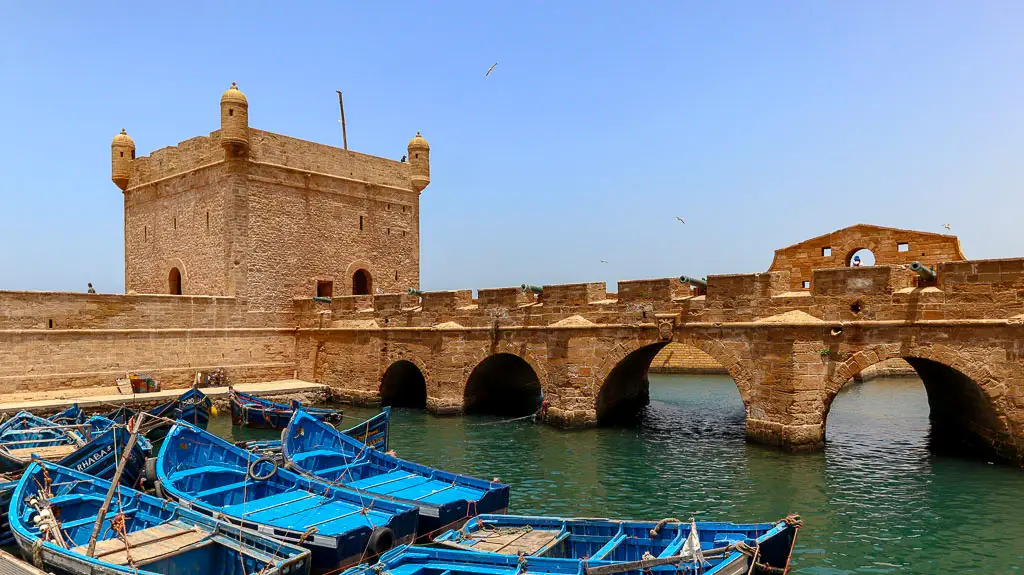
Don’t miss the port and ramparts, strolls at sunset, gnawa music performances if the timing’s right, and sampling fresh seafood at tiny local eateries. Read our full guide on things to do in Essaouira.

Guide to Fez for backpackers
If Marrakech was sensory overload, Fez was sensory whiplash—in a good way. This city threw us deep into its chaotic, criss-crossing medina alleys right on Day One. We didn’t feel 100% comfortable in Fez, but the charm of the city made up for it.
The leather tanneries were one of the main highlights. It was stunning to see people doing a job that has been done for over 1000 years.
Actually, I didn’t feel the chemical exaltation as many people report. We got lost more times than we can count, but that’s part of the charm—there’s no shortcut to soaking up Fez’s history.
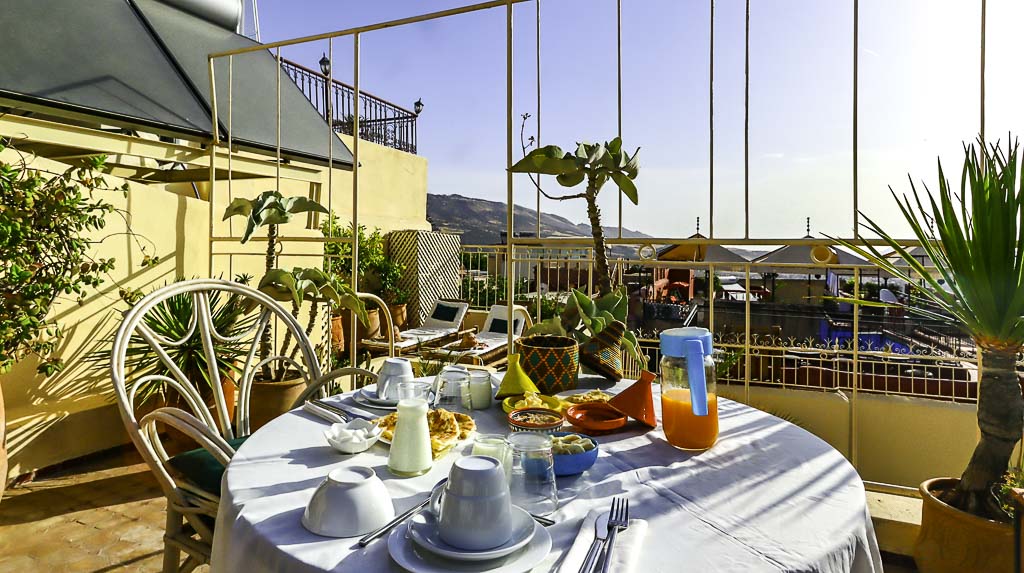
Backpacking in Fez as a Couple
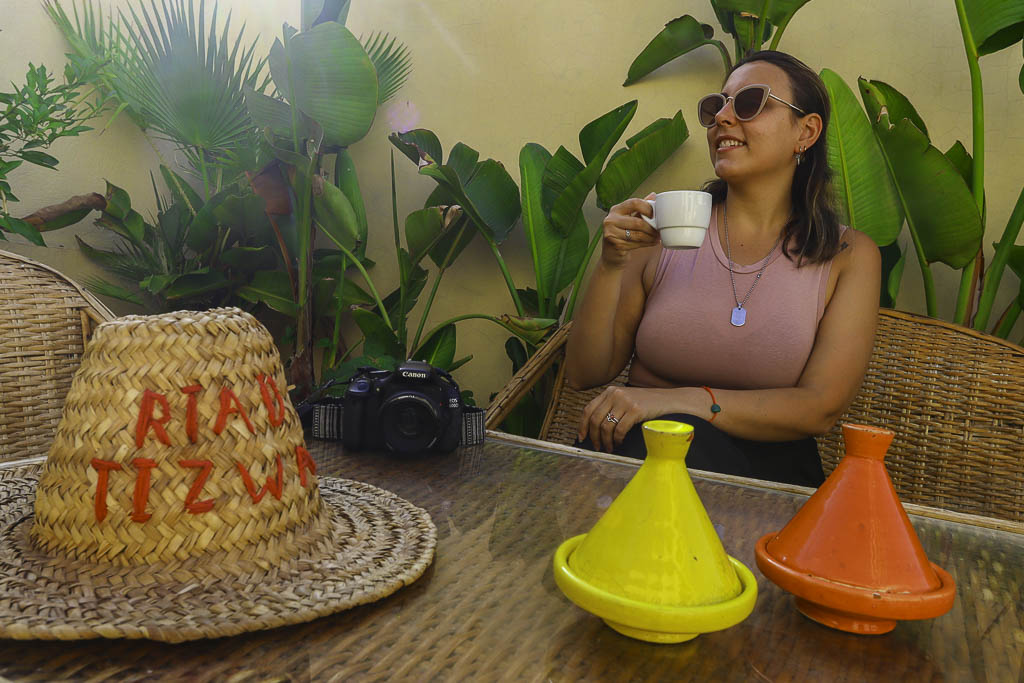
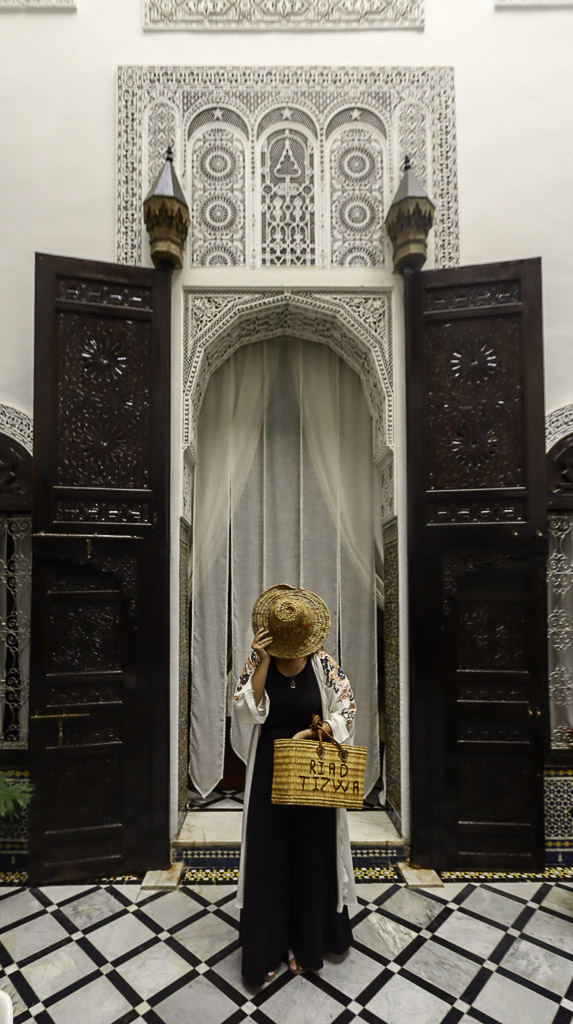
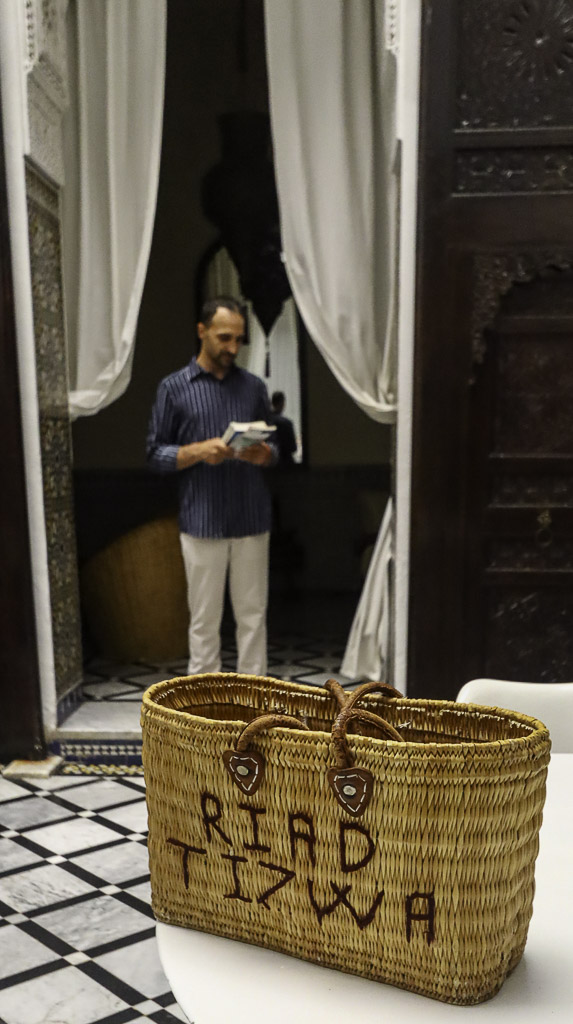
Stay somewhere with a rooftop terrace so you can escape the labyrinth below and share peaceful views over the medina’s madness. Riad Tizwa worked for us, although it was not the cheapest option, but we made it work, and the bed is so comfortable.
You will say more “No, Thank you” than you imagine while walking in the souk. Vendors in Fez are more aggressive than in Marrakech; we felt the pressure sometimes. Fez isn’t the safest place for backpackers, especially Solo. We were avoiding walking in Medina after 9 PM, which seems a pity compared to the freedom in Marrakech.
Avoid flashing flashy jewellery or excessive gadgets, and keep your wits about you in the crowd. Sometimes Ale felt really uncomfortable with males (but not only) staring at her, even though not wearing revealing clothes at all.

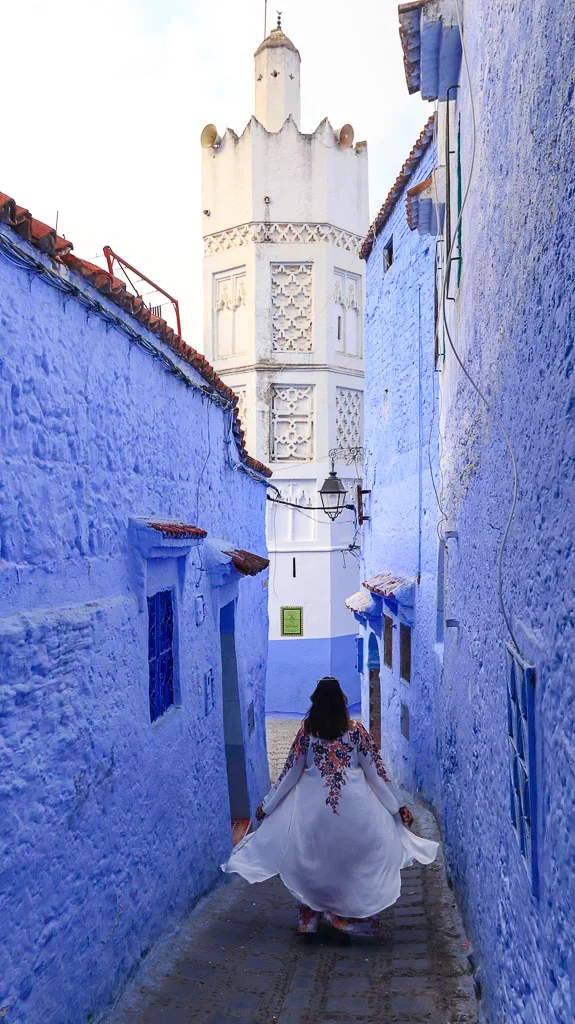
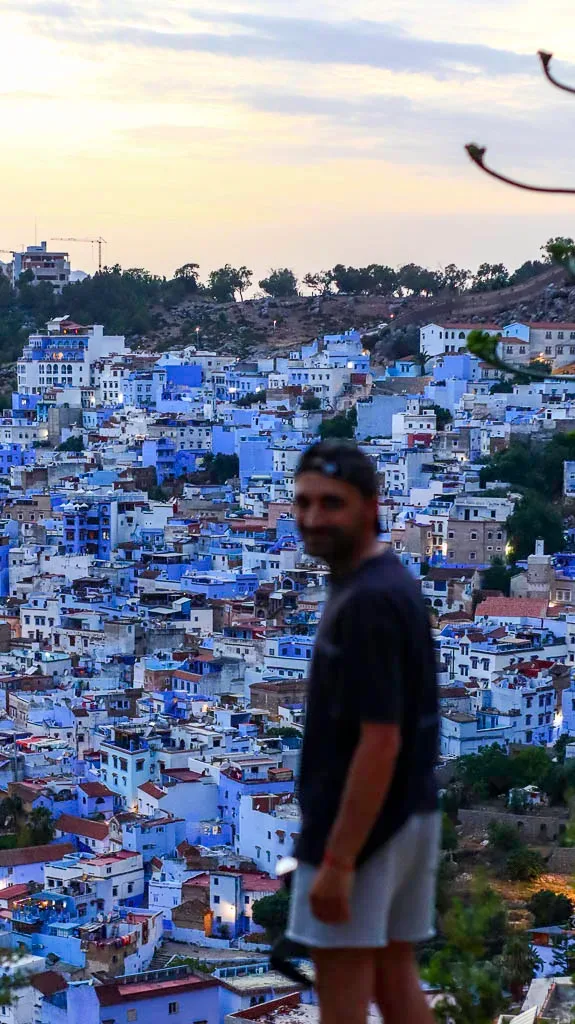
Chefchaouen: The Blue Pearl
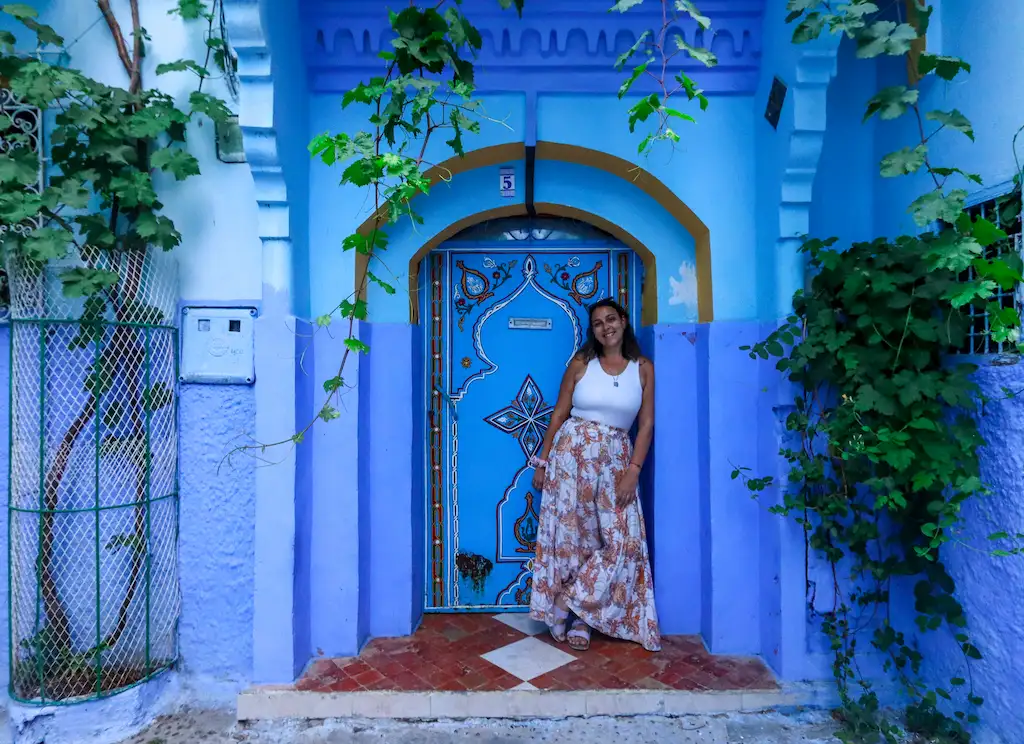
We found Chefchaouen to be a refreshing change from the crowded medinas elsewhere. Its narrow streets drenched in blue hues create a calm vibe, almost dreamlike if you catch it early in the morning.
The town isn’t just for photographers; it’s a place to slow down, sip mint tea in quiet squares, and watch locals go about daily life at a gentle pace.
As backpackers we loved our guesthouse. Even though it was too warm at night in our private room. Not much to complain about, as it cost us only 264 MAD per night (£22 | €25 | $30). The local markets are compact but full of handcrafted goodies and delicious snacks.
Don’t miss wandering up to the Spanish Mosque for sweeping views of the Rif Mountains, or sampling the tasty goat cheese at small local cafés. We found the town laid-back enough for relaxed strolls but lively enough after sunset with music and small terrace bars or by the river.
More guides about Morocco
MOROCCO BUDGET GUIDE

BEST CAFES IN TAMRAGHT
A DETAILED GUIDE TO TAGHAZOUT

AGADIR SOUK GUIDE
IS ESSAOUIRA WORTH VISITING?
MARRAKECH STREET FOOD TOUR
Tetouan: A real taste of Northern Morocco
Tetouan felt like diving into the heart of authentic Moroccan culture with fewer tourists and a more traditional lifestyle on the Mediterranean coast.
We don’t lie when saying that it seemed to be in a Spanish town. Tetouan medina is UNESCO-listed and less hectic than Marrakech’s, with characteristic Andalusian architecture. We walked over the weekend, and it was buzzing without the usual backpacker hustle.
For budget stays, modest riads and simple hotels are starting at around 80-120 MAD ($8-12) for private rooms. Dining here is also quieter and cheaper. We had one of the best paellas outside of Spain on our first day in Tetouan.
Try the tagines or freshly baked bread for under 30 MAD ($3). Tetouan offers a great base to explore nearby beaches or mountain villages for couples wanting to blend culture with some quiet nature time.
Rabat: The Calm Capital
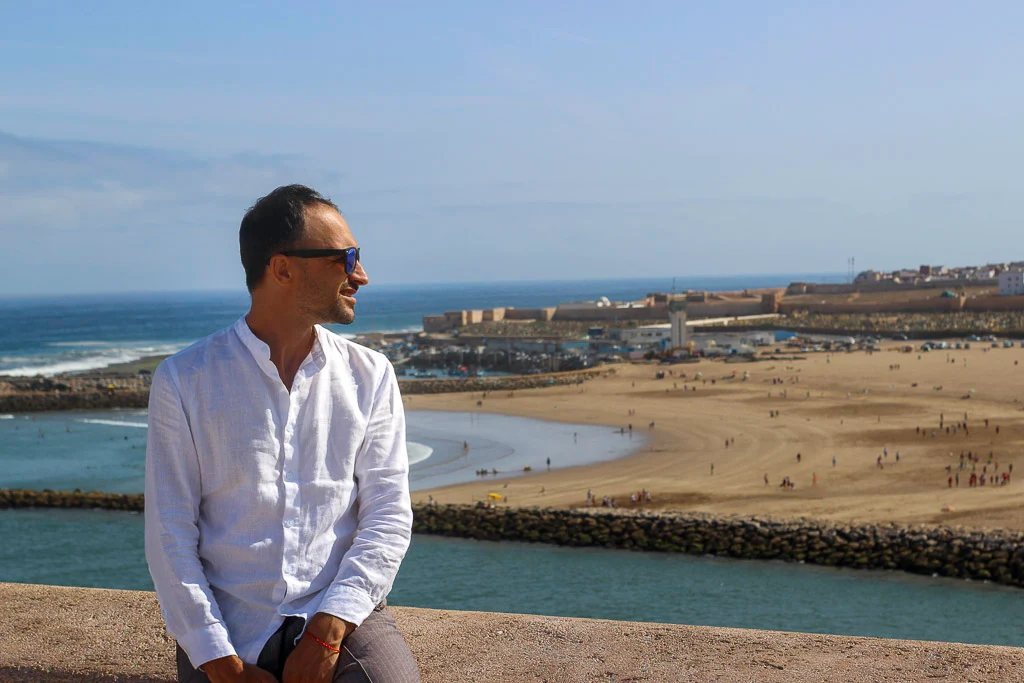
While not as touristy as Marrakech or Fez, Rabat charmed us with its breezy, less chaotic feel. The city is the capital, so you get wide boulevards, green public gardens, and a relaxed Mediterranean vibe.
Yep, it’s that polished version of Morocco we were not expecting. The Kasbah of the Udayas offers romantic sunset views over the Atlantic, and the historic medina is compact and easy to navigate without getting overwhelmed.
We stayed in a guesthouse in the middle of the souk. I wish we had stayed here longer, as it was quiet but so central. Rabat is one of the most budget friendly places to go in Morocco, for everything. Food, accommodation and even parking were within our Morocco budget.
Street food here isn’t as packed as other cities, but the quality is solid and affordable. If you want a city break on your Morocco backpacking itinerary that’s calm yet culturally rich, Rabat is your best destination.
Ouarzazate: Gateway to the Sahara and Film Magic
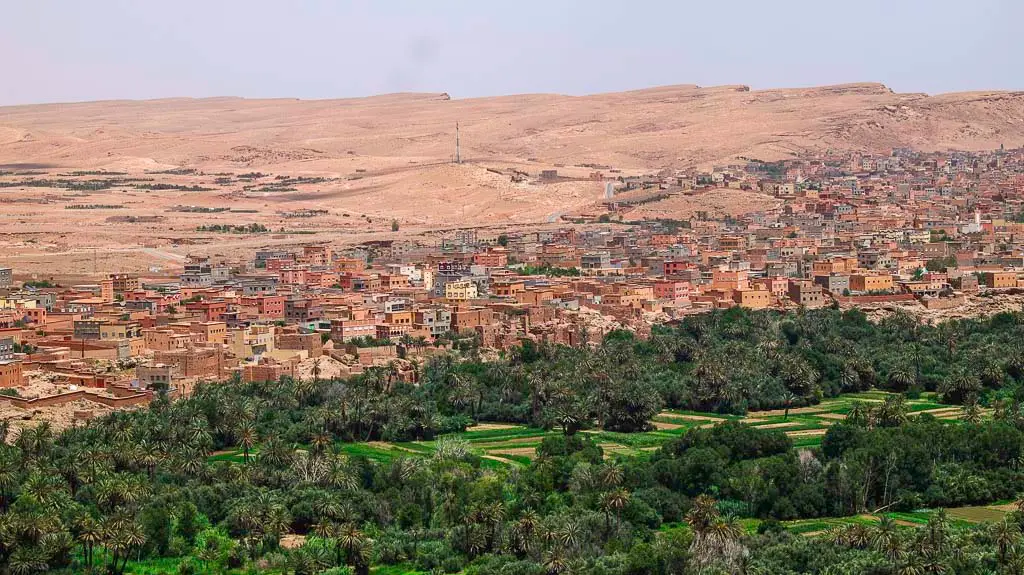
Ouarzazate surprised us with its desert charm and unexpected things to do. It’s a city, not a village in between the Atlas Mountains and the desert.
The town is the perfect stopover if you want to catch a desert tour or explore kasbahs like Aït Benhaddou nearby. It felt less touristy than the big cities, which we appreciated.
Accommodations range from budget guesthouses for around 100-150 MAD ($10-15) to slightly fancier riads. Food is straightforward Moroccan fare—couscous, tagines, and hearty soups for 30-50 MAD ($3-5).
We had grilled meat for just 60 MAD for both of us. For couples, it’s fantastic to unwind here before or after the Sahara, enjoy starry desert skies, or take a guided stroll around the impressive kasbahs.
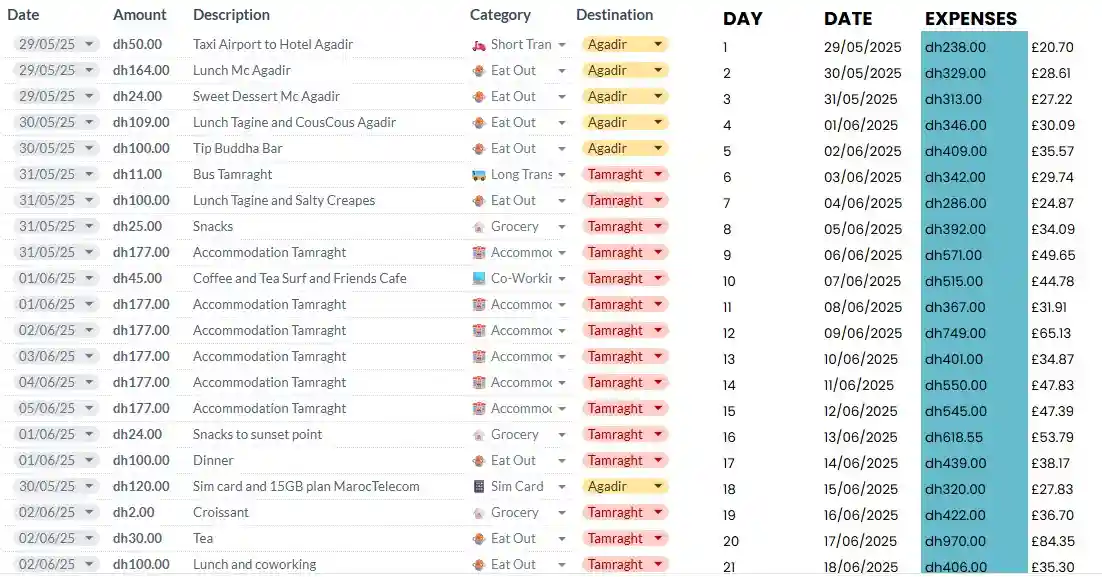
Backpacking Morocco Budget
We were somewhere in the “flashpacker” range rather than hardcore budget, but definitely felt the pinch more than in places like Southeast Asia. Here’s a breakdown for you:
| Category | Approximate Daily Cost (per person) | Notes |
| Accommodation | €10-15 / 110-160 MAD | Hostel dorms and budget riads |
| Food & Drinks | €5-10 / 50-100 MAD | Street food, Moroccan staples like tagine and couscous, occasional café splurges |
| Transport | €5 / 50 MAD | Buses, occasional shared taxi (grand taxis), and local minibusses |
| Activities | €5-10 / 50-100 MAD | Entry to medinas, museums, and occasional guided tours |
| Miscellaneous | €2-5 / 20-50 MAD | Sim, laundry, snacks |
Please note that often Morocco refers to prices in local currency and euros. So we included the Euro as our baseline currency instead of our usual £ conversion.
On average, for modest comfort and a bit of indulgence, plan to budget around €30-35 ($35-40) per day. Stretch this toward €50+ if you want more private rooms or plan to explore the desert or mountains with pricey tours.
We spent about €880 (~$900) in total over two weeks, including all this and a bit more for occasional splurges and gear.
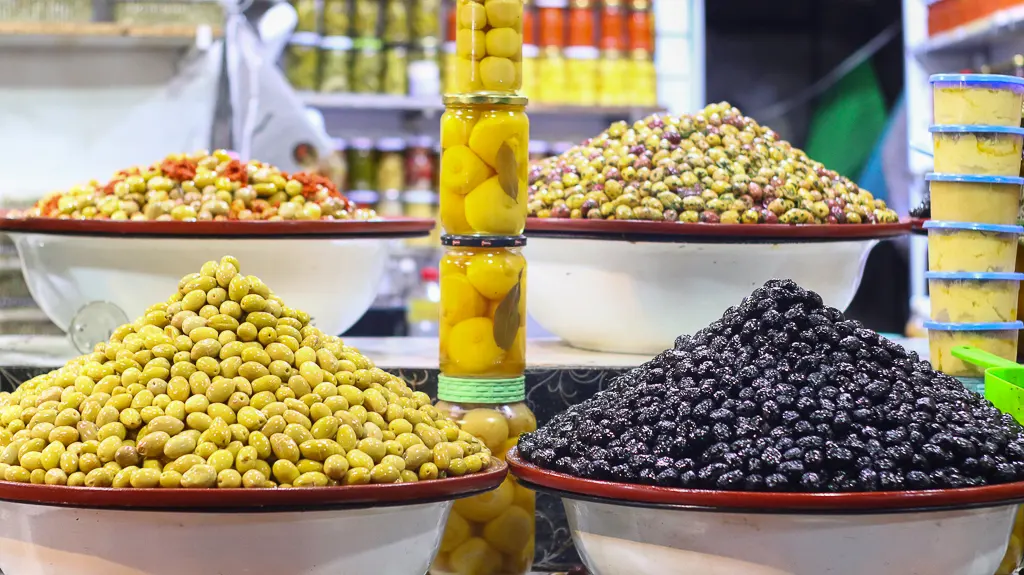
Food and Drink Highlights Backpacking in Morocco
Moroccan street food is wallet-friendly and delicious. Expect to find:
- Msemen (Moroccan pancakes), 5-10 MAD (50 cents to $1).
- Tajine meals for 40-70 MAD ($4-7) – Poulet (Chicken) and Kefta (meatball) were among our favourites.
- Grilled meats and skewers for about 5-10 MAD each (50 cents to $1).
- Fresh orange juice for 10-15 MAD ($1-1.50).
- Mint tea and sweet pastries to keep you going without breaking the bank.

Getting Around: Transport and options for backpackers
- Long distance buses are the cheapest way to get around Morocco. The major local company is CTM. Most of the routes are also covered by Supratours.
- To get around cities, we used very cheap buses. Like going around Marrakech, or to the airport is just 4 MAD.
- Grand taxis are shared but quick and very Moroccan; always negotiate your fare.
- Agadir to surf spots: A local bus (#32/33) between Agadir and Tamraght costs just 5.5 MAD per ride, but be prepared for a standing-room-only, chaotic ride.
- Trains: Some routes, especially through major cities, are covered by train too. We didn’t take any because it was too expensive, so we opted for renting a car.
- We rented a car as it was convenient. We paid £200 for 21 days’ rental, and gasoline is convenient. We made 2,500 Km, passing from cities to mountains, seaside towns and even the desert.
Best Time to Visit Morocco
Morocco is a year-round destination, but the best time to visit generally falls between spring (March to May) and autumn (September to November). These months offer milder temperatures and fewer crowds, making your backpacking experience more enjoyable across cities, coasts, deserts, and mountains.
Best Time for a Backpacking Trip on the Atlantic Coast
The Atlantic Coast, including Essaouira and Taghazout, is best visited in spring and autumn. The weather is pleasant with mild temperatures, ideal for surfing and beach strolls without the summer tourist rush or the cooler, windier winter months.
Best Time for a Backpacking Trip in Morocco – Fez and Marrakech
Spring (March to May) and autumn (September to November) are perfect for Fez and Marrakech. These months bring comfortable daytime temperatures and cooler evenings, letting you explore medinas, markets, and city sights without the intense heat or winter chill.


Best Time for a Backpacking Trip in Morocco to Visit the Desert
For the desert, plan your trip in late autumn to early spring (October to March). Nights can be cold, but daytime temps remain pleasant, and you avoid the scorching summer heat that makes desert trekking challenging.
Best Time for a Backpacking Trip to Enjoy the Outdoors in the Atlas Mountains
Late spring (May-June) and early autumn (September-October) offer the best conditions for trekking in the Atlas Mountains. The weather is warm but not too hot, snow has melted at lower elevations, and the trails are accessible for outdoor adventures.
What to Pack and Prepare for Backpackers in Morocco
Backpack Size: We recommend keeping it light, around 30-40 liters. Also carry an extra small backpack for daily use, or take it on board on bus transfer with your valuables. While exploring, you’ll walk through narrow alleys, steep stairs and pull the strength on uneven terrains. Travelling light is essential.
Clothing: The Heat was unbearable sometimes, as we visited in summer. Dress in modest, comfortable, and breathable clothes. Get some layers (a jumper or a jacket) for cool nights by the sea, or even in the desert. We forgot our fabulous scarves got in Dubai on our desert safari. Big regrets about that, don’t be like us.
Footwear: Comfortable walking shoes; We mostly use sandals for daily exploration of the medinas. Keep flip-flops handy for shared bathrooms in hostels.
Money: Cash is king in Morocco, but don’t withdraw a lot at one time. Keep some small bills and coins for purchases or taking local buses.
Essentials: Our reusable bottles were a life saviour. We also had one power bank for long journeys and kept passports and valuables in our bumbags. Also, we had to use some of our stock of motion sickness pills bought in Thailand. Roads are quite something, and drivers are crazy.
Safety and Tips for Backpackers in Morocco
- Some areas aren’t very safe (Fez, we are talking to you!), so avoid isolated and poorly lit alleys at night.
- Avoid unsolicited guides who may harass or lead you to overpriced shops.
- When taking taxis, agree on fees in advance. Check the overall price for the journey on InDrive, and make your offer. If in doubt, join a shared taxi, or taxi berber if on the Atlantic Coast.
- Morocco is a conservative country, so keep a low profile, dress modestly. If you are a solo traveller or a woman solo, it can be very aggressive. Find a company in your hostel and stay in popular areas.
- Get your travel insurance before the trip starts. We used a SafetyWing, and it covered all our long trips for a reasonable fee. Request a quote here.
Morocco Language
Throughout our trip to Morocco, we had to speak several languages and learn new words all the time. Morocco is a very mixed country, mostly because of its dominations – Spanish, French and Arabs.
We found that while Arabic is widely spoken, it has many variations coming from the Berber culture. In the South of Morocco and the coast, you’ll also see them speaking French. This is also true in Marrakech, Essaouira, Casablanca and Fez.
While in this last city, Fez, the language scenery started changing. They speak Spanish fluently too, and get better and better the more you go up north on the Mediterranean coast.
When in Tetouan, we were speaking Spanish all the time, ordering at the restaurant, or even talking to an old lady, while queuing to withdraw money.
Final Notes for a Morocco Backpacking Adventure
Backpacking Morocco is an adventure of vibrant contrasts—from medina mystique to Atlantic surf culture. It is affordable, but not dirt cheap; if you want comfort with authenticity, budgeting is key.
Our experience showed that pacing yourself well and choosing a mix of bustling cities and slow coastal towns makes for a rewarding trip.
Stay curious, respect the culture, and pack with care. Morocco’s sour, sweet, spicy, sandy, and soulful, all in one backpack-sized package. We’d say it’s well worth the dust on your shoes and stories you bring home.