Guide to Marrakech Spices Souk: Our experience, tips and places to go

We got lost in the Rahba Kedima spice square so you can find the best saffron without the scam. From the pushy vendors in the Jewish quarter (Mellah) to the fragrant pyramids of cumin, here’s our survival guide to buying spices in Marrakech—including the shop with the “nut alley.”
Step into the Marrakech spices souk with us, where the air is thick with cumin, paprika, and orange blossom—the kind of scents you carry home on your jacket for days. Ale was carried into the Souk of Spices because of the insta-ready corners, while I was more into the history of the Jewish Quarter, or Mellah.
So we thought that creating a compelling guide of the Spices Souk of Marrakech was the perfect way to help you discover one of the hidden gems in town.
We loved the atmosphere around the main square, not so much the vibes of the souk, but you’ll get why soon. Despite that, we still think it’s an unmissable sight.

👋Toti & Ale here
London couple, 45+ countries, 300+ guides. We are full-time content creators, travelling as slowmads, spending quality time in places we love the most. We run this and several other blogs from the best places in the world. This guide is all about our sensory overload in the souks. We sampled olives at Marché aux Olives, bought bags of caramelized nuts at Le Souk Urbain, and learned the hard way which vendors in Mellah are too aggressive. My nose is still remembering the cumin.
January 16, 2026 This update reflects the exact location of the olive square, the “nut alley” passage to Jemaa el-Fnaa, and fair prices for saffron. Non Less the “Galanga tea” stall details. No AI; all spices smelled.
Is the Spices Souk in Marrakech worth visiting?
For context, the Spices Souk isn’t just another instagrammable market stall. It’s the throbbing heart of the Mellah, the old Jewish Quarter that’s seen centuries of trade, migration, and newer waves of “let’s snap that for the ‘Gram” tourism.
You’ll hear this area called Mellah, the Jewish Quarter, or just “that place with the rainbow spice cones.” It’s all the same labyrinth. It’s picturesque, with plenty of cute corners and some great restaurants too.
If you’re gunning for “authentic,” skip the well-trodden Medina for a detour here. We walked in at noon, led by our noses and a half-baked Google Maps route, and quickly found ourselves wondering if we’d just made a rookie move (spoiler: we totally did, but would still do it again).
Where is the souk des spices in Marrakech?
The Spices Souk is away from the main area of Marrakech. If you are en route to the Bahia Palace, pop in for a glimpse of an authentic market.
You can reach the Jewish Quarter in many ways, but our preferred passage is the narrow Rue Riad Zitoun el Kdim. This shop-filled road spans from Jemaa El-Fnaa to the Place Mellah roundabout.
This is the entry port to the Jewish Quarter, which is still within Marrakech’s old town walls. If you do this exact route we also suggest stopping at Moroccan Donut shop. We learned about this place on our Marrakech food tour, and it’s the best surprise with a local doughnut (sfenj), costing only 1.5 Dh.
This post includes affiliate links. We may earn a small commission at no cost to you. You can also buy us a coffee to support the site directly. Learn more in our Cookie Policy.
☕ Buy us a coffee!
Our travel guides are free and made with love to help you explore more, spend less, and travel better. If you’ve found them useful, you can buy us a coffee to keep the adventures going and support more content like this. Cheers!! ☕🌍

Marrakech Spices Souk Guide
We didn’t start early—by the time we reached the Marrakech spices souk, the city was in full swing. Entering from the Mellah district at midday, we squeezed through bustling, narrow lanes where locals traded ingredients for dinner and the air was sharp with spice.
There’s no obvious entrance; the souk slowly appears—rosebuds, cumin, and citrus peels everywhere you look. Vendors focused on real business, not tourists. Getting lost was normal, leading us to booths selling olives and fresh cinnamon. Experiencing the souk during the day made it feel honest, chaotic, and vibrant—just like Marrakesh itself.
Sections of the Spices Souk
We break down the souk this way:
- Tinsmiths Square: It’s your entry port to Mellah and the souk of Spices. It’s a large square limited by the city walls. Some of the shops are also spanning the side of the square.
- Central Market Alleys: The busiest, with stacked pyramids of turmeric and fresh pepper. Vendors here are talkative. Always ask to smell and, if possible, sample. Prices swing wildly—expect to bargain.
- Mellah (Jewish Quarter): Get deeper. The quieter zone is within the narrow alleys. Walls are painted ochre and blue. Fewer crowds, a slower pace, and—most importantly—legendary Ras el Hanout blends. The spice shops here felt more local, with vendors happy to walk us through each blend.
READ ALSO | DIY Food tour in Marrakech
Where to start the visit?
Our entrance into the Spices Souk was through Mellah’s rough-edged main square – Place des Ferblantiers (Tinsmiths Square). That’s where we used the entrance port to the spices souk—tucked beside the synagogue, away from the main crowds. Not very well signed on Google, save the above map for reference.

Our first impression of the Spices Souk
Honestly? We almost bailed after five minutes. The sellers here are pushy—way more than in other Marrakech souks. Ale felt uncomfortable, and for a second, the thought of a chill rooftop cafe was pretty appealing.
But, if you keep your wits (and your wallet) about you, and fake confidence even if you’re directionally hopeless, the Spices Souk rewards you with genuine moments.
We found the Spices souk less polished, more “lived-in”. I will say authentic. Unlike Medina, there’s no tourist security blanket here. We clung to our cameras and dove deeper, following pyramids of saffron, cumin, and neon-hued dyes.
Within moments, you’re hit with sensory overload:
- Burning sticks tangling in your hair and throat.
- Spices stacked impossibly high, gravity-defying cones of paprika, turmeric, ras el hanout.
- The unmistakable “Marrakech spice market” soundtrack: merchants alternately charming and, well, aggressive.
READ ALSO | How to get from Marrakech airport to city centre
The instagrammable shop
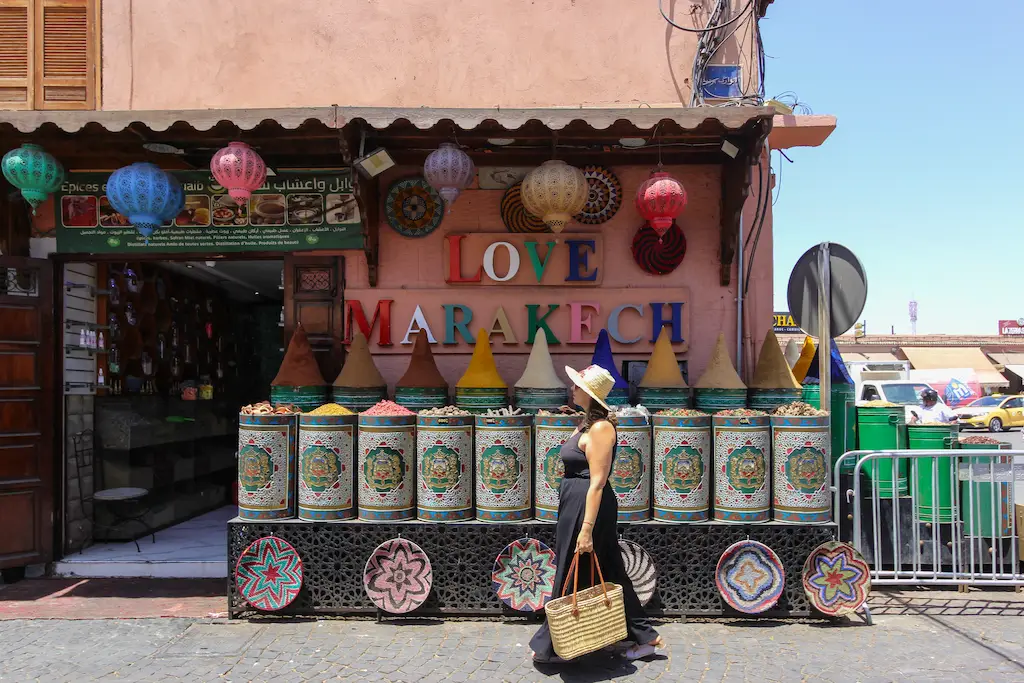
We wandered around the main square at Mellah, sometimes seeking quiet, in search of the Instagrammable spices shop. We weren’t in luck that morning, but we equally scored a nice shot. Going on the side road, Rue de Berrima, we found Herboristerie Chaouaib.
What looks like the classic shop with spices on the front, this shows a giant Love Marrakech sign, which attracted our attention. With the right angle and light, you can get your best shot from Marrakech. Continuing on the road, there are other Herb shops (as classified by Google), mostly with the same style, maybe less stylish.

What to Buy at the Marrakech Spices Souk
This souk specialises in spices, but also offers other beauty products and cooking powders. This is what you can find at the Spices Souk in Marrakech.
- Ras el Hanout (local blend): Best in the Mellah. Ask for a pinch to taste. Each shop’s mix is unique.
- Dried whole spices: Cinnamon sticks, dried lime, star anise, black nigella.
- Saffron: Real strands (never powder). If it’s cheap, it’s likely fake.
- Moroccan mint: Perfect for tea. Fresh is good, but dried bunches travel better.
- Rosebuds & orange blossom: For tea, baking, or to carry your trip home with you.
- Argan: This is one of the main products, often imported from the nearby Essaouira, but you can get the best quality in the spice souk.
READ ALSO | Unique things to do in Marrakech
Where to eat?
We arrived for our visit to the Souk des Spices around midday, and after a stroll around, it was time for lunch. There is so much choice within this part of Marrakech, and the fact that it is less touristy than the Medina souk makes it also more affordable. These are our best places to eat in the Souk of Spices, or to get a drink.
- La Casa Berber: Lifesaver for cooling off and eavesdropping on fellow lost tourists
- Malah Café & Restaurant: One of the highest-rated restaurants in Tinsmith Square. Stop here for a tasty tagine and sunshine at their outdoor tables
- Mon Sandwich: Few blocks away, our rescue lunch spot with cheap bites and loads of shade
- Kosybar rooftop Marrakesh: Perfect rooftop, with a view over the square and Jemaa El-Fnaa
Tips for Navigating the Marrakesh Jewish Quarter
- Take it slow: The Mellah is about more than shopping—there’s history on every block.
- Look for balconies and street-facing windows—unique to this part of Marrakech. Some of the buildings remind me of Berber houses in the Merzouga Desert.
- The Jewish cemetery and synagogues are near the main spice strip.
- The best harira (chickpea soup), lentil soup and more traditional dishes have a history here and are served well and cheap in family kitchens and restaurants at Mellah’s edge.

Into the Mellah: Beyond Spices
As introduced, we didn’t go to the Souk of Spices only for the best photos. My main goal was to experience some of the real Marrakech without travelling as far.
Wander just a few alleys deeper, and you see another Marrakech—one where the rhythm is less frantic, but also less curated. The Mellah (Jewish Quarter) isn’t sanitised. Some corners feel abandoned, fantastic old doors and crumbling walls giving the area character.
There’s a jewellery souk (the “Jewish silver souk”) nearby—a real treat if you love old-school crafts and getting lost. Every piece has a story (or at least the seller will claim so), and bargaining here is even tougher.
We’d tell you exactly where, but the streets twist and double-back: follow your feet and ask for “Rue Bahia Bab Mellah” (even Google can’t always keep up).
A bit more about the Mellah District
The Mellah district, Marrakech’s old Jewish quarter, reveals a different rhythm from the medina. Here, the streets are narrower, lined with houses sporting rare outward-facing balconies—a nod to its Jewish heritage.
During the day, the market pulses with local life: families bargaining for herbs and spices, laughter spilling from doorway cafés, and shopkeepers swapping stories in French, Arabic, and Hebrew. You’ll notice historic synagogues and the
Jewish cemetery set quietly among the bustle. The district’s spice vendors take pride in their craft, especially when it comes to Ras el Hanout, often offering samples and sharing recipes handed down through generations.
Bonus: Other Corners to Check in the Neighbourhood
- Slat Al Azama Synagogue: Hidden, often closed, but worth swinging by to get into the district’s heritage
- Rue Bahia Bab Mellah: Jump into the jewellery souk, but mind your prices
Where to stay in Mellah District
Not many know, but some of the best Riads in Marrakech are around Mellah. It also happens that these are affordable, even having the most scenic courtyards, some with pools too.
Staying between El Badhi Palace and Mellah assures the best stay and safety even walking at night. These are our suggestions if you are looking for accommodations around the Spices Souk.
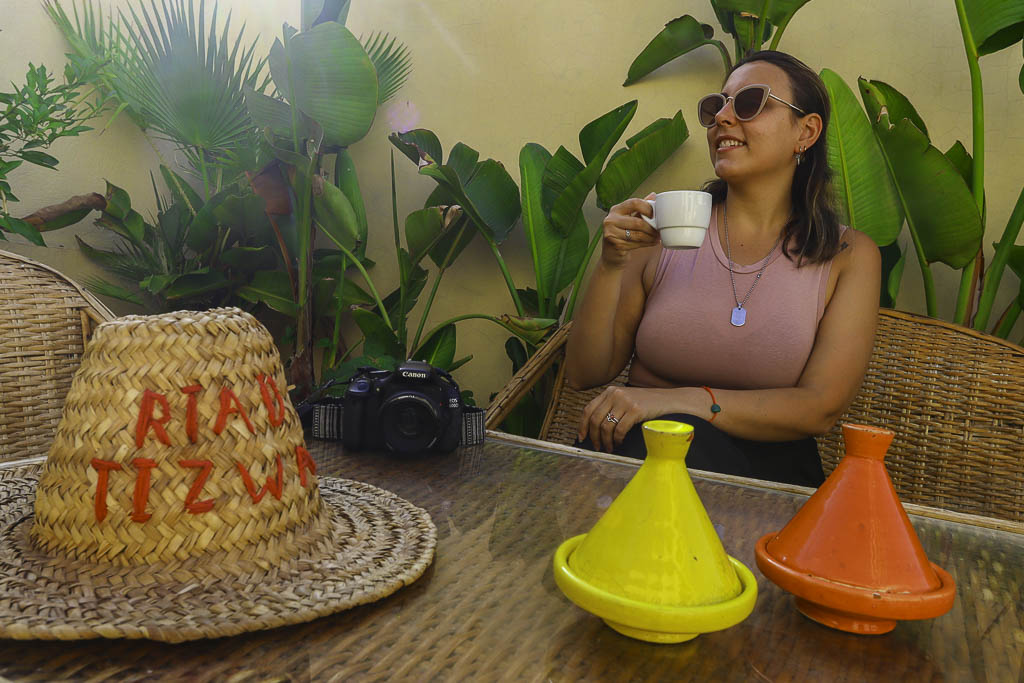
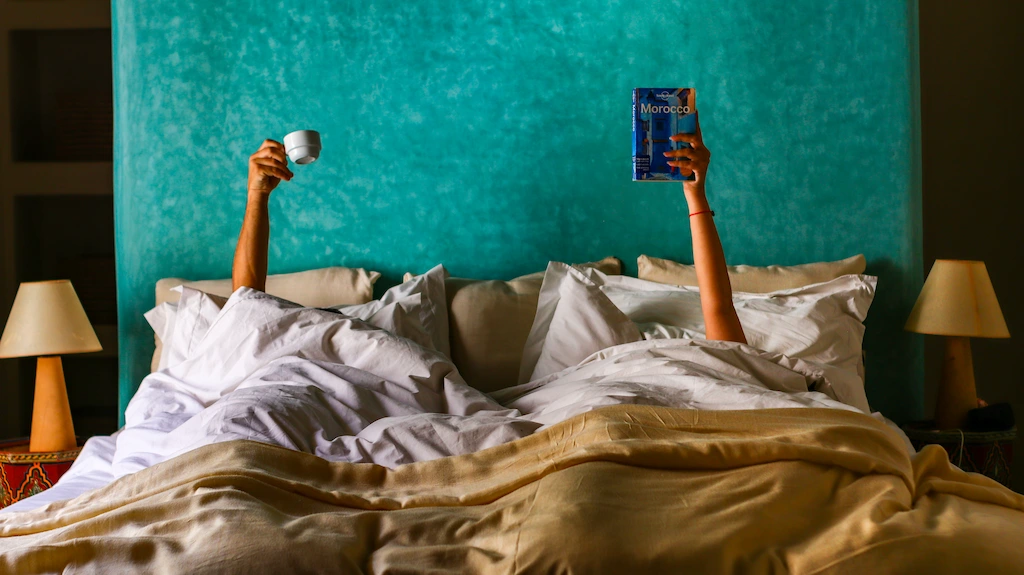
Riad Tizwa: Closer to Marrakech Medina, right behind Bacha Coffee and Marrakech Royal Palace, it feels a world away from the chaos. We stayed 2 nights in these finely decorated rooms, and it was the best in Marrakech // BOOK IT HERE!