Is Ubud Worth Visiting in 2026? Honest Pros, Cons & Verdict

We’ve stayed in Ubud twice ourselves. Here’s our honest verdict on the traffic, the crowds, the cost, and whether it’s really worth your time in 2026.
Yes, Ubud is worth visiting — we’ve been twice ourselves, plus two separate stints living in Bali as digital nomads, and it remains one of the few places on the island where we can actually get work done and still feel like we’re on holiday.
It’s calmer than Canggu, sits roughly midway to Munduk (our favourite corner of Bali), and rewards visitors who slow down rather than rush the sights.
That said, Ubud in 2026 isn’t the sleepy cultural retreat its reputation suggests. Our most recent stay was during rainy season — it rained hard, most days — and the town centre was still busier than we expected.
If you’re weighing Ubud up against the rest of the island, our full Bali itinerary breaks down how to combine it with the coast, and if beaches are non-negotiable, read our honest take on whether Bali is worth visiting at all before you commit days to the inland hills.
Below is our at-a-glance verdict, followed by the honest reasons to visit Ubud (and the honest reasons you might skip it), how many days you actually need, how safe and easy it is to get around, and what it costs — all based on our own stays, not a generic checklist.

At a Glance: Is Ubud Worth Visiting?
Here’s the short version, if you’re deciding fast:
| Category | Quick Verdict | Ideal Visitor | Best Season | Recommended Stay |
|---|---|---|---|---|
| Culture & temples | Excellent | Culture-first travellers | Year-round | 2-3 days |
| Rice terraces & nature | Good, if you dodge the crowds | Photographers, slow travellers | Dry season (Apr-Oct) | 1-2 days |
| Nightlife | Weak | Not a nightlife crowd | – | – |
| Traffic & walkability | Poor in the centre, fine outside it | Scooter-confident travellers | Dry season (less flooding/mud) | – |
| Wellness & relaxation | Excellent | Couples, remote workers | Year-round | 2+ days |
| Beaches | None (40-60 min drive to coast) | Not for beach-only trips | – | – |
| Overall | Worth visiting for 3-4 days, paired with the coast | Culture, food and jungle lovers | Apr-Oct (dry season) | 3-4 days |
Ubud earns its reputation honestly in some places, and doesn’t in others. Here’s what we’d actually tell a friend, based on our own stays — not a rehashed listicle.
This post may contain affiliate links or Sponsored Links (read our Cookie Policy) and useful experiences that we love to suggest to you. If you click one of them, we may receive a small commission (for which we are really grateful) at no extra cost to you. Clicking on it will help us run this website for you for FREE, funding our project and continuing to travel and inform curious explorers.
5 Honest Reasons to Visit Ubud
Q&A: Is Ubud worth visiting?

Reason 1: Genuine Cultural Depth, Beyond the Photo Spots
Ubud’s cultural depth goes well beyond photo backdrops. Traditional Balinese Hinduism shapes daily life here — small offerings (canang sari) appear on doorsteps and pavements every morning, and a temple ceremony (odalan) can close a street with no warning.
We walked through Ubud Royal Palace ourselves on a crowded afternoon; Legong and Kecak dance performances are still staged there most evenings for a small entry fee, though on our own trips we ended up watching a Kecak fire dance the night before Nyepi in Seminyak, not in Ubud itself — so if it’s specifically an Ubud performance you’re after, book ahead.
Reason 2: The Rice Terraces — If You Pick the Right One
We first saw Tegalalang years ago, before it became one of Bali’s most Instagrammed spots — on our most recent stay we drove past it and kept going. The crowds and vendor stalls just aren’t worth queuing for any more.
Jatiluwih is the larger, quieter alternative, showcasing Bali’s ancient subak irrigation system across roughly 1,500 acres against Mount Batukaru. But for genuinely unspoiled volcano views, Sidemen is our favourite part of the whole island.
We had lunch there on a wooden platform overlooking a still-young, green paddy field. It was our anniversary and still feels surreal. We paired with a stop at Gembleng Waterfall — no Instagram queue in sight.

Reason 3: A Genuine Arts and Food Scene, Not Just Instagram Bait
Ubud’s arts scene is real, not just a backdrop. Monkey Forest Road and the surrounding streets are lined with galleries showing traditional Balinese painting and wood carving alongside contemporary work, and the Ubud Art Market is still a good place to bargain directly with the makers — we nearly bought a painting of a woman on a wooden boat from a stall near Ubud Palace.
Food-wise, Ubud keeps more of its own identity than Canggu or Seminyak: alongside the inevitable international menus, family-run warungs serve honest Balinese dishes like babi guling (roast suckling pig) and nasi campur at a fraction of resort prices.
Reason 4: Ubud Is a Genuinely Relaxing Base
Ubud takes wellness seriously in a way the coast doesn’t always match: proper Balinese massage, yoga studios tucked into the jungle, and spas at every price point. On one stay we treated ourselves to a private-pool package at Cretya Ubud — it included a two-course dinner for two plus drinks, and while it isn’t cheap even on the package rate, the infinity pools, rice-field views and rope bridges through the jungle made it one of our best memories from the whole trip.
On our most recent stay we booked a treehouse room at The Dijiwa Blue Karma instead — tucked away from the centre, jungle views, genuinely quiet. The trade-off: it sat behind the inhabited part of town, and our Gojek delivery driver couldn’t find a way in. By day two we’d given up on delivery apps entirely and just ate at the property — full breakfast, a proper lunch, no complaints.

Reason 5: Ubud Is a Genuine Base for Day Trips
Ubud’s real strength is location. Mount Batur’s sunrise trek, Tirta Empul’s water temple, and the Sacred Monkey Forest Sanctuary (Mandala Suci Wenara Wana) — which we’ve visited ourselves — are all within an hour or so, making Ubud workable as a base even if you’re not staying inland the whole trip.
The Monkey Forest itself is genuinely worth the ticket: three temples inside a nature reserve, including the atmospheric ‘Great Temple of Death’ — just don’t carry visible snacks, the macaques will find them.
3 Reasons You Might Want to Skip Ubud
None of these are dealbreakers for us — we keep going back — but they’re worth knowing before you commit several days to Ubud specifically.
Skip Reason 1: Central Ubud’s Traffic Gridlock
Jalan Raya Ubud, Monkey Forest Road and Hanoman all seize up with cars, tour vans and scooters for most of the day, and pavements narrow to almost nothing in places.
We always get around Bali by scooter — it’s our mandatory way to get around, for the freedom it gives us — but riding through central Ubud takes real caution: constant stop-start traffic, tourists wobbling on rented scooters, and drivers who don’t always give way.
Away from the main strip, it’s a completely different story — we’ve had entire backroads to ourselves with not another scooter in sight. If you’re not scooter-confident, walk the centre and use ride-hailing or a driver for anything further out.

Skip Reason 2: Heavy Tourist Crowds in the Town Centre
On our most recent stay it was rainy season — and it rained hard, most days — yet the centre still felt busier than we expected. Ubud Palace was very crowded on our afternoon visit, and we diverted away from Tegalalang entirely rather than queue with the tour groups.
If you want the quieter side of Ubud, base yourself slightly outside the centre (as we did) and time popular sights for early morning.

Skip Reason 3: No Beaches
Ubud is inland, in the hills — there’s no getting around it. The nearest coast is roughly 40-60 minutes’ drive depending on traffic and which beach you pick, so this isn’t a base for a beach holiday. Most travellers pair a few days in Ubud with time in Canggu, Seminyak or further along the coast; see our Bali itinerary for how we’d split the time.
Ubud’s Cultural Heartbeat
Traditional dance performances (Legong, Baris, Kecak) are staged most evenings around town, most notably at Ubud Royal Palace, and temple ceremonies are a genuine, ongoing part of daily life here rather than a show put on for visitors.
These performances retell ancient stories through movement and are often staged in temple courtyards, giving a real window into Balinese philosophy and heritage — not simply a show for visitors.
The most accessible of these is at Ubud Royal Palace itself. Dances like baris and pendet showcase real depth in Balinese artistic tradition.

Ubud’s Surrounding Water Temples
Tirta Empul and Pura Taman Saraswati sit within easy reach of Ubud and are two of Bali’s most-photographed spiritual sites. A purification ritual at Tirta Empul is open to visitors (sarongs are provided as part of the entry fee), and it’s one of the clearest windows into Balinese Hindu practice you’ll find near Ubud.
Heartfelt Ubudian Hospitality
Balinese hospitality is genuinely warm, and it’s especially evident in Ubud, where the pace is slower than the coast. We’ve found people consistently kind and happy to chat, even with our limited Indonesian.
You’ll be greeted with genuine warmth from the moment you arrive — it’s one of the things that keeps drawing us back to Ubud specifically, more so than the busier coastal towns.
READ ALSO | Is Bali worth visiting?
Nurturing Wellness and Relaxation
Ubud has more high-end spas per street than almost anywhere else in Bali, offering traditional Balinese massage and therapies alongside jungle-set yoga studios — see Reason 4 above for our own splurge at Cretya.

How Many Days Do You Really Need in Ubud?
A day trip from Canggu or Seminyak is enough to tick off the Sacred Monkey Forest, one rice terrace and a temple, but you’ll spend most of it in the car given the traffic. We’d plan for 3-4 days if you want to actually settle in: enough time for the sights, a wellness afternoon, and a day trip to Mount Batur or Sidemen without rushing.
We’ve done Ubud twice ourselves, each time for about 3 days, and both times felt right — long enough to slow down, not so long that the traffic and crowds in the centre start to wear on you. For a wider trip, see how we’d split time between Ubud and the coast in our Bali itinerary.
Ubud Trip Cost & Budget Expectations
Before you land, budget for Bali’s mandatory Tourist Levy: IDR 150,000 (roughly £8 / $10) per person, paid once per trip via the official Love Bali portal — pay it online before you fly to skip the arrivals queue at Denpasar (DPS).
Entrance fees around Ubud are modest: the Sacred Monkey Forest is IDR 130,000 for foreign adults, Tegalalang is a cash-only IDR 25,000, and Tirta Empul is IDR 75,000 (sarong included). Check our Bali expenses for more details about that.
Expect the drive in from Denpasar Airport to take 1.5-2+ hours depending on traffic. A splurge day — like our private-pool package at Cretya Ubud — will cost noticeably more than a standard warung-and-scooter day, so budget for it separately rather than averaging it into your daily spend.
Renting your own scooter is one of the best ways to keep daily costs down and stay flexible around the traffic.
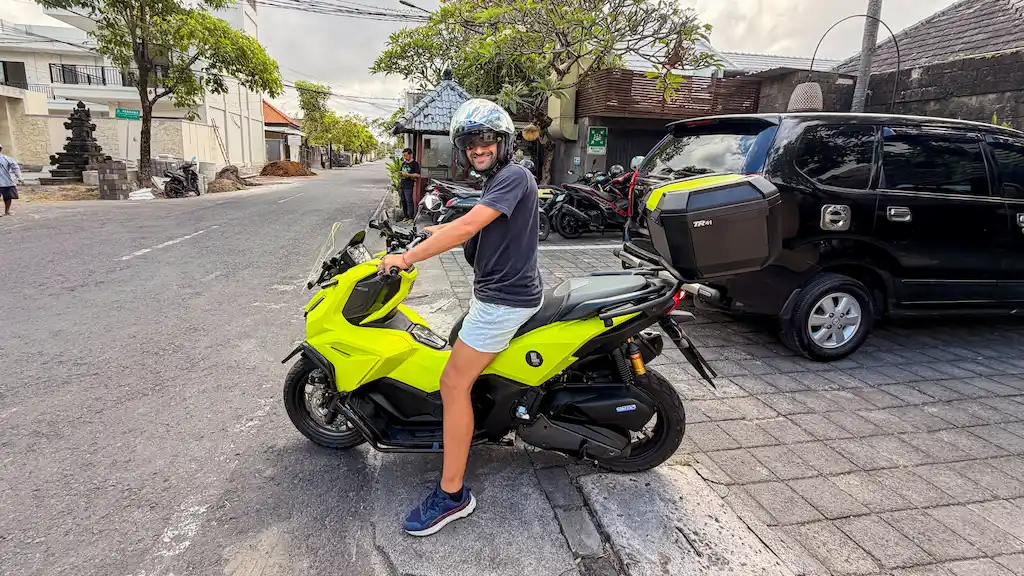
Where to rent a scooter in Bali without being scammed?
We are locals in Bali, and know where to go, rented our scooters in multiple places. Check our tips on how to avoid scams, which are the most recommended scooter rentals and how much costs.
Is Ubud Worth Visiting? Our Verdict
Ubud is worth visiting — for the culture, the food, the rice terraces done right, and the genuine ability to slow down that the coast doesn’t offer. It isn’t worth visiting if you want beaches, nightlife, or an easy drive across town at 5pm.
We’d pair 3-4 days in Ubud with time on the coast rather than base an entire trip here, and we’ll keep going back for exactly the reasons above.
Bali Travel Guides

For further recommendations about Canggu, see this guide.
Is Canggu worth visiting? A pros and cons guide to Canggu, Bali
Where to stay in Ubud
Perfect Stay!
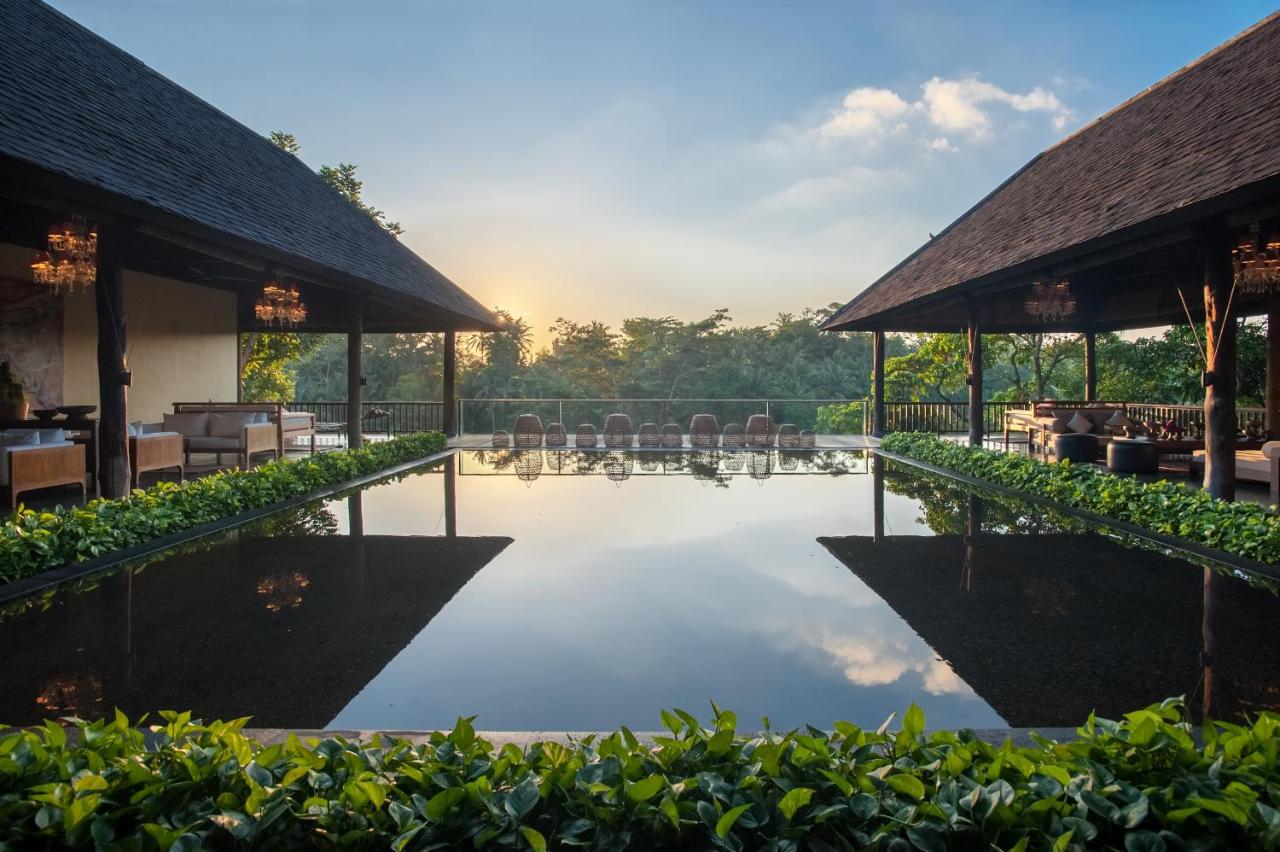
Amazing location, great rooms and the best infinity pool ever, Komaneka at Bisma Ubud is the perfect place for you!
Affordable Places in Ubud
Things to know before visiting Ubud
Is Ubud Safe & Easy to Get Around?
Our stay in Ubud was completely safe, even at night — our accommodation sat a little away from the centre, still within walking distance, and it was genuinely pleasant to stroll around after dinner. The real friction isn’t crime, it’s traffic: central Ubud (Jalan Raya Ubud, Monkey Forest Road, Hanoman) suffers serious gridlock, and pavements can disappear entirely in places, so walking or a short, careful scooter ride is usually faster than a car.
Grab and Gojek both operate in Ubud, but pick-up is restricted to designated zones in the centre — local taxi driver unions have pushed back on ride-hailing in the past, so drivers sometimes cancel or ask you to walk to a nearby meeting point rather than collecting you at your door. We felt this ourselves: our Gojek delivery driver couldn’t reach our jungle-edge accommodation at all, and we ended up eating on-site rather than persisting with the app. If you’re staying somewhere similarly tucked away, check pick-up logistics with your accommodation before you rely on delivery or ride-hailing.
Bali Visa
If you plan to travel to Bali, you can use a VOA (visa on arrival). However, be prepared to wait in line at either Denpasar (Bali airport) or other airports in the country. If you have a US, UK, Australian, or EU passport, you can easily apply online and travel as we did.
With a VOA, you can stay in Indonesia for up to 30 days, whether you get it online or on-site. In fact, completing the online procedure can save you time and money.
If you only get a VOA when you arrive at the airport, you will need to visit the Denpasar immigration office twice to extend your stay for another 30 days. Completing the procedure online eliminates the need to go back and forth to the immigration office and allows you to complete all necessary paperwork online.
Don’t drink tap water in Ubud
During our trip to Asia, we made a conscious decision to avoid drinking tap water. This was especially important in Bali, where the high mineral content in tap water can cause digestive issues, commonly referred to as “Bali Belly.” To ensure that we stayed hydrated and healthy, we opted for bottled water instead.
ATMs, currency, card payment and cash in Ubud
During our trip to Ubud, we didn’t face any issues while making payments with our card. However, if you plan to visit local markets, warungs, or similar places, it’s better to carry cash. Many ATMs are available in Ubud, but you need to be cautious of the ones that charge exorbitant fees.
Maya Bank, which is identifiable by its yellow sign, is the most convenient ATM in Bali. It allows you to withdraw up to 5 Million Rupees, approximately $340, with no additional fees. The currency used in Bali is the same as the entire Indonesia, and the exchange rate is around $1 = 17,400 Rupee. Check the current exchange rate.
Bali Travel Insurance
Although we did not experience any safety problems while in Bali, we recommend that you be aware of the possibility of hazardous driving conditions in busy areas like Ubud, Canggu, Seminyak, and Kuta. If you are planning to rent a motorbike, we strongly advise that you purchase travel insurance that will cover any potential incidents. REQUEST A QUOTE.
Bali’s roads carry real risk for scooter riders, and medical bills, repairs or repatriation can add up quickly without cover — it’s worth taking seriously rather than skipping.