







Chiang Mai and Chiang Rai end up together on almost every Northern Thailand itinerary, and honestly, we get why. They’re both old Lanna cities with temples, markets and cool winter mornings, and they’re only about 186 km apart.
But they feel very different once you’re there. Chiang Mai is the bigger, busier base with the cafes, the coworking spaces and the day trips, while Chiang Rai is smaller, quieter and known for a handful of temples that look like nothing else in Thailand.
We spent nearly a month in Chiang Mai and a week in Chiang Rai on our backpacking trip around Southeast Asia, and we tracked our spending in a spreadsheet. This guide puts those numbers next to the things that really decide Chiang Mai vs Chiang Rai, like how many days you’ve got, when you’re going, how you’d get between the two and what each one costs.
Choose Chiang Rai if you’ve got two or three days, mostly want temples and a slower pace, or you’re heading on to Laos. If you’ve got the time, do both and start in Chiang Mai, which is how we did it.
We updated the prices, bus times and entry fees below in October 2026, and we’ve flagged the parts that change with the season.

Is Chiang Mai the same as Chiang Rai?
No. Chiang Mai and Chiang Rai are two separate cities in two separate provinces, about 186 km (116 miles) apart, which is roughly three to four hours by road. Chiang Rai is the older of the two, because Chiang Mai (the name means “new city”) was founded in 1296 as the new capital of the Lanna Kingdom, taking over from Chiang Rai.
Today Chiang Mai is the much bigger city and a popular base for digital nomads, while Chiang Rai is known for its temples, such as the Blue Temple and the White Temple.
Which is better, Chiang Mai or Chiang Rai?
It comes down to how much time you’ve got and what you want out of the trip. How many days can you spare? Do you want cafes, coworking spaces and a different night market every evening, or would you rather see a few unforgettable temples and slow down?
And is Laos next on your route? Which one’s right for you really depends on your answers, because both cities have their own charm and offer a very different pace.
If you’re up for variety, Chiang Mai is the better pick in our opinion. It’s the bigger and more developed city, with a big expat community, loads of cafes, cooking classes, elephant sanctuaries, and Doi Suthep and Doi Inthanon on your doorstep, which is why it’s so popular with digital nomads and backpackers in Thailand. It’s also where our plans fell apart in the best way, since 10 days turned into a month. If you’re into history, culture, temples and street food, Chiang Mai is a great base for all of it.
If you’d rather slow down, Chiang Rai is your place. It’s smaller and laid-back, with fantastic temples, the Golden Triangle close by and a lot less going on after dark, which makes it a good spot to unwind, learn about Northern Thai traditions and even get some work done. It’s also the better launch pad for Laos, because the Chiang Khong border crossing is a bus ride from Chiang Rai and not from Chiang Mai. So if you want natural beauty, a quieter atmosphere and a road to Laos, Chiang Rai is the one.
Heading there soon?

How to Get From Chiang Rai to the Laos Border by Bus (2026 Update)
Chiang Rai to the Laos border is one cheap local bus, a short ride to Thai immigration, a bridge shuttle and the visa counter. We did it in about five…
Read this guide
Can we do a day trip from Chiang Mai to Chiang Rai?
Yes, you can take a day trip from Chiang Mai to Chiang Rai, but it makes for a very long day. The road is about 186 km, which is three to four hours each way, so you’ll start early in the morning and get back late in the evening. That’s enough time for the famous White Temple (Wat Rong Khun) and the nearby Golden Triangle, but not much else.
If you’d rather not sort out the transport yourself, a tour covers the main sights with a guide and the driving. We suggest using Get Your Guide, which costs only £40 | $50 | €45, and it’s a good option if you want to make the most of one day and keep it organised. Check out this tour!
Honestly, we’d stay at least one night if you can. Most tour groups head back to Chiang Mai around 4 to 4:30 PM, so if you stay over you get the temples, and Wat Huay Pla Kang at sunset, once the crowds have gone. That’s how we did it.
Heading there soon?

How to get from Chiang Mai to Chiang Rai
We’ve all been there—planning a trip and trying to make the most of our budget. Travelling from Chiang Mai to Chiang Rai is no exception; you can do it cheap,…
Read this guideWhat Are the Differences between Chiang Mai and Chiang Rai?
Here’s the short version of how the two compare, and we go into the details of each row further down.
| Name | Chiang Mai | Chiang Rai |
|---|---|---|
| Best for | First-timers, digital nomads, day trips and long stays | Temples, a slower pace and the road to Laos |
| How long should you stay | A week or more | 2-3 days |
| Size | About 127,000 people in the city proper, more than 1 million in the urban area | About 77,000 people in the city proper |
| Best time to visit | November to January, before the smoke season | November to January, before the smoke season |
| Things to do | Elephant sanctuaries Doi Suthep Wat Chedi Luang Sunday Night Market Thai cooking class | Blue Temple White Temple Wat Huay Pla Kang Black House |
| Cheapest Pad Thai we found | Around 50 baht | Around 80 baht |
| After dark | Night markets, bars and live music most nights | Night Bazaar every night and a Saturday Walking Street |
| How you get to the other city | Green Bus from Arcade Bus Station (Terminal 3), 3 to 4 hours | Green Bus from Bus Terminal 1 in the city centre, 3 to 4 hours |
Chiang Mai vs Chiang Rai: Food
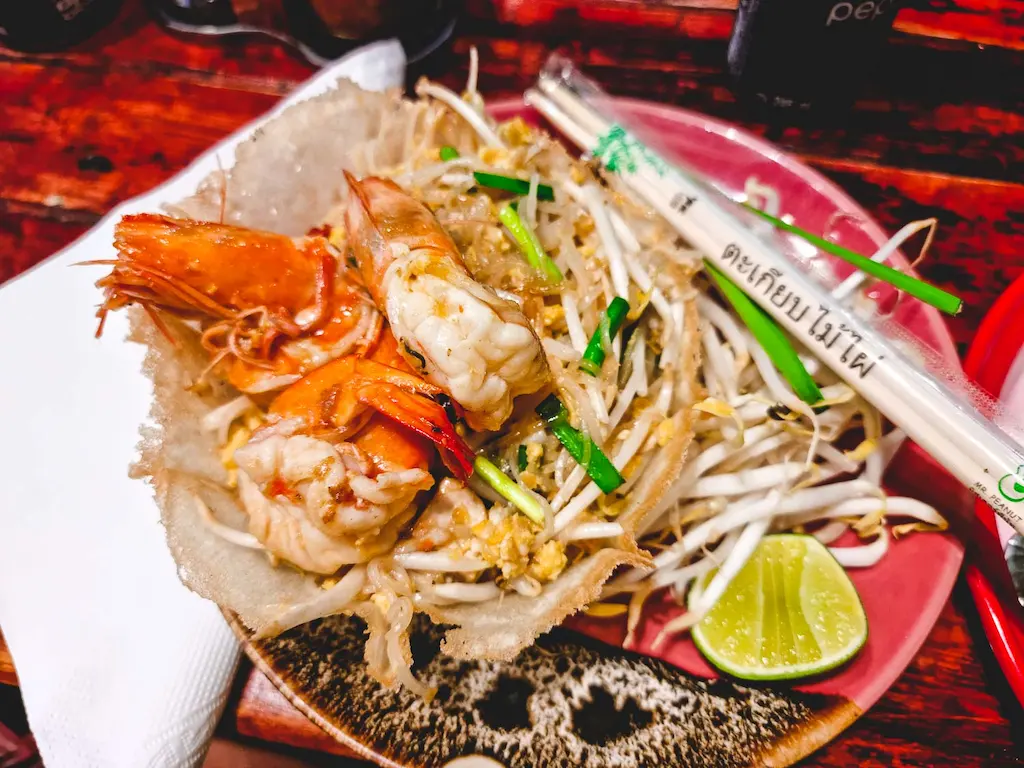
Both Chiang Mai and Chiang Rai are in northern Thailand and share a food identity built on local dishes passed down through generations. Khao Soi is the one you shouldn’t skip, a coconut curry noodle soup that can be mildly or strongly spicy depending on where you order it. In Chiang Mai we found a fantastic restaurant called Grazie, which serves absolutely delicious food.
We had a harder time finding good alternatives in Chiang Rai. The Night Bazaar was our go-to place to eat there, and it was always lively, but prices were generally higher than in Chiang Mai. They’re still cheap compared with Western prices, though higher than what we usually spend in Thailand.
A good example is Pad Thai, which cost around 50 baht (£1.20 | $1.50 | €1.40) in Chiang Mai, while the cheapest we found in Chiang Rai was 80 baht (£2 | $2.50 | €2.20). That’s roughly 60% more, which is still small money but adds up if you eat out every day.
Chiang Mai vs Chiang Rai: Value for Money
Throughout our trip to Thailand we tracked all our expenses in an internal spreadsheet, so we can tell you what each place actually cost us rather than guess.
In Chiang Mai we spent around £700 on accommodation, meals, night outs, scooter rentals and other bits and pieces. During our 4-day stay in Chiang Rai we spent a total of £120 on everything, including accommodation, meals and other expenses.
It isn’t a perfect comparison, since a long stay and a short one are very different trips, but it gives you a feel for the budget. Food was pricier for us in Chiang Rai, though the main sights are mostly free. If you’re planning your first trip to Thailand, we highly recommend visiting both, and Chiang Rai works well as a 2-day trip from Chiang Mai, with our Chiang Mai itinerary covering the other side.

Chiang Mai vs Chiang Rai: Things to Do
Both cities have plenty to fill a few days, and our guides go deeper on each. Here are the highlights:
Things to do in Chiang Mai
- Go temples hopping
- Take a cooking class
- Visit Doi Suthep and Doi Inthanon National Park
- Visit the Elephant Sanctuary
- Grab a beer at Zoe in Yellow
- Visit the night markets
- Cool down at Chiang Mai Sticky Waterfalls
- Explore the jungle in search of Waterfalls
Things to do in Chiang Rai
- Visit the Blue temple (free)
- Check out the famous White Temple (200 baht for foreigners)
- Enjoy the sunset from Wat Huay Pla Kang Temple (free)
- Grab some food at Night Bazaar market
- See the Black House (Baan Dam Museum), a collection of dark wooden buildings and art, which we cover in our Chiang Rai guide
- Take the bus to Chiang Khong and cross into Laos, as in our Chiang Rai to Laos border guide
READ ALSO | Chiang Rai itinerary


Get your free guide
Going soon to Thailand? Over 400 tips, places and experiences
We've spent the past 5 years travelling around Thailand, from south to north, staying longer in places, living like locals. We travel slow, that's why our maps are filled with over 400 pins and tips on how to make the most.
Check your inbox!
We've just emailed you. Click the button in that email and your guide is on its way.
Chiang Mai vs Chiang Rai: Weather
Both Chiang Mai and Chiang Rai are in Northern Thailand, and Chiang Rai sits further north, so it’s usually a degree or two cooler, especially at night. The bigger story for both is the season, because the dry season isn’t always the clear one.
- ☀️ Sunny
- 🌤️ Mild
- 🔥 Hot
- 🌧️ Rainy
- January: Sunny, 22°C (72°F)
- February: Sunny, 25°C (77°F)
- March: Hot, 29°C (84°F)
- April: Hot, 33°C (91°F)
- May: Rainy, 31°C (88°F)
- June: Rainy, 29°C (84°F)
- July: Rainy, 28°C (82°F)
- August: Rainy, 28°C (82°F)
- September: Rainy, 28°C (82°F)
- October: Mild, 27°C (81°F)
- November: Mild, 24°C (75°F)
- December: Sunny, 21°C (70°F)
Weather in Chiang Mai and Chiang Rai
There isn’t much difference between Chiang Rai and Chiang Mai in terms of weather. Both locations are very close, and climate is similar. The cool, dry season runs from about mid-November to late January, with days around 29 degrees and nights dropping to roughly 15. From March to May it gets properly hot, and April is the hottest month with highs around 36 degrees.
The rains arrive around May and stay until October, with August and September the wettest. The best time to visit Chiang Mai is covered in more detail in its own guide.
We’d avoid travelling to Chiang Mai from July to early October because it’s the heart of the rainy season, but the weather can be unpredictable. During our month-long stay in Chiang Mai, we only had two heavy rainy days.
The smoke season in Northern Thailand
This is the part a lot of guides skip. Every year, usually from January to April and peaking in March, crop and forest fires fill the north with smoke, and the air quality in Chiang Mai can drop to some of the worst in the world. Chiang Rai gets hit too. In 2026 Chiang Mai banned open burning from 1 January to 31 May, and Chiang Mai, Chiang Rai, Lamphun and Mae Hong Son have been declared pollution control zones from February to May each year. We’ve never stayed through it (we always leave before it starts), so we can’t tell you what it feels like first-hand, but the data is clear enough for us to plan around it.
That’s why we’d go between November and January if you can, instead of the “October to April” window you’ll see on a lot of sites. If March is your only option, check the live air quality index before you book and keep your plans flexible. Our guide to Thailand in January shows what that cool, clear window looks like.
Chiang Mai vs Chiang Rai: Length of Stay
We enjoy travelling slowly and staying longer at places we genuinely enjoy. Initially, we had planned to spend only 10 days in Chiang Mai, but we ended up spending a whole month there. If you have limited time and want to visit both places, we recommend spending at least 4-5 days in Chiang Mai and 3 days in Chiang Rai. If you only have a week in total, that split still works, and ten days would be ideal if you don’t want to rush.
If you’d rather keep Chiang Mai as your only base, you can take a day trip to Chiang Rai and choose the tour that suits you. You can consider checking out this tour!
The order matters if Laos is on your route. We started in Chiang Mai, took the bus to Chiang Rai, and then carried on to the Laos border by bus before taking the slow boat down the Mekong from Huay Xai. Going in that direction means you never backtrack, because Chiang Rai is the stepping stone to Chiang Khong. Our guides to the Chiang Rai to Laos border and the Mekong slow boat cover that part of the trip.
READ ALSO | Is Chiang Rai worth visiting?

Chiang Mai vs Chiang Rai: Travel Costs
Thailand is known for being inexpensive, so you won’t have to spend a lot if you plan your trip properly. During our month-long stay in Chiang Mai, we spent around £700, which covered our accommodation, meals, activities, scooter rentals and other experiences. In Chiang Mai, the cost depends a lot on what you add on, like cooking classes, elephant sanctuary visits and day tours.
Chiang Rai is a budget-friendly option because most of the main sights are free or cheap. The White Temple entrance fee is the one that costs real money, at 200 baht for foreigners since 1 January 2026, up from 100 baht before, and the new price includes the Cave of Art. The Blue Temple and Wat Huay Pla Kang are free to visit, although climbing inside the Guanyin statue at Wat Huay Pla Kang costs 40 baht. The Black House charges around 80 baht.
Chiang Mai vs Chiang Rai: Nightlife
We found that Chiang Mai had the most vibrant nightlife during our trip. Every night, there was something to do or a new pop up market.
The city has many open spaces, markets, bars and clubs, making it the best place to experience Thailand’s nightlife. We particularly enjoyed spending time at Zoe in Yellow, which became our go-to place for a great evening every night.
Although Chiang Rai also had a decent nightlife, it couldn’t compare to Chiang Mai. During our visit, though, there was a festival in Chiang Rai, and the locals were dancing to live music, with fantastic food stands all around. The Night Bazaar is open every night, and on Saturdays the Walking Street on Thanalai Road fills the town centre with food and craft stalls, so a Saturday is the night to be there if you can choose.
Are there flights between Chiang Mai and Chiang Rai?
Not at the moment. Both cities have an airport, but no airline runs a regular direct flight between them right now, so flying means connecting through Bangkok. That takes far longer than the bus and costs a lot more, with one-way fares starting at roughly 2,000 baht. Direct routes have come and gone here before, so it’s worth a quick search with the widget below before you rule flying out completely.
Chiang Rai vs Chiang Mai: Day Trips
Day trip from Chiang Mai
From Chiang Mai, you have more flexibility to plan a day trip, and here are some ideas:
- Chiang Rai
- Doi Suthep
- Huay Tung Tao Lake
- Doi Inthanon National Park
- Elephant Nature Park – BOOK IT HERE!
- Chiang Dao Cave
Day Trip from Chiang Rai
From Chiang Rai the options are fewer, but they take you closer to the hills and the borders:
- The Golden Triangle, where Thailand, Laos and Myanmar meet
- Doi Luang National Park
- Akha Village – CHECK THE AVAILABILITY!
- Doi Tung and Doi Mea Salong
How to go from Chiang Mai to Chiang Rai?
The easy way is the bus, and there are a few other options for the 186 km between Chiang Mai and Chiang Rai, each with its own advantages and disadvantages.
BUS
Travelling between Chiang Mai and Chiang Rai by bus is cheap and easy, and it’s the route most backpackers take. Green Bus is the main operator, with buses leaving Chiang Mai’s Arcade Bus Station (Terminal 3) and arriving at Chiang Rai Bus Terminal 1 in the city centre. The standard bus takes around 3 hours 45 minutes and costs roughly 250 to 300 THB, while the VIP bus takes about 3 hours 20 minutes and costs around 100 THB more. We took the VIP, because it was only a little pricier and a lot more comfortable. You can book Green Bus tickets online on 12Go, which costs a few baht extra but beats queueing for the last seats at the terminal. The same buses run the other way too, from Chiang Rai to Chiang Mai, with similar times and prices.
CAR
Renting a car in Thailand can be great if you value flexibility and privacy, and it’s particularly convenient if you’re travelling with your family. The journey usually lasts around 3 to 4 hours, so you can set your own pace and stop along the way. A scooter is possible too and takes about 4 hours, but we haven’t done it (we had Laos next), so only try it if you’re confident on Thai highways.
MINIVAN OR TAXI
Minivans also leave Chiang Mai during the day and are a fine option if the bus times don’t suit you. A Bolt or private driver is the pricey choice at around 1,500 baht (about £35) for the whole car, which starts to make sense if you’re a group of three or four.
FLIGHT
As we explain in the flights section above, there’s no regular direct flight right now, so flying means connecting through Bangkok. Add the security queues and the hassle of getting a reasonable rate for the taxi to the airport, and the bus is faster door to door as well as much cheaper.
TRAIN CHIANG MAI TO CHIANG RAI
There’s no train between Chiang Mai and Chiang Rai. The railway from Bangkok ends in Chiang Mai, and extending it north is still only a plan, so you’ll need the bus or a car for this stretch. Our Chiang Mai to Chiang Rai guide has the full breakdown.

Chiang Mai vs Chiang Rai: Accommodation
Depending on where you plan to stay, you can find great deals on accommodation in Chiang Mai. The city is big, so you can base yourself inside the Old Town or in the Nimman area, which is where a lot of digital nomads end up.
During our first visit to Chiang Mai, we spent the first ten days within the Old Town walls and the rest of our stay outside the city centre. On our trip to Chiang Rai, we stayed central, about a 15-minute walk from the Night Bazaar, which suited a short trip. For where to stay in Chiang Rai, our Chiang Rai guide has our picks.
READ ALSO | Renting a scooter in Chiang Mai
Final thoughts: Chiang Mai or Chiang Rai?
If we had to sum it up, we’d say Chiang Mai for a long stay, Chiang Rai for a short and slower one, and both if you’ve got the time. Chiang Mai is where 10 days turned into a month for us, because there was always another cafe, market or day trip to try. Chiang Rai gave us the quieter side of the north, and Wat Huay Pla Kang quickly became one of our favourite temples in all of Thailand. The downsides are real too. Chiang Mai is busier and, during the smoke season from about February to April, the air can be properly bad, while Chiang Rai has less to fill more than three days and the food cost us more. For a first trip to Northern Thailand, we’d start in Chiang Mai, give Chiang Rai two or three nights, and carry on to Laos from there if that’s your route.
the best place to start