How We Get Around Chiang Mai: Honest Tips After 4 Years exploring the city

Is it better to rent a scooter or rely on Grab? We’ve tested every transport mode in Chiang Mai since 2022. From dodging police checkpoints to hailing electric LOMO tuk-tuks, here is the “boots-on-the-ground” reality of getting around Chiang Mai in 2026.
Chiang Mai has been our home away from home for the past four years. Every year, we return for at least a month, trading the London drizzle for the humid, temple-lined streets of the North. Transport has always been our first problem everytime we explore a new city. However, we can assure getting around Chiang Mai is easier than you think.
Since those early days, we’ve tried every possible way to navigate the city, its local markets and quiet streets away from touristy routes. How to get around Chiang Mai? We’ve spent countless mornings flagging down Songthaews (the iconic red trucks) from the side of the moat, and evenings comparing prices between Grab, Bolt, and InDrive to see who would get us to Nimman the fastest.
We’ve pedalled bicycles through the quiet sois behind Central Festival at sunrise and relied on local tours to reach the misty peaks of the surrounding mountains when we didn’t feel like driving ourselves.
Whether you are in Chiang Mai for a slowmad (slow digital nomad) journey or for a quick trip, believe us, knowing the logistics is the key to enjoying CNX more. If you’re landing, your first mission will be getting from Chiang Mai Airport to the city centre, but once you’ve dropped your bags at your accommodation in Chiang Mai, the real adventure begins.
In this guide, we’re sharing the “boots-on-the-ground” reality of transport in 2026—from what we’ve seen as the rise of electric LOMO tuk-tuks to the best apps for avoiding dealing with greedy or unregulated taxi drivers.


👋Toti & Ale here
London couple, 45+ countries, 300+ guides. We are full-time content creators, travelling as slowmads, spending quality time in places we love the most. We run this and several other blogs from the best places in the world. This guide is all about how to get around Chiang Mai, every transport option from private rentals to public transport. We take them all, every year when spend two months as digital nomads from our Condo in Northern Thailand.
April 11, 2026 This update reflect changes in prices and routes we noted in our February visit. Low season is cheaper than high season of course, but that doesn’t change price for the red trucks. No AI; all road-tested.
This post includes affiliate links. We may earn a small commission at no cost to you. You can also buy us a coffee to support the site directly. Learn more in our Cookie Policy.
Chiang Mai Transport Comparison & Pricing (2026 Updated)
| Mode of Transport | 2026 Estimated Price (THB) | Best For | Pro Tip for 2026 |
| Songthaew (Red Truck) | 30 – 60 Baht (City) | Budget & Short distances | Prices are now semi-fixed at 30B within the moat, but can reach 60B for Nimman. |
| Grab / Bolt / InDrive | 60 – 150 Baht | Comfort & No haggling | Bolt is currently the cheapest, but InDrive allows you to bid for your own price. |
| RTC Smart Bus | 30 Baht (Flat fare) | Airport to Old City/Nimman | The blue buses are back! Great for A/C and fixed routes via the R3 line. |
| Tuk-Tuk | 100 – 200 Baht | Short tourist hops (bargain to lower the price | Prices have risen; 100 THB is the minimum “tourist” starting rate for even 1km. |
| LOMO (EV Tuk-Tuk) | 80 – 150 Baht | Eco-friendly and sustainable | Look for the bright green electric tuk-tuks. They are often cleaner and quieter. |
| Scooter Rental | 200 – 350 Baht / Day | For day trip driving around (Doi Suthep, Doi Inthanon, Mae Kampong Village | High-season (Dec-Feb) prices push closer to 350B. Always check for insurance. |
| Bicycle Rental | 50 – 100 Baht / Day | Exploring the Old City or if staying around Central Festival | Best for the morning before the 2026 heat kicks in. |
Walk is our favourite way to get around Chiang Mai
The first time we arrived in Chiang Mai, we chose an accommodation which was within the city walls. We didn’t have much experience neither driving, nor staying at the back of a motorbike, so renting a scooter wasn’t on the table.
Basically, Chiang Mai is pretty walkable and safe, making it one of our favourite destinations in Southeast Asia. If you are just starting your trip backpacking in Southeast Asia, walking is probably your best option.
There are plenty of pedestrian paths in Chiang Mai, making it easy to navigate. If you are staying in the Old Town or in the Nimmanhaemin Area, you probably don’t need a scooter and will rely merely on Taxi apps or Songtheaw for the entire trip.

The Sustainable Shift: LOMO EV Tuk-Tuks & RTC Smart Bus
In our latest visit to Chiang Mai we were super happy to find innovative changes. The city is evolving and with mass tourism also infostructures are improving.
The new EV TukTuks are an innovative signal, that beats the old fashioned way to get around Chiang Mai. Lomo, is an app that you can use on the mobile, it only applies to TukTuk and it’s mostly for rides within the old town and Nimman.
☕ Buy us a coffee!
Our travel guides are free and made with love to help you explore more, spend less, and travel better. Passport and Stamps project is all run at our expenses, and reader founded. If you’ve found our tips and guides useful, we’ll appreciate if you can buy us a coffee.
This will keep the adventures going and support more content like this. Cheers!! ☕🌍
Rent a scooter
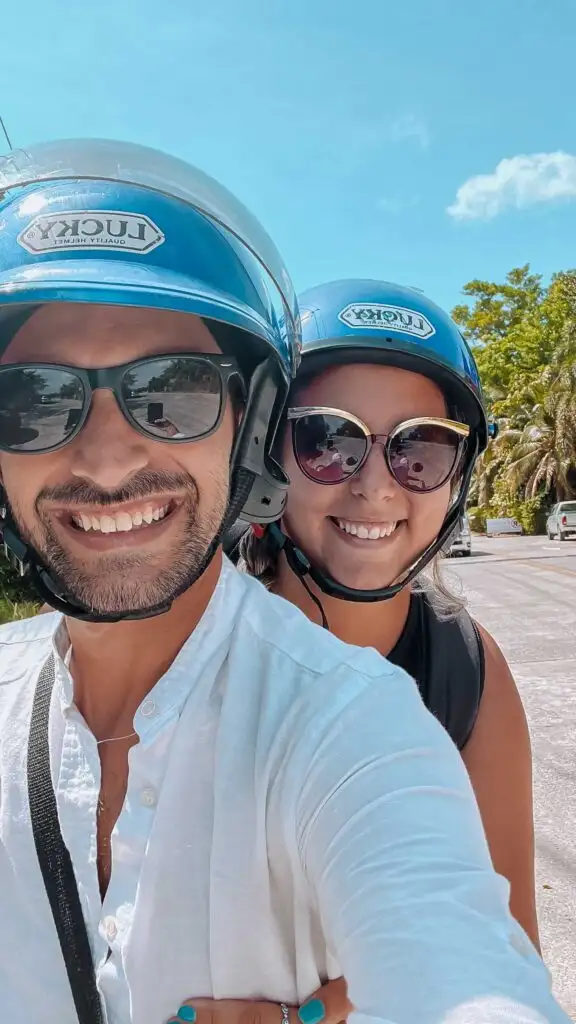
Renting a scooter is, in our opinion, the ultimate way to unlock Chiang Mai. While we love a good Songthaew ride, having your own set of wheels gives you a level of freedom that taxis can’t match. It allows you to set your own pace, stop at that random roadside coffee stall, and explore the quiet sois (alleys) that most tourists never see.
For us as a couple, it’s also the most budget-friendly move. Instead of paying for two seats on a tour or multiple Grabs, one scooter rental covers us both for the entire day.
Epic Day Trips You Can Only Do by Bike
If you are planning to venture beyond the Old City, a motorbike is almost essential. Some of our favourite “Slowmad” memories were made on long drives to:
- The Sticky Waterfall (Bua Tong): A 90-minute scenic drive where you can literally climb up the limestone falls.
- Ely Cafe: An ethical cafe for retired elephants and cute dogs. The sousage ones are so playful. One of our favourite coffee places in Chiang Mai.
- Huay Tung Tao Reservoir: Perfect for a cheap lunch in a bamboo hut over the water.
- Mae Kampong Village: We reached the Chinese Village after a 1h ride in the Chiang Mai province countryside, it’s unique, but we did easily with a scoopy 125cc.
Police Checks & Licenses in 2026
We have to be honest with you—the days of “easy riding” without a license are over. In 2026, the Chiang Mai police became very strict. During our last visit, we were stopped twice at major intersections (like the Maya Mall corner and North Gate).
To ride legally and avoid a 500 – 2,000 THB fine, you must have:
- Your home country’s driving license (with a motorcycle endorsement).
- An International Driving Permit (IDP). Note: In 2026, the police specifically look for the “Motorcycle” stamp on your IDP. If you only have a car license, your travel insurance will likely be void in the event of an accident.
How Much Does it Cost? (2026 Prices)
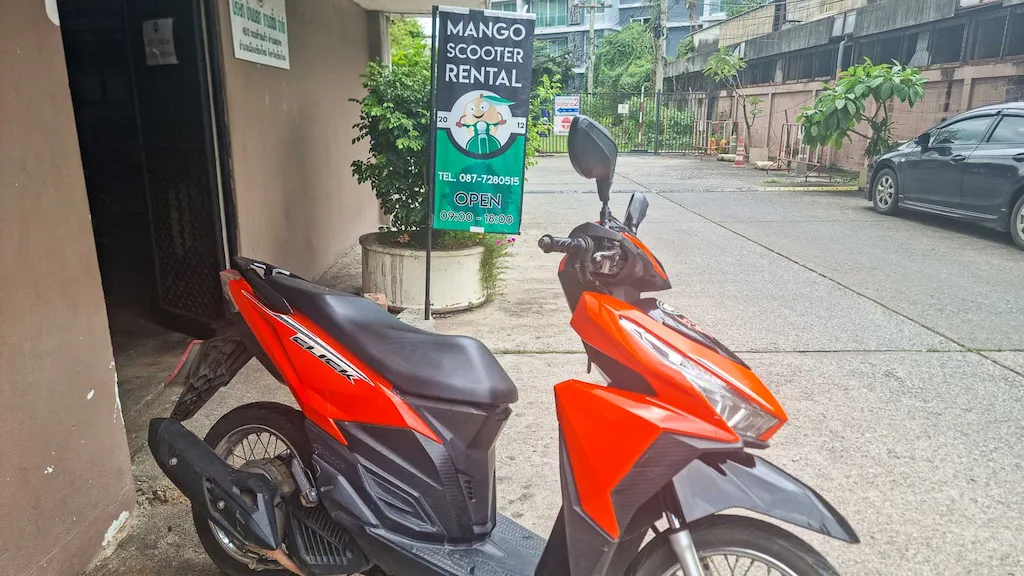
Prices have shifted slightly lately. Here is what you can expect to pay for a reliable 125cc scooter (like a Honda Click or Grand Filano):
- Daily: 200 – 300 THB
- Weekly: 1,200 – 1,500 THB
- Monthly: 3,000 – 4,500 THB (The “Slowmad” rate)
Pro Tip: Never leave your original passport as a deposit. Reputable shops will always accept a 2,000 – 3,000 THB cash deposit and a photo of your passport instead. For a deep dive into our favourite shops and safety tips, check out our Full Guide to Renting a Scooter in Chiang Mai.
Riding the Red Trucks (Songthaews)
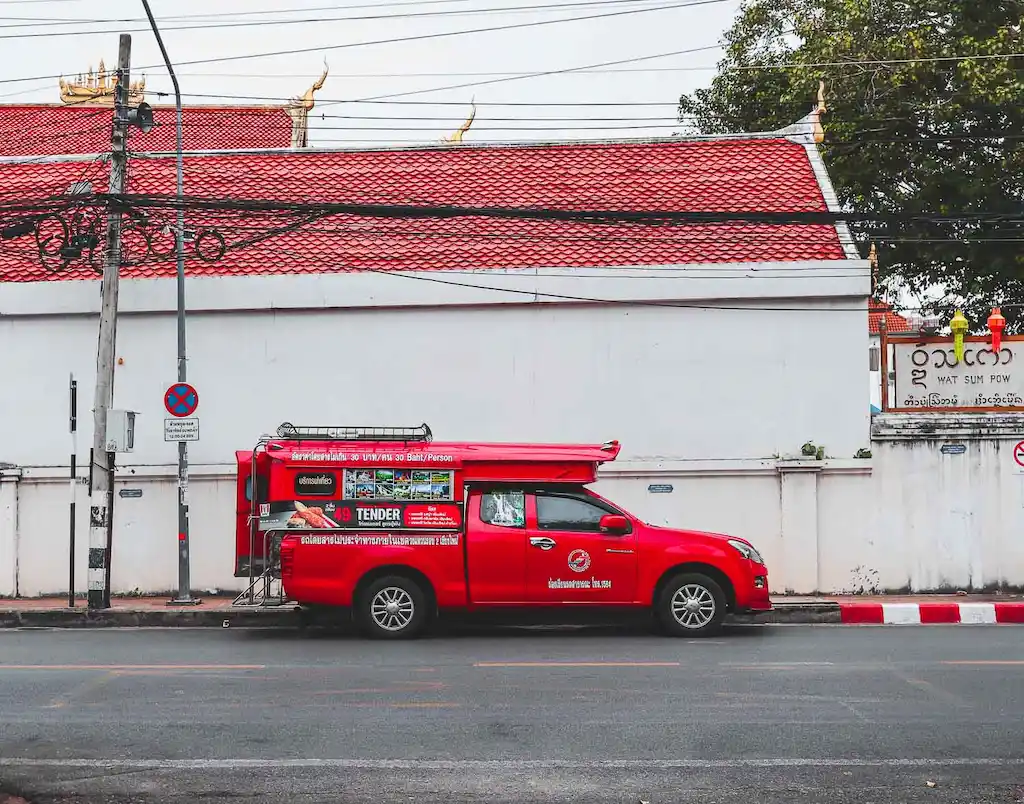
Besides our daily walks or dodging traffic on our rental scooter, Songthaews (the iconic Red Trucks) are our absolute favourite way to get around. These “shared taxis” are the heartbeat of Chiang Mai.
After four years of living here, we’ve realised that while they might look intimidating to a first-timer, they are actually the most flexible way to navigate the city.
How it Works: Locals call them Rod Daeng. Unlike the RTC Smart Bus, which has fixed stops, a Red Truck is a hybrid between a bus and a taxi. You simply hail one on the side of the road, tell the driver your destination, and if they are heading that way, you jump in the back.
The “30 Baht” Rule in 2026:The standard fare for a shared ride within the city moat and out to Nimman is 30 THB per person. You don’t pay when you get in; you pay at the driver’s window once you arrive and hop out.
Beyond the Old City (The Colour Code): One thing we didn’t know during our first year was that the colours actually matter! While Red Trucks roam the city freely, other colours follow specific “Songthaew routes” to the outskirts:
- Yellow Trucks: Head North toward Mae Rim.
- White Trucks: Go East toward the craft villages in San Kamphaeng.
- Blue/Green Trucks: Take locals toward Mae Jo and Lamphun.
Goint to Doi Suthep Temple: If you aren’t ready to rent a scooter in Chiang Mai (we weren’t on our first week) the Songthaew is your best friend. Believe us, getting to the peak isn’t easy, you must tackle mountain curves and steep turns. We found a dedicated trucks at the “Doi Suthep Station” (near the Zoo or Chang Phuak Gate).
The standard shared rate is roughly 100 THB one way, or you can negotiate a private return trip if you’re with a group.

Public AC Buses
The AC ultralow emission buses like the R3 Loop (Airport -> Old City -> Nimman) are a new addition. While many old guides still treat it as a beta of the program, we found it in 2026 working, running and very efficient.
The buses have AC, and you pay once boarding to the driver. Payment is only in cash and costs 30 THB per person. Instead, the shuttle bus from Chiang Mai Airport to the city centre costs 50 THB per person.
Taxis, Ride-Hailing, and Apps: The 2026 Breakdown
The way people get around Chiang Mai has changed drastically in the four years we’ve been visiting. While traditional street taxis exist, the real power is in your pocket.
Ride-Hailing Apps: Is there Uber in Chiang Mai?
Let’s get the big question out of the way: No, there is no Uber in Chiang Mai. Uber sold its Southeast Asian operations to Grab years ago. However, Grab is no longer the only (or even the best) player in town.
Based on our recent testing as slowmads, here is how we rank the apps in 2026:
- Bolt: Our go-to for the lowest prices. It is consistently 20–30% cheaper than Grab, though you might wait a few minutes longer for a driver.
- Grab: The “premium” choice. It’s the most reliable, accepts international credit cards easily, and is the best for getting from Chiang Mai Airport to the city.
- InDrive: The “Negotiator.” This app allows you to bid your own price. It is fantastic for longer trips to places like Mae Rim or the Sticky Waterfall.
- Maxim: The newcomer. Prices are incredibly low, though the car count is still growing.
Slowmad Tip: Always download both Bolt and Grab. If it starts raining in Chiang Mai, Grab prices skyrocket (surge pricing), while Bolt often remains stable!
Traditional Taxis and Tuk-Tuks
If you prefer to hail a ride the old-fashioned way, look for the traditional cars with the “Taxi-Meter” light on top.
- The Meter Rule: Always ensure the driver turns the meter on before you pull away. A typical cross-city trip (e.g., Nimmanhaemin to the Arcade Bus Station) should cost between 100 – 150 THB. If they insist on a fixed rate of 300 THB, kindly decline and use an app instead.
- Tuk-Tuks: They are iconic and fun for a photo, but we’ll be honest: they are the most expensive way to travel. Expect to pay a “tourist tax,” with rates rarely starting below 100 – 150 THB for even the shortest hops.
- The 2026 Update – LOMO: Look out for the bright green LOMO electric tuk-tuks. They are quieter, eco-friendly, and can be booked via an app, taking the stress out of haggling!
Motorbike Taxis
If you are traveling solo and in a rush, a motorbike taxi is what I will use. Since we moved in Southeast Asia we relied on motorbike taxi for quick moving around. Because of the insane traffic in pick hours, it was my personal cheat code to tackle traffic and arrive to Muay Thai classes on time, leaving Ale with the scooter.
- How to spot them: Riders wear bright orange or yellow numbered vests.
- How to book: You can hail them at street corners or book them directly through the Grab or Bolt apps.
- Safety & Cost: It’s significantly cheaper than a car and much faster during the Nimman “rush hour.” While you’ll often see two locals squeezed onto one bike, we highly recommend getting one bike per person for safety. It’s a cheap thrill that gets you to your Chiang Mai itinerary stops in half the time.

Rent a Car
We haven’t placed renting a car in Chiang Mai higher on our list because it isn’t the smartest idea if you are only staying within the city. While you can still rent a car for a few days to go out in the wild, avoid it if you are only visiting Chiang Mai sights.
Renting a car in Chiang Mai isn’t costly, but still a higher price compared to a motorbike.
Get a driver
One of the most popular options for travellers and first-timers in Thailand is hiring a driver. It isn’t expensive, and it is quite affordable if you share the expenses with friends.
We have also seen many families getting a driver, which makes possible day trips to Chiang Rai, Doi Inthanon and everything easier.
We suggest you book in advance the driver, through a reliable platform like Klook, which allows you to personalise in all details your trip. Prior to arriving in Chiang Mai, you can decide where to get the car, if at the airport or a different location, but also at a different drop-off. Check the service.