



Chinatown Singapore is one of the most well-preserved and photogenic Chinatowns in the world, and in our opinion it’s second only to Bangkok. It’s a compact district of shophouses, temples, murals and hawker food, with the skyscrapers of the CBD looming right behind it.
Our latest trip to Singapore was our fourth, and it included a month living here as slowmads, when Chinatown became our “office away from home”. It has been one of our highlights since the first visit, and whatever the time of year, we’ve found it hot and humid with a short rain shower now and then.
It’s always busy, but on our latest visit it was Chinese New Year, so it was particularly busy, with decorations everywhere and even people singing at the pagoda by the MRT.
Chinatown is incredible for food, and it also ranks highly among the top neighbourhoods to stay in Singapore for first-timers.
This is our full Chinatown Singapore guide, with a self-guided walking tour, a free map, things to do, cafes and practical tips. If you love walks and heritage, our guide to the 10 iconic spots in Singapore Chinatown and other photo spots goes well with it.
About the Authors

Toti and Ale
London couple, 50+ countries, 300+ guides
We are full-time content creators, travelling as slowmads, spending quality time in places we love the most. We have been to Chinatown in Singapore many times, as it's one of our favourite city in Southeast Asia. Passing by every time we can, and staying longer (2 weeks at time).
This update reflect our March 2026 visit to Chinatown, which actually visited twice on our 10 day trip. It was during the Chinese New Year, and we enjoyed the decorations and active party feels. No AI; all road-tested.
Things to Do in Chinatown Singapore
Chinatown’s history dates back to the early 19th century when immigrants from southern China settled here. Today you can find heritage houses in contrast with modern buildings.
The feeling of a mini China is real, starting from the shopping mall, where most of the signs are only in Chinese. These are our highlights of 10 cool things to do in Chinatown Singapore, in the order we walk them, plus an evening bonus:
- Photo ops at the MRT staircase and People’s Park Complex
- Explore shophouses and souvenir stalls on Pagoda Street
- Marvel at the Buddha Tooth Relic Temple
- Hunt for street art and murals
- Coffee break at Nanyang Old Coffee (with a mini museum upstairs)
- Stroll Ann Siang Road for its heritage-meets-modern look
- Visit Sri Mariamman Temple
- Lunch at Maxwell Food Centre
- Cool down at the Singapore City Gallery
- Sip a local brew at Lion Brewery Co. or other bars on Club Street
Evening bonus: head to Boon Tat Street.
Quick Guide to Chinatown Singapore
How to get there: Chinatown MRT station is on the North East Line and the Downtown Line. We tapped our contactless Visa or Mastercard straight at the gates, and we always came out of Exit A.
How long to spend: plan for most of a day if you want every stop. Our walk, with lunch at Maxwell, a break at the City Gallery and an evening on Boon Tat Street, came to about 15,000 steps.
When to go: Pagoda Street is quiet early and buzzing by 11 am, and the Buddha Tooth Relic Temple gets packed around midday. Club Street and Boon Tat Street come alive after dark.
Heat: the humidity hit us like a wall as soon as we stepped out of the MRT. We planned the City Gallery as our air-conditioned break, and we’d suggest you do the same.
Free stops: the street art, the Singapore City Gallery (free for everyone, closed on Sundays) and the 1-Arden rooftop cost nothing (the rooftop needs a booking, more on that in Stop 1).


Best Singapore Chinatown Guided Tours
If you’d rather have the history explained as you go, these are the guided walking tours for Chinatown. One combines it with Little India, one adds a street food tasting in a small group, and one includes lunch. We haven’t taken these tours, but we basically did all three on our own, visiting some of the same spots as the guided ones. They’re the top-rated Chinatown tours on GetYourGuide, our partner website, and we highly suggest them.
- Chinatown and Little India Guided Walking Tour
- Chinatown Heritage Walk & Street Food Tasting (Small Group)
- Chinatown Historic Walking Tour with Lunch
Singapore Chinatown Self-Guided Walking Tour Map
Here’s our free Chinatown Singapore walking tour map with every stop marked. Save it to your phone or print it before you go.

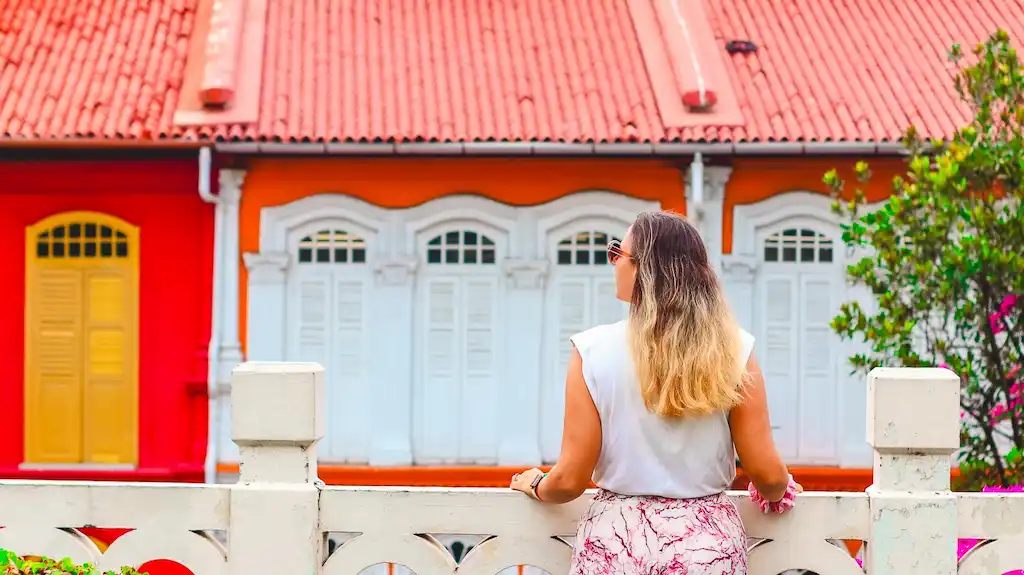
Our Self-Guided Walking Tour of Chinatown Singapore
Chinatown was one of those places in Singapore that just stuck with us. Do you know how some spots have a buzz about them? The moment we stepped out of Chinatown MRT (Exit A), we were hit with the energy: bright lights overhead, the hum of chatter and the smell of sizzling food.
It’s a world away from Singapore’s polished skyline, even though it’s pretty close. We loved every minute, and we think you will too.
Stop 1: The MRT Staircase and People’s Park Complex
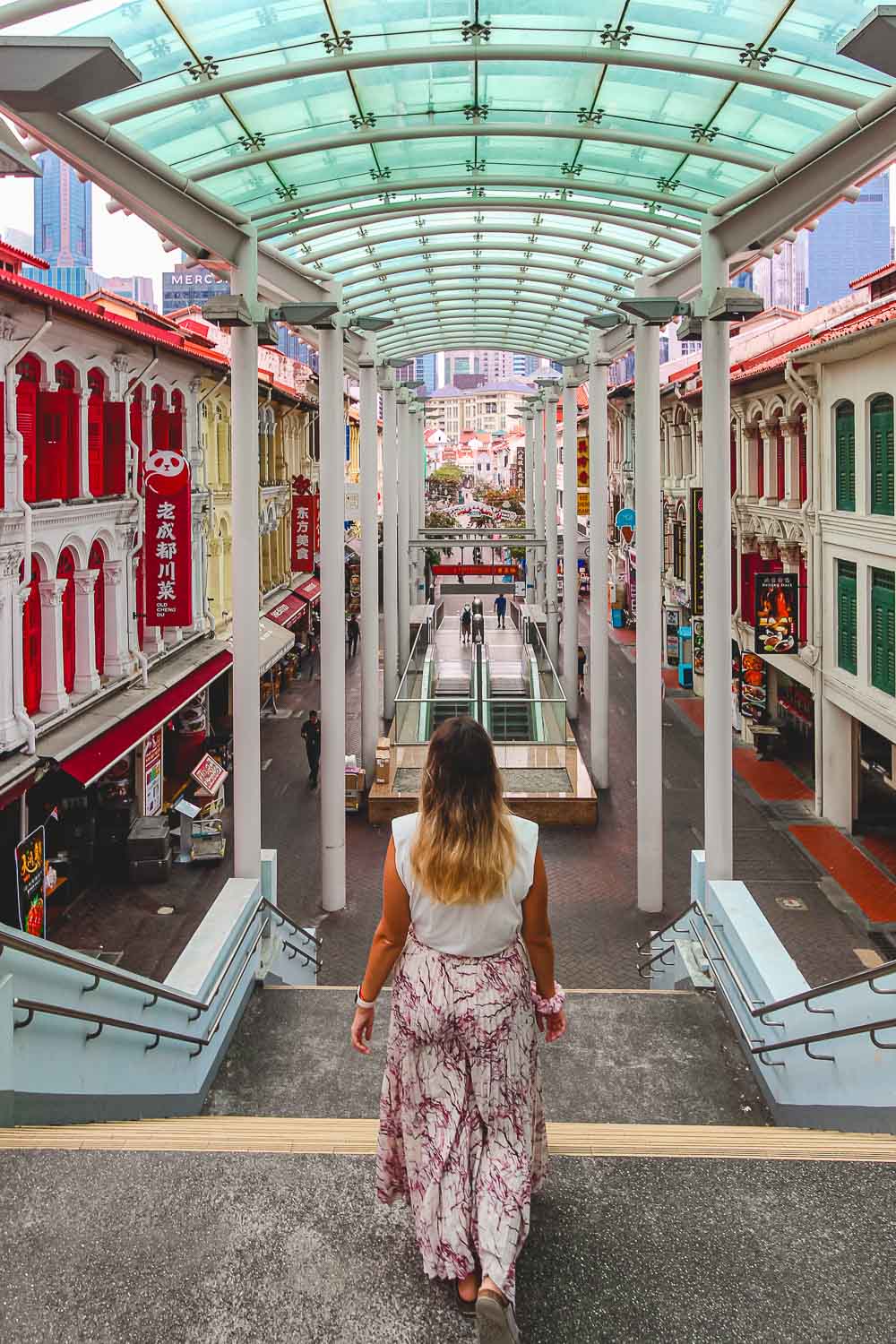
We came into Singapore Chinatown by the iconic staircase that leads you down to Pagoda Street. The best MRT exit is Exit A, which gets you to the upper park.
From there you have a view of the colourful shophouses with the mall behind you, and we spent way more time on that staircase than we should have, trying to get the shot. It’s the ultimate old Singapore against new Singapore frame, and the building’s quirky balconies and retro feel are a photographer’s dream.
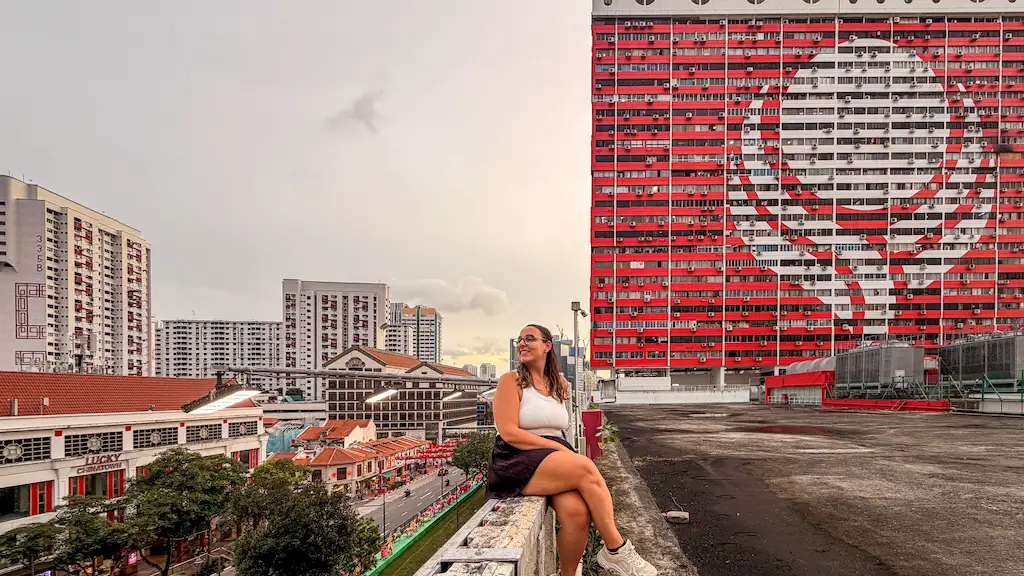
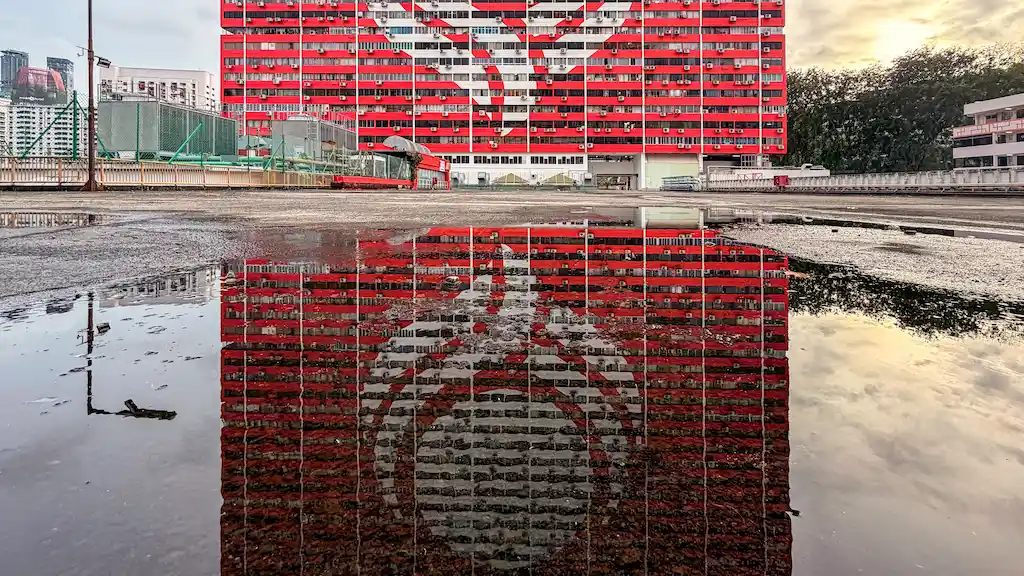
For a different angle, we went up to the rooftop of the People’s Park Complex, a former car park space, and the view from there is insane. It’s one of the most Instagrammable spots in Singapore.
It’s tricky to get to. The first time we got lost in the maze, because there’s no clear sign to the car park, and we gave up. The second time we had more time and didn’t give up: we asked around (some people pointed the way, others didn’t answer at all), made it to the staircase, climbed to the top and found the door onto the rooftop.
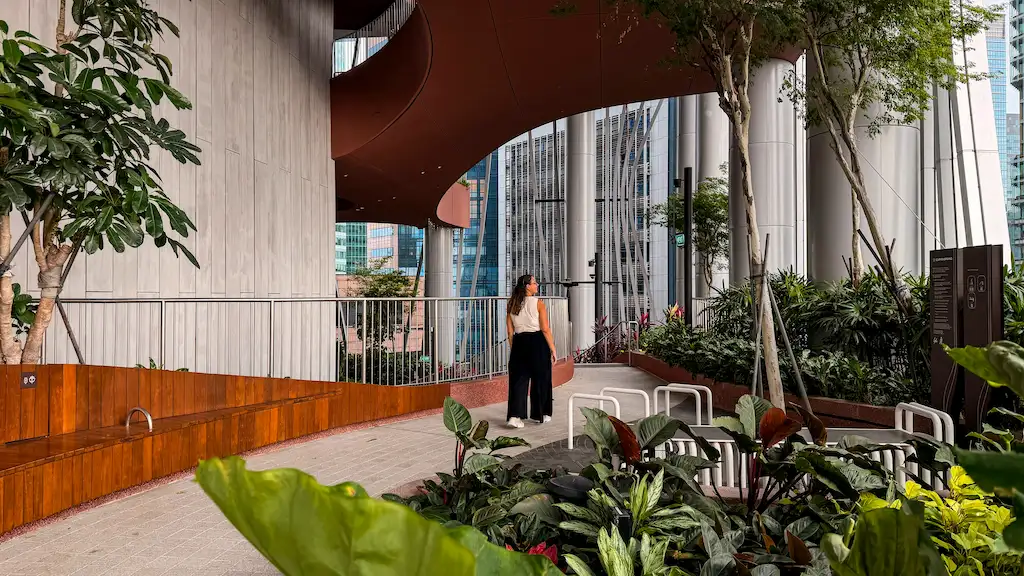
Want another view of the same mural? 1-Arden at CapitaSpring is free and looks south-west over Chinatown, and we watched the People’s Park mural start to show as the clouds cleared.
Tickets are released two weeks ahead and go fast, but the reception told us they keep a few for walk-ins. On our rainy visit the 51st floor was closed at first, so we started on levels 17 to 20 (open until 6 pm), and it opened once the weather cleared.


Stop 2: Pagoda Street for Souvenirs and Shophouses
Pagoda Street is a renowned landmark in Chinatown, Singapore. Like on Koon Seng Road, you’ll step back in time with colourful shophouses (more modern, though, because of the shops).
It’s a covered market, with shops, cafes, boutique retailers and souvenir stands lined up. We got there early and it was ghost-town quiet, which was a bit eerie but cool, and by 11 am the switch had flipped, with the stalls open and us dodging people. We wandered into the boutiques and ended up buying a few gifts to take home.
The atmosphere changes in the evening, and Chinatown feels even more vibrant at night. Plenty of the bars and restaurants only open from the afternoon.
Stop 3: Buddha Tooth Relic Temple
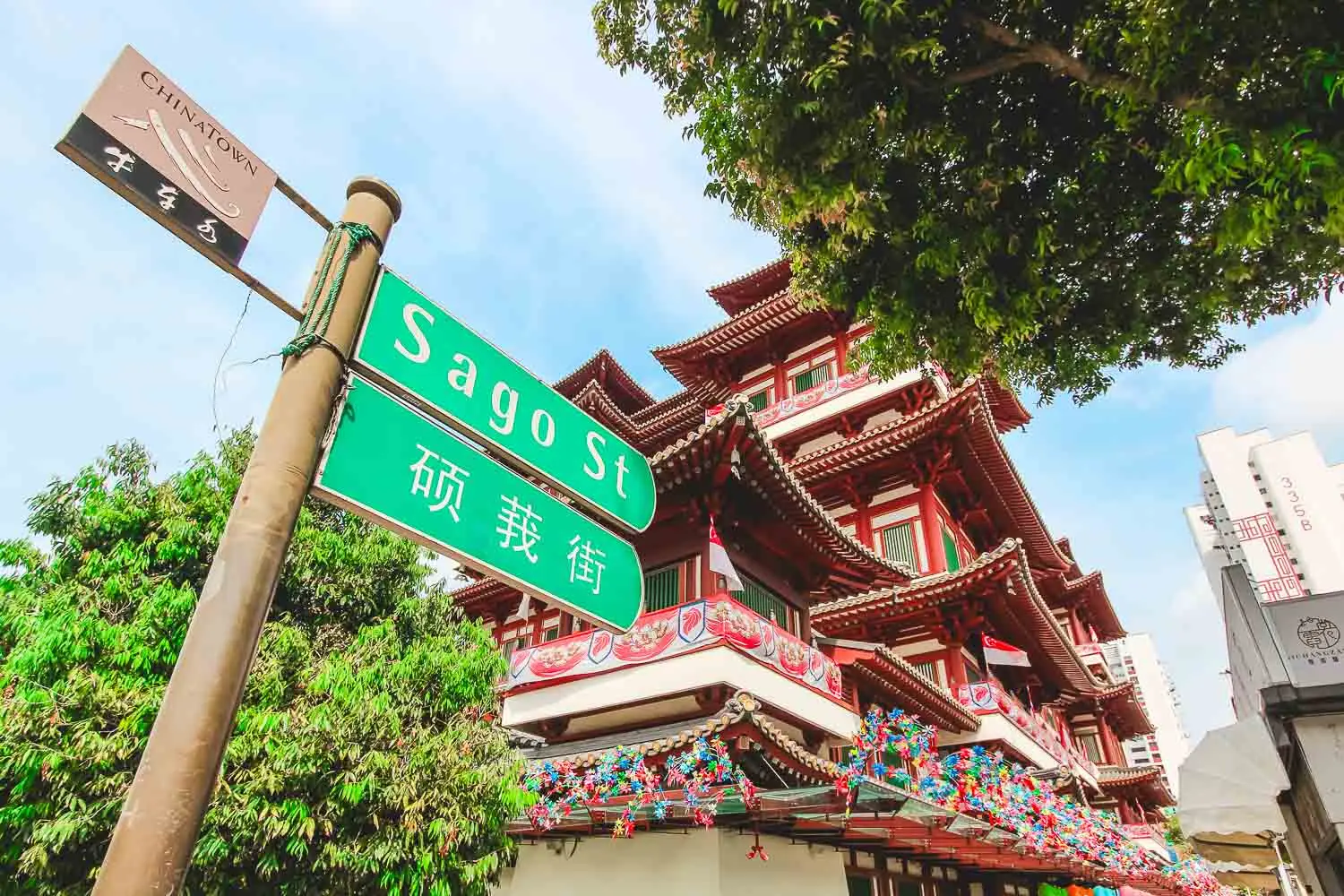
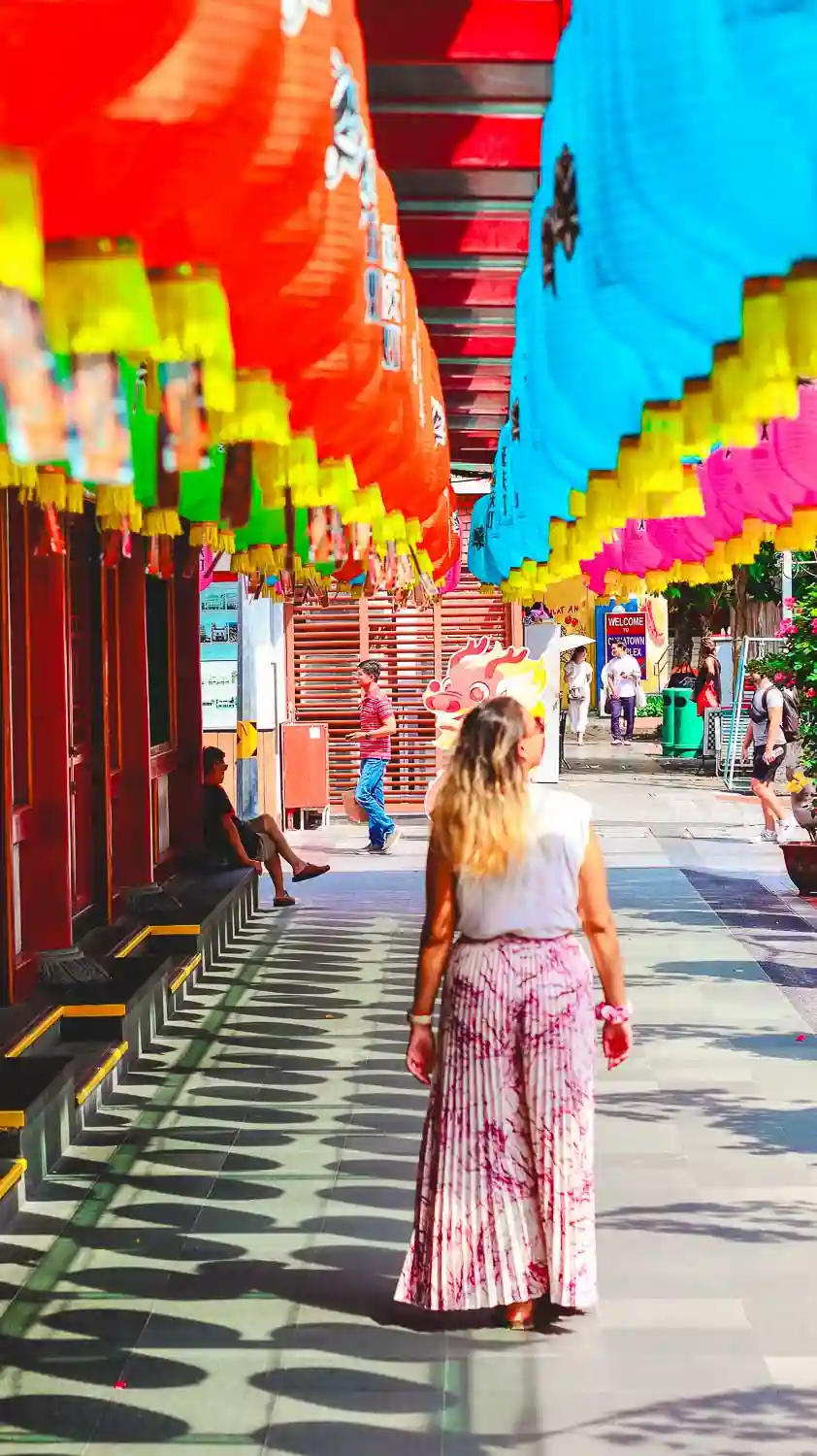
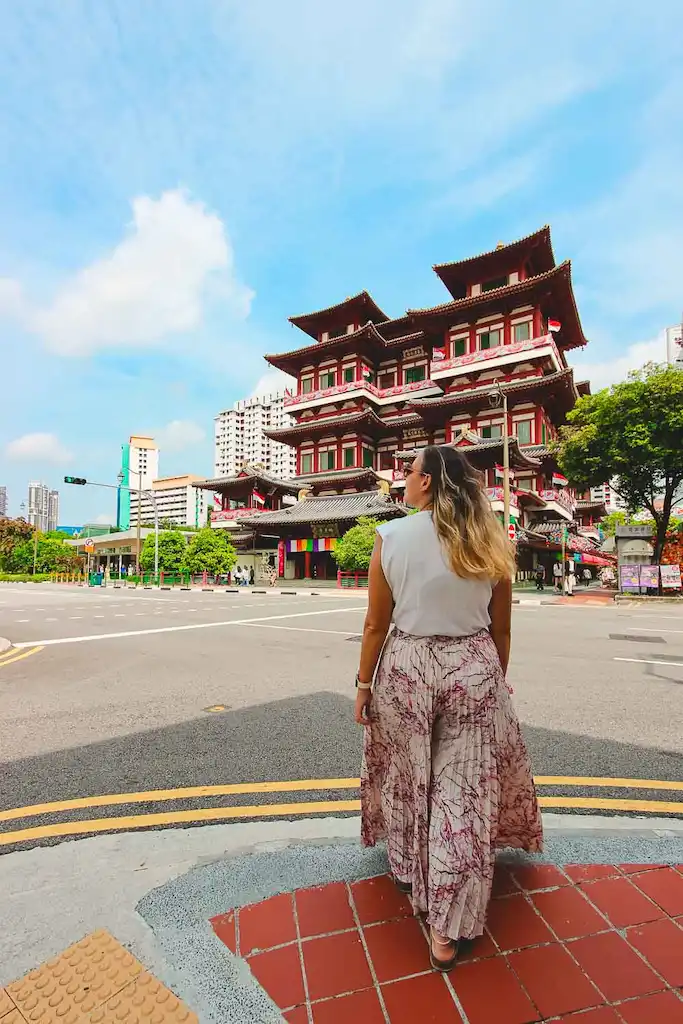
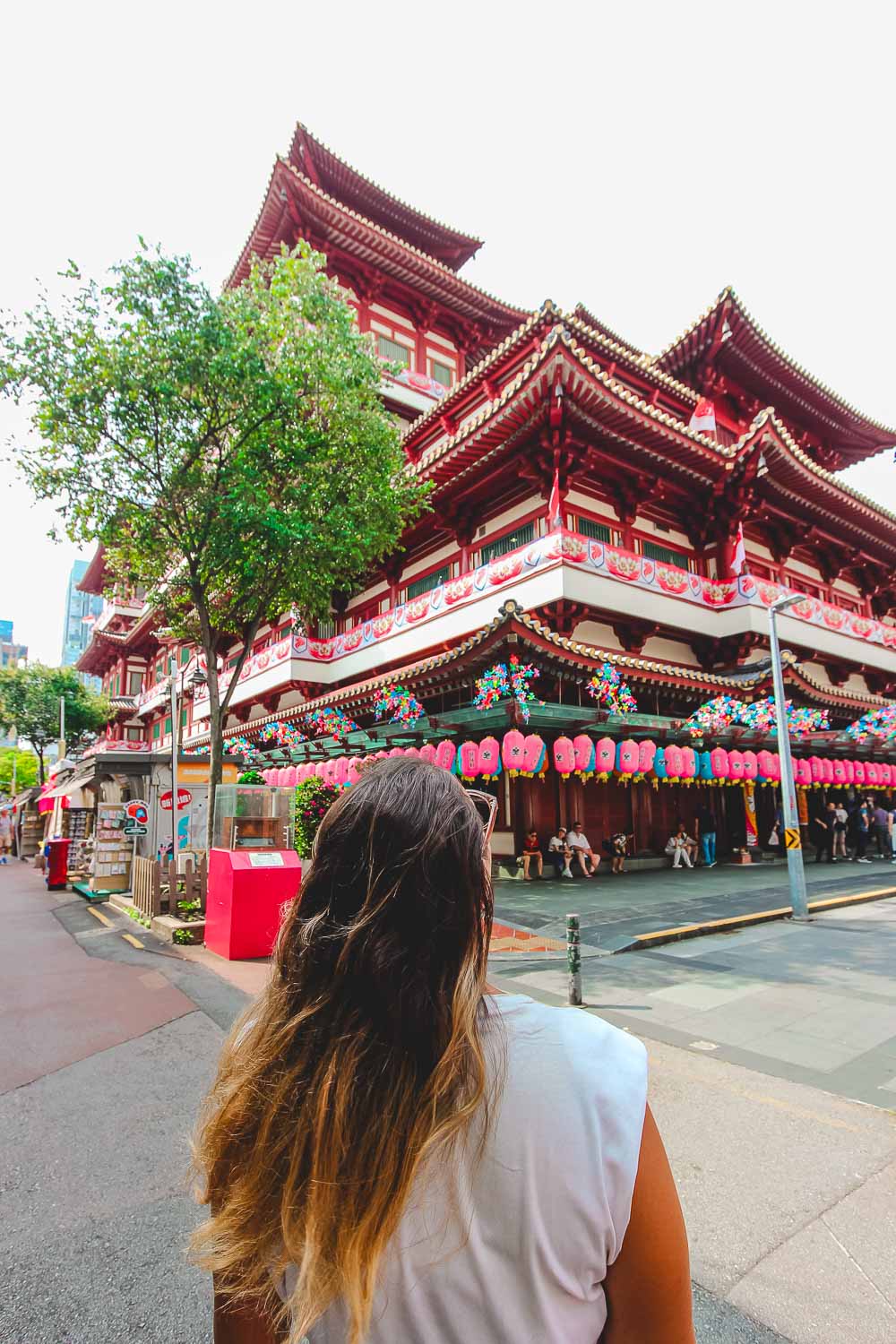
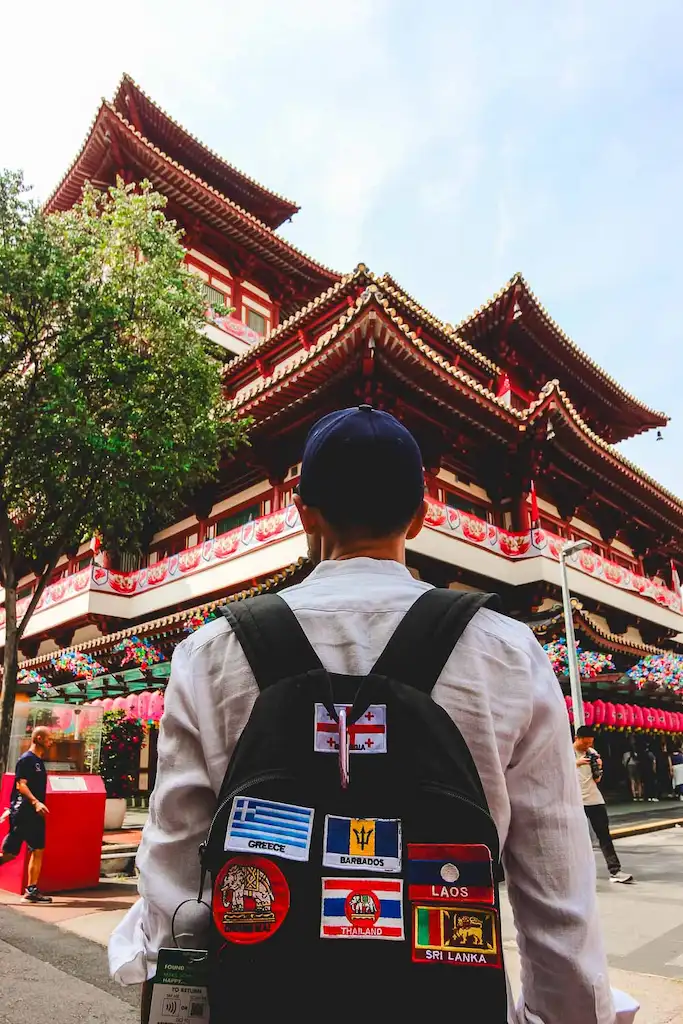
We walked into the Buddha Tooth Relic Temple around midday and it was already packed. This is one of the most revered Buddhist temples in the country, and from the outside the building reminded us of China, with its red roof, tiles and atmosphere that makes places like this feel so special.
To our surprise, it was very well organised, with a clearly marked path in a circle around the perimeter that leads to the main hall, and there’s no time limit on your visit. Inside it’s massive, ornate and somehow peaceful despite the crowds.
We counted thousands of Buddha statues, and the air was thick, sweet and heavy with incense, so for a few minutes the city’s noise faded away.
Tip: for a quieter visit, come back just before closing (usually 5 pm).
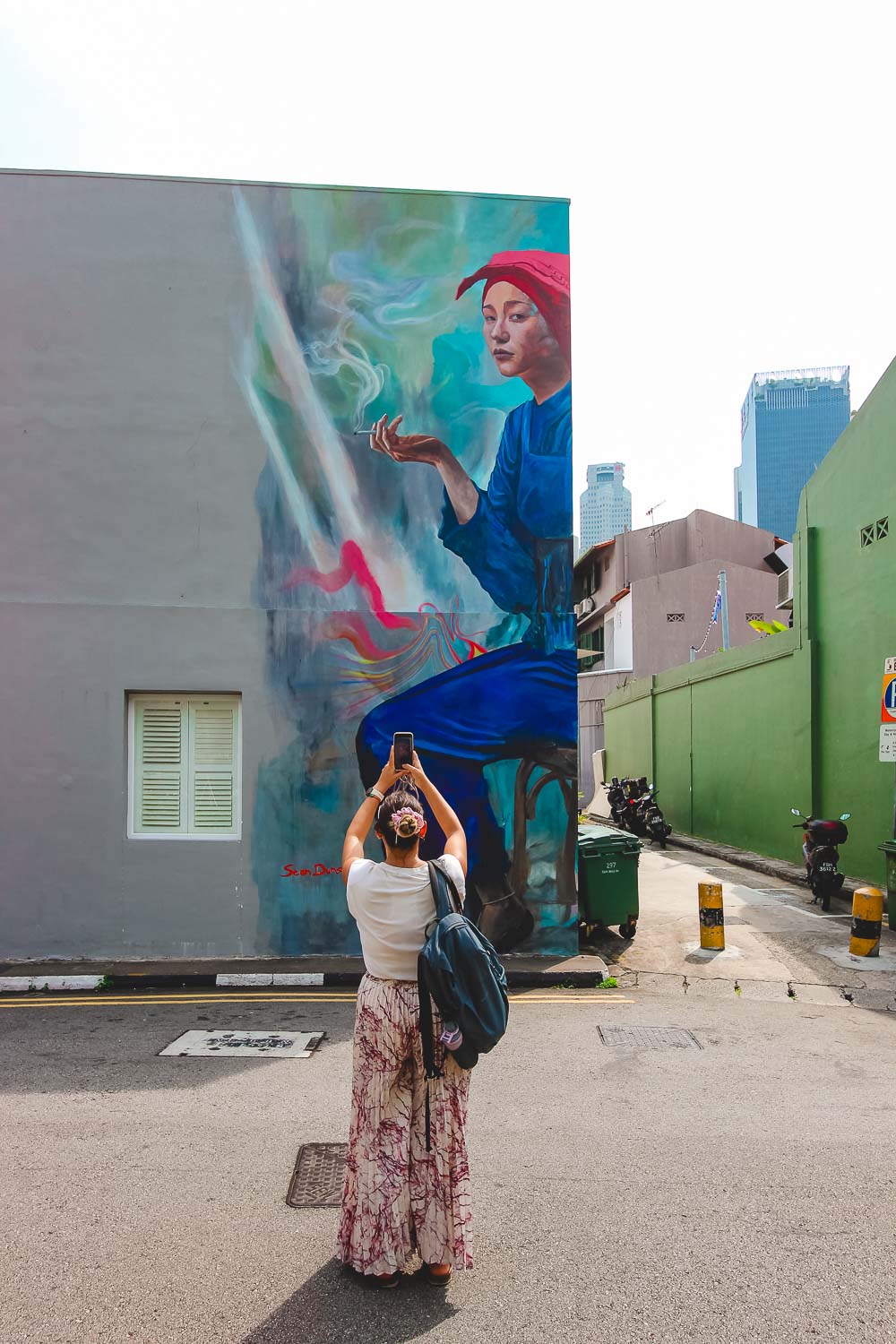
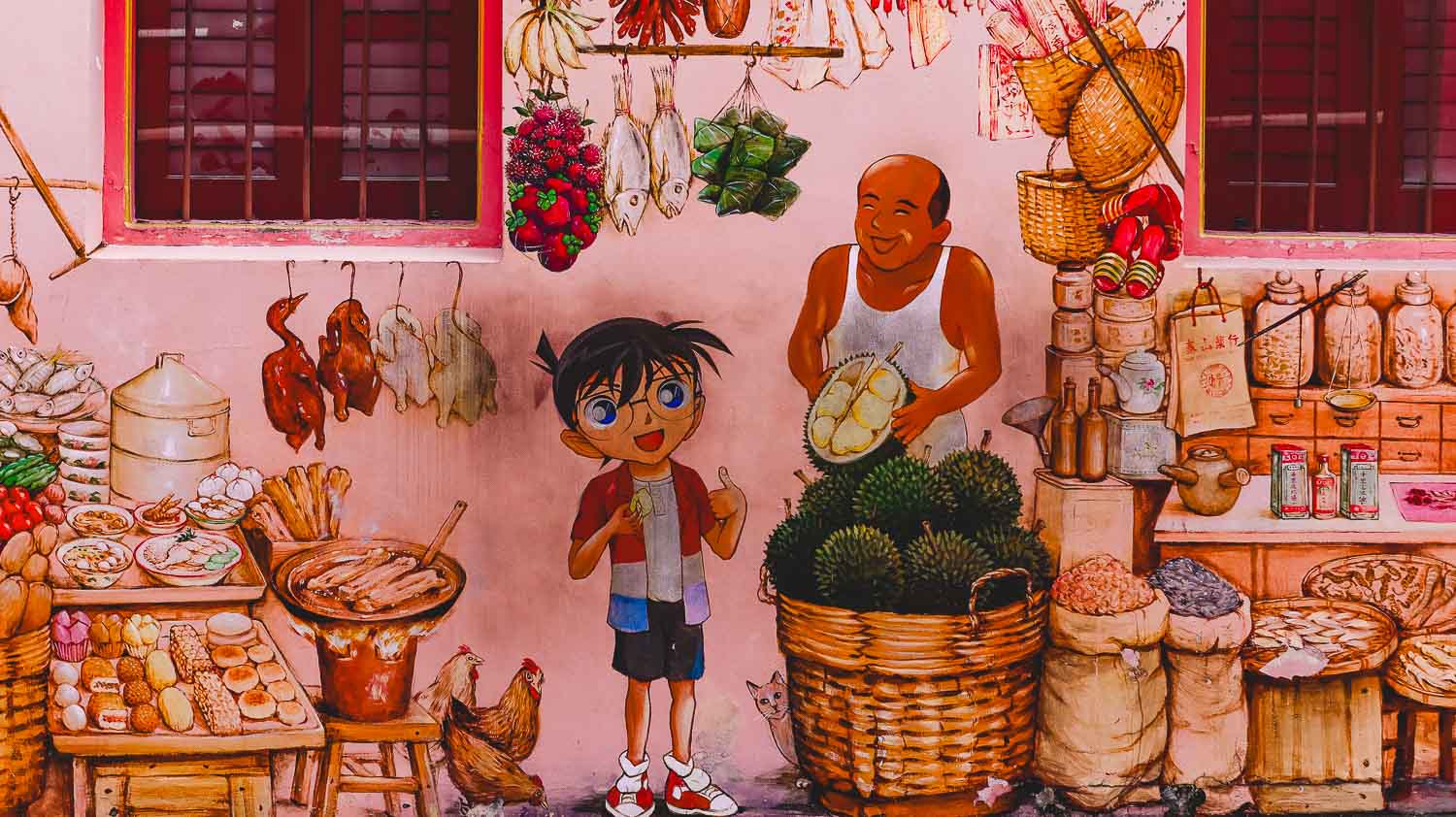
Stop 4: Street Art and Yip Yew Chong Murals
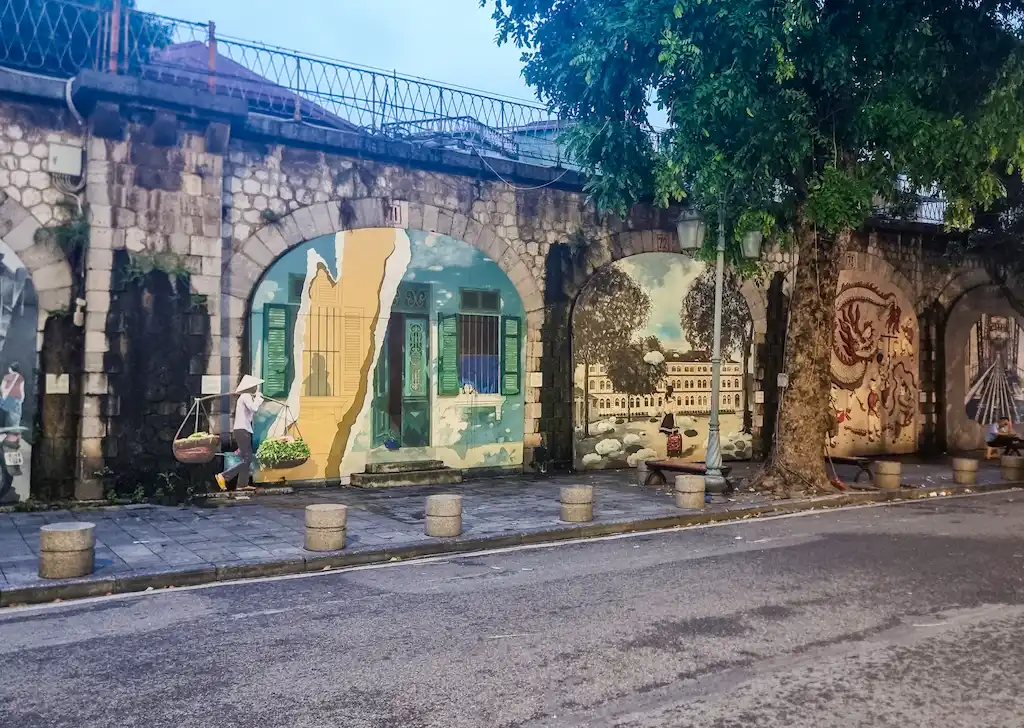
We were there for the hunt. After a thorough scouting, we found that some of the most interesting murals in Singapore are in Chinatown, so here’s our living gallery walking tour of murals.
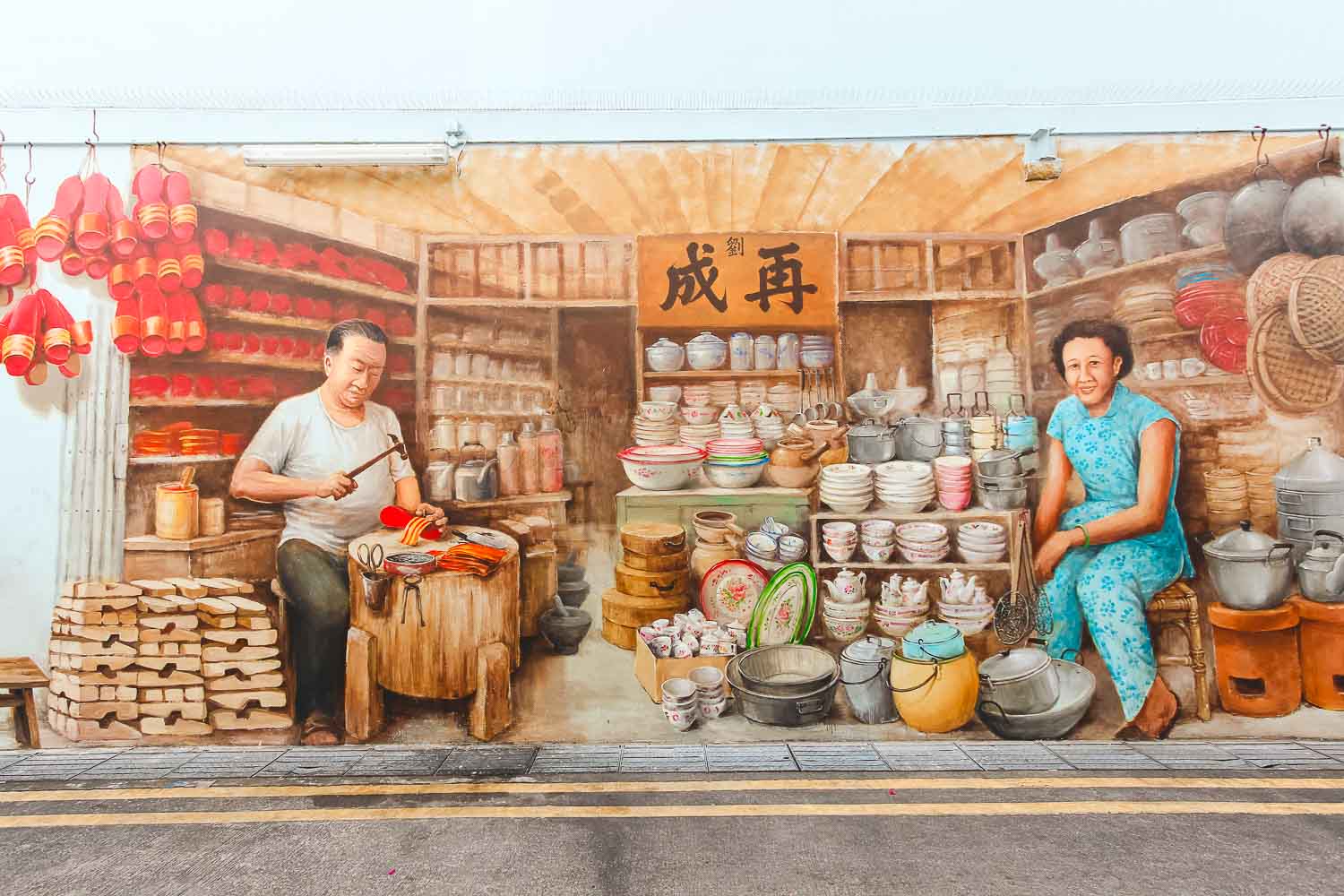
Bruce Lee tributes, people of Chinatown, shop owners and street vendors all have a slice of the wall, with scenes of real life. The idea is to preserve and celebrate the heritage of Chinatown.
Temple Street has one of the most impressive murals, and finding the Cantonese Opera mural by Yip Yew Chong there felt like a win. It looks like an old photo of kids watching a traditional puppet play.

Around the district you can also admire murals of real life and the people serving Chinatown with their craft. One of the most significant is Yong Kee Food Supply.
It is on a narrow alley between the former opium den and Temple Street. The mural captures a local shop, a street vendor and a bar, with people hanging out and a father feeding his son delicious handmade dumplings.
It takes the whole alley, even around the corner, and makes a real door part of the frame, which is genius. It doesn’t feel like tourist art, it feels like the neighbourhood’s memories are leaking onto the walls.
Honestly, the murals on Haji Lane are on a much bigger scale than the ones in Chinatown, so if you’re on a street-art hunt it’s worth pairing the two.
Stop 5: Coffee at Nanyang Old Coffee
Need a caffeine fix? We did too, and stopped for a coffee at Nanyang Old Coffee, one of the most popular choices in Singapore Chinatown. We broke our walking tour into roughly 30-minute segments, so it makes a natural pause.
The coffee is strong enough to punch you in the face, which was exactly what we needed, and the decor is old-school. There’s a tiny museum upstairs for a quick look into Singapore’s coffee culture. To be fair, we didn’t much appreciate the service, which was a bit brisk, but the coffee was good.
Stop 6: Ann Siang Road
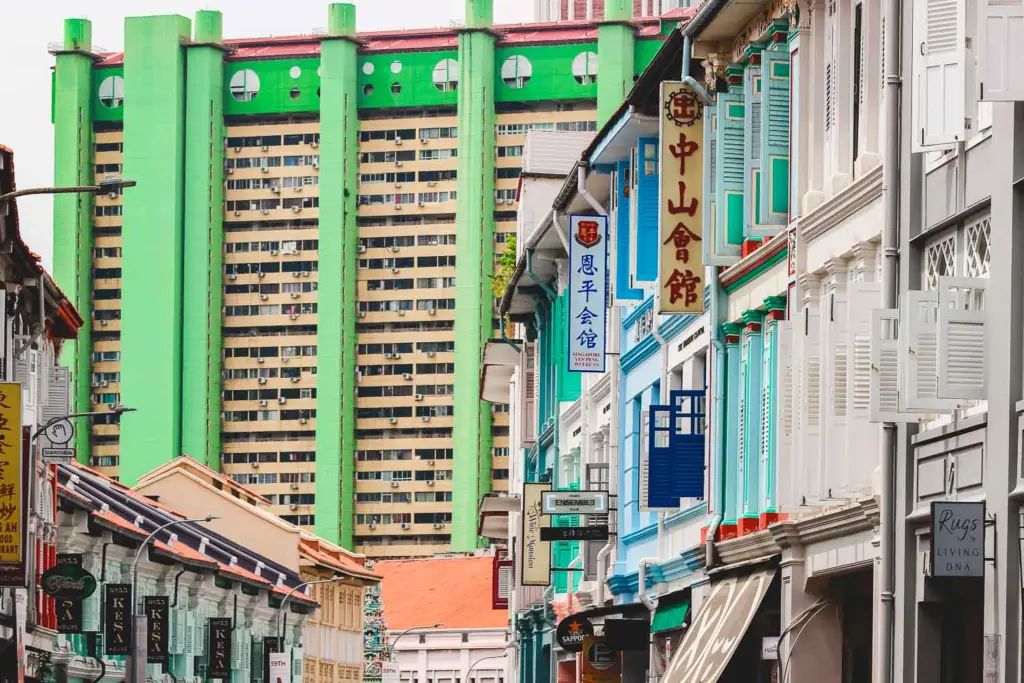
Ann Siang Road is one of those places that surprises you if you’re into photography, like us. One minute we were in the chaos of the markets, and the next we were on a silent road, with historic shophouses in the foreground and the sleek skyscrapers of the CBD looming behind them.
We caught one of the most iconic photos of Singapore, in our opinion. We loved the contrast and the quiet, which was a welcome respite from the main crowds.
There isn’t much to do on Ann Siang Road, but it’s worth a quick visit. It sits close to Club Street, so you can also pair it with Stop 10 in the evening and save your legs.
Stop 7: Sri Mariamman Temple
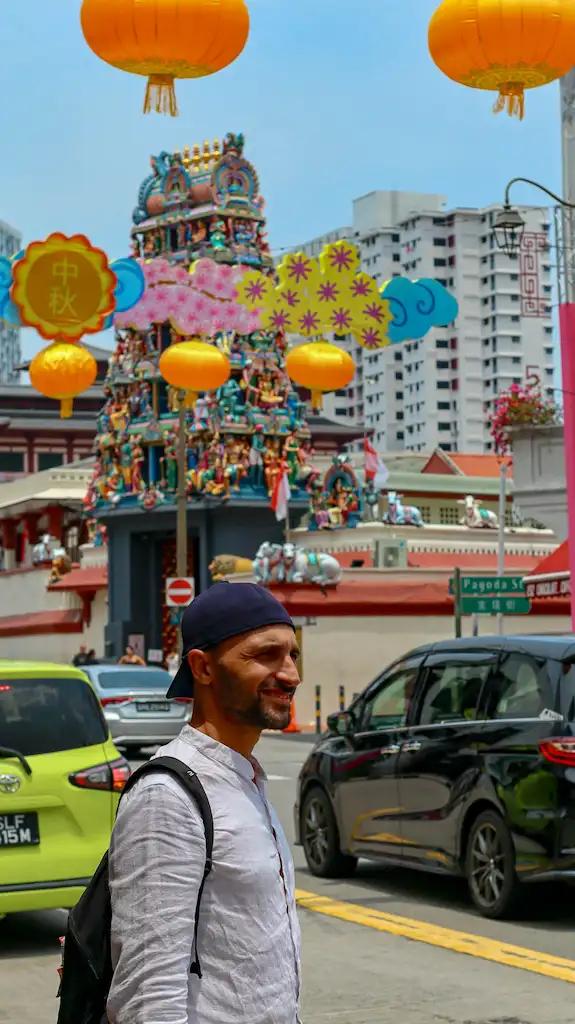
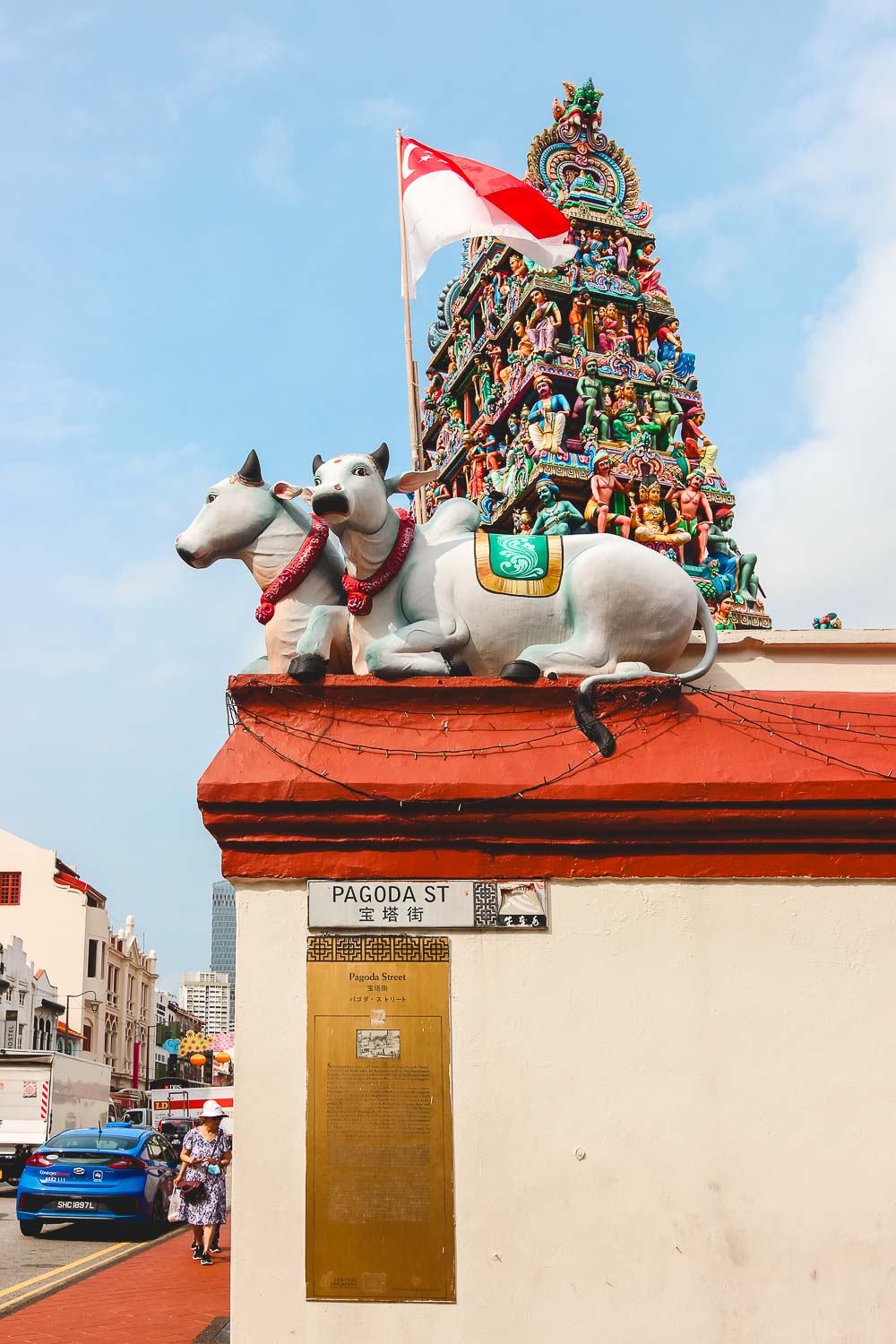
Just a short walk from Maxwell (our lunch spot), you’ll see the colourful Sri Mariamman Temple. We left our shoes outside, walked in and watched a ceremony that was going on, trying to be as discreet as possible.
The temple is in pure Hindu style and reminded us of other temples we saw in Little India in Singapore and even in Jaffna (in the north of Sri Lanka).
Even if you only catch it from the outside, it’s worth a look. The intricate carvings and vibrant colours are worth a photo.
Stop 8: Lunch at Maxwell Food Centre
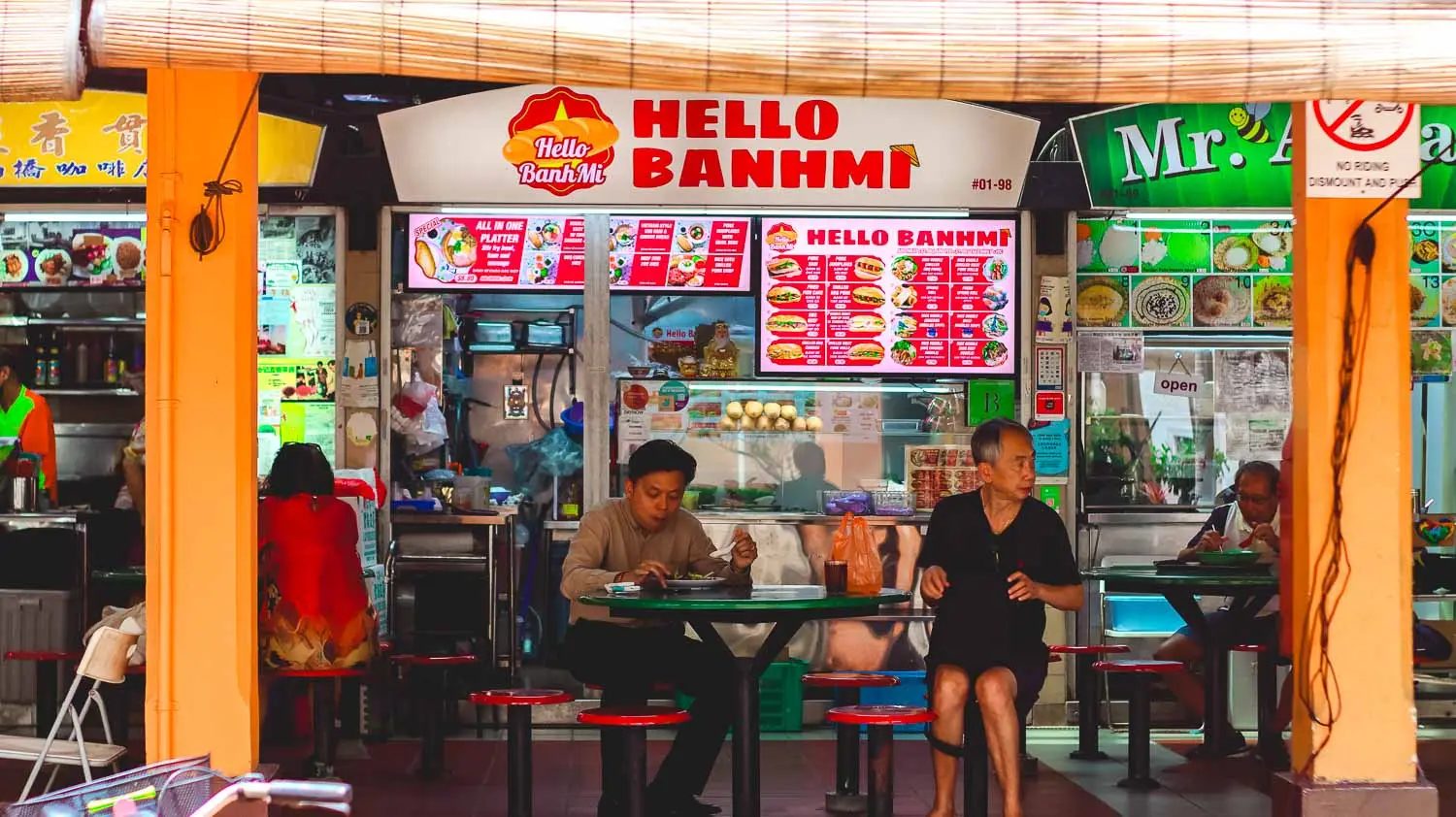
We were very late for lunch, but we still went to Maxwell Food Centre. As budget travellers we rely on hawker centres a lot, and to our surprise this one, in the middle of Chinatown, was one of the most affordable. It’s a short walk from our next stop, the Singapore City Gallery.
It was still a madhouse when we arrived, and there were so many stalls that we did the hawker lap, circling around three times before deciding. We squeezed into a tiny gap at a shared table, where nobody talks and everyone just eats, which is glorious. As usual Ale went for soup and fresh coconut (essential in the heat), and I ordered rice and pork.
I’m always surprised that I can order pork and drink a beer here, with Muslim-majority Malaysia and Indonesia so close, but Singapore is open and diverse. You can see it in the stalls at Maxwell Food Centre, which offer not just Asian cuisine but also Mexican and Western options. For more of that mix, see our Arab Street and Kampong Glam guide.
Stop 9: Singapore City Gallery
The sun was too hot to handle, and after lunch we needed some shade and quiet time. We ducked into the Singapore City Gallery mostly for the air conditioning, but the scale model of the city is mind-blowing.
We watched a demonstration about Singapore’s efficiency, from public transport to energy, marine life and beach preservation. I was truly impressed by the interactive display of urban planning and the energy cycle, and if you’re still deciding about the city, we wrote about whether Singapore is worth visiting.
The centre has clean toilets, a water refilling station and a bench to watch documentaries. Outside there’s a comfy bench where we relaxed for about 20 minutes before our next stop, which makes it the best free reset button in Chinatown.

Stop 10: Club Street and Lion Brewery Co
If you’re still around as night falls, head over to Club Street. Lion Brewery Co is always buzzing, and the street transforms as tables spill out and the air fills with laughter. It’s the perfect way to wind down after a day of exploring.
Bonus: Boon Tat Street at Night
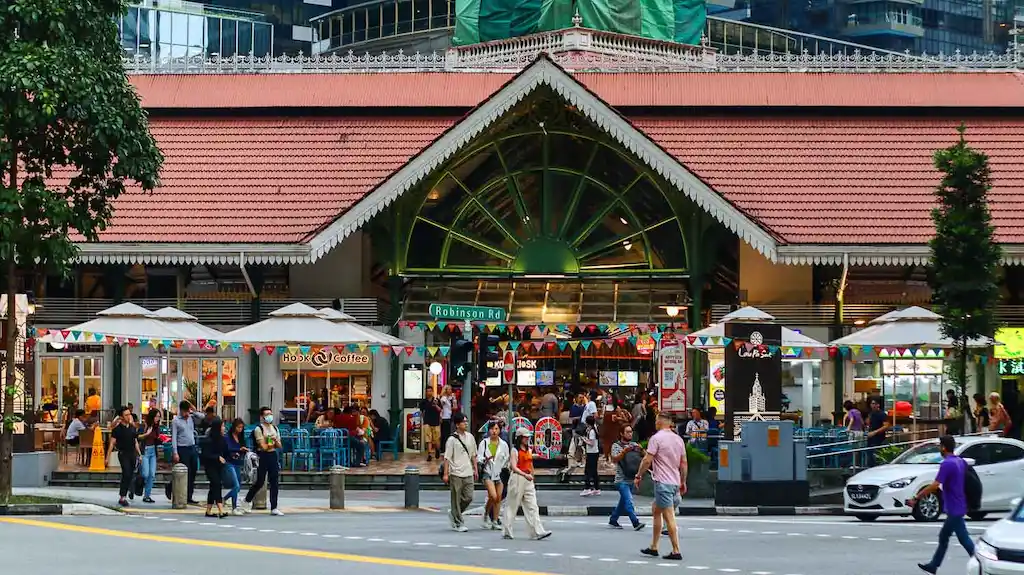
Located on the edge of Chinatown, very close to Lau Pa Sat, there is Boon Tat Street. It might sound like nothing to you, as not many tourists know about it, but locals love this street.
During the day it’s a regular road, with traffic passing by. At night it’s pedestrian-only, and tables are set out in the road. It is a proper hawker centre in a normal street.
The restaurants and bars prepare the scene for a party, reminding us of a more organised, cleaner Khao San Road in Bangkok. Usually it’s not much of a hassle, but on our latest visit during Chinese New Year only a handful of stalls were open, so the competition for customers was high and some of the satay stalls were quite insistent.
We were there on Chinese New Year’s eve, with fireworks going off at Marina Bay, so Lau Pa Sat was packed and only around 60% of the stalls were open. The food was hit and miss, but the atmosphere was great, with everyone in red and white (black is unlucky) and even foreigners in traditional Chinese dress.

Our personal favourites
Our instant go-to spots
-
 Updated
1-Arden CapitaSpring Review: Singapore’s Best Free Rooftop, With Booking, Hours and Tickets
Best rooftop view in Singapore -
 Updated
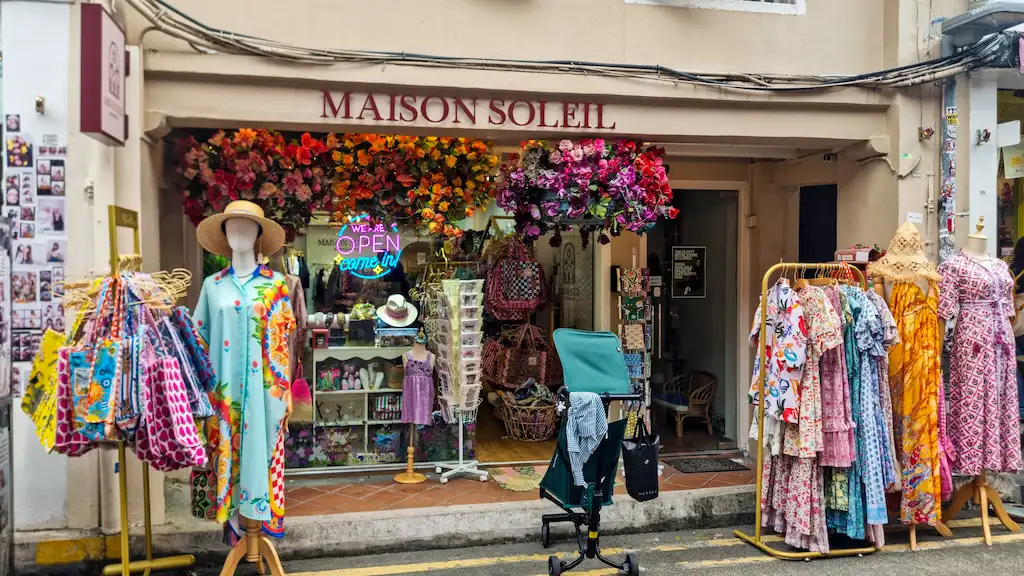
Is Haji Lane Worth It? Or dawn Walks to Night Beers and tricks for a night out in Singapore
Perfect Night out -
 Updated
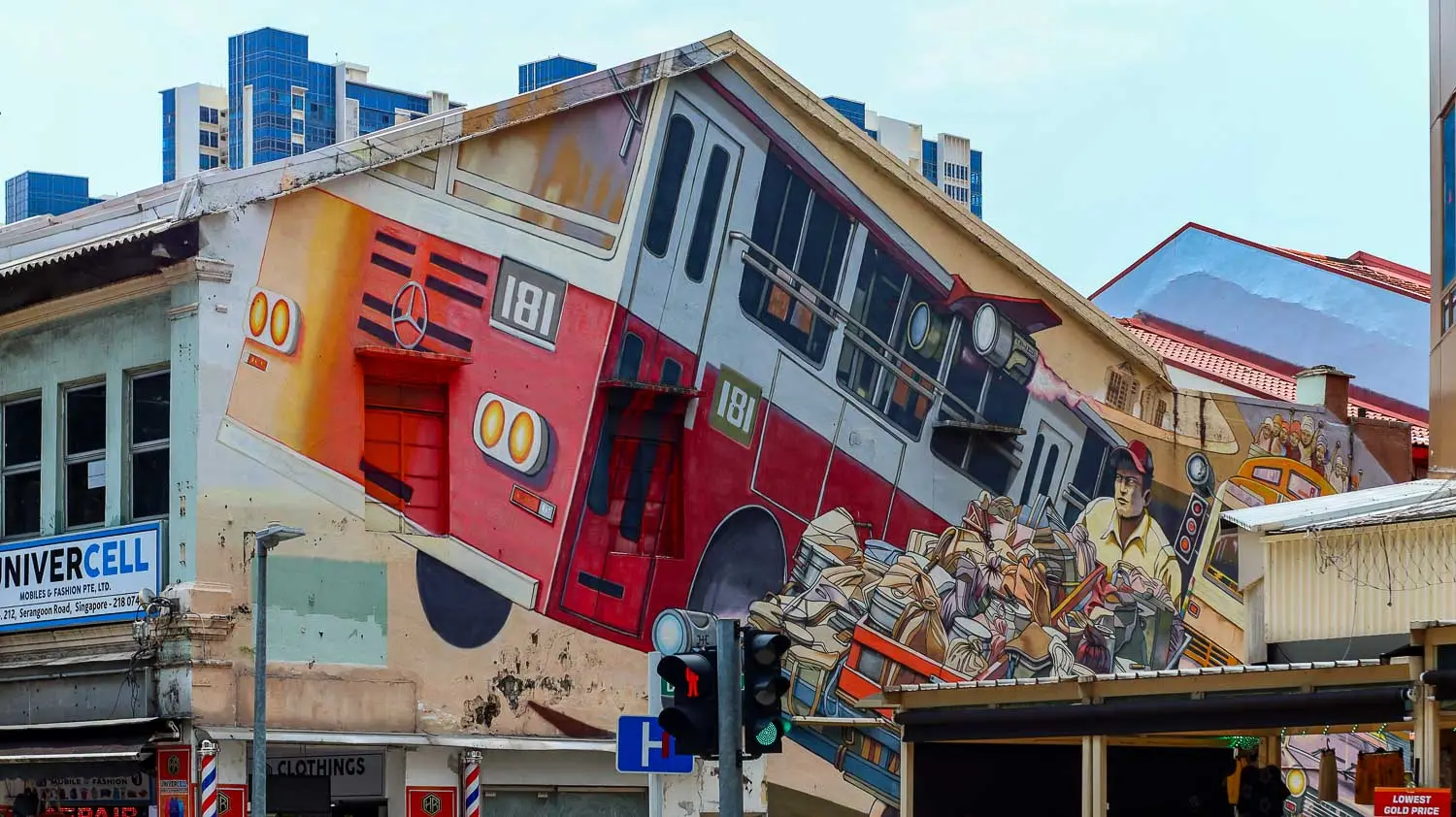
Little India Singapore Walking Tour: Our Self-Guided Route
Self-guided walking tour -
 Updated
Koon Seng Road: A Slow Walk Past Joo Chiat’s Peranakan Shophouses
Underrated Singapore -
 Updated
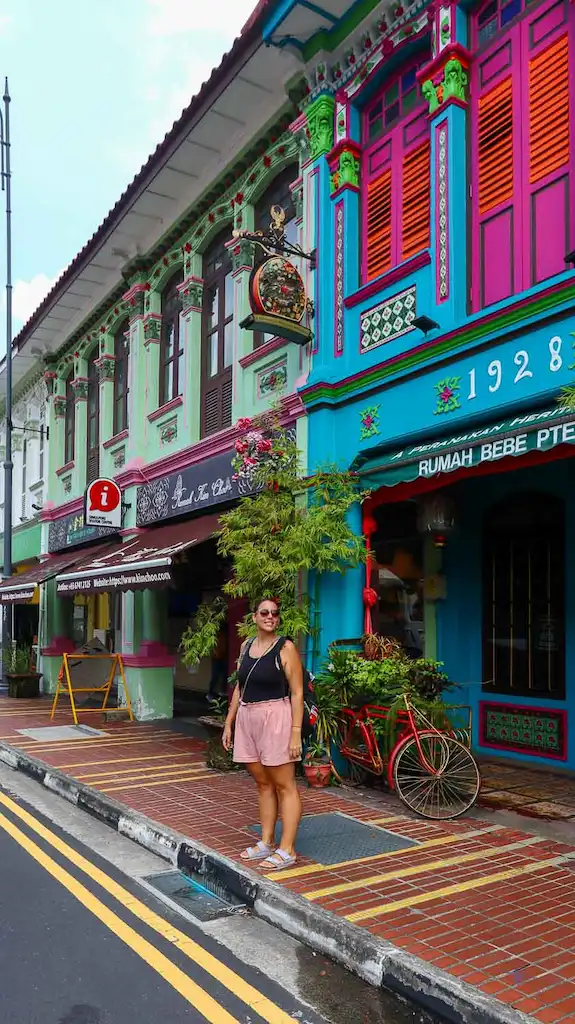
Is Singapore Worth Visiting? What We Learned Living There
Singapore Tips
Where to Eat and Drink in Singapore Chinatown
Ya Kun Kaya Toast: Kaya toast with a Singapore coffee is the classic quick breakfast. Ya Kun is a chain, and we tried the Pasir Ris branch on our first proper stay in Singapore (10 days, long after our layovers).
We ordered the combo, with coffee and juice, and Ale had the basic toast with jam. To be fair, we’re not big fans: we liked it, but wouldn’t order two or have it again.
Yum Cha Restaurant: If you are up for some great dim sum, Yum Cha is the place to go. Along with it, we ordered fried prawn rolls and sour, spicy dumplings.
Maxwell Food Centre: Famous partly because Anthony Bourdain featured it, it is about much more than the chicken and rice from Tian Tian. We had a blast, we found a pint of Tiger here for S$3.50, and we highly recommend it for the wide choice of food.
SILK Tea Bar: One of the best places to sip tea, with a chill environment. You’ll have a one-hour limit on your visit, but it’s worth it. We highly suggest signing up for their unique Tea Tasting Experience.
The Cider Pit Maxwell: A cider place at Maxwell Food Centre that we love to suggest.
Daily Beer (Telok Ayer): For the best pint in central Singapore, in our opinion, and it is not far from Lau Pa Sat and Boon Tat Street.
Where to Stay in Chinatown Singapore
We spent a month in Singapore, based near Orchard Road, and walked Chinatown, Bugis and Little India from there, so we know how the areas compare. These are the hotels around Chinatown we would shortlist. If you want other areas, check our guide to the best area to stay in Singapore.
planning this trip? Tap Save on any hotel, tour or place you like. Your list follows you on every page, ready when you book.
Singapore Chinatown Stay
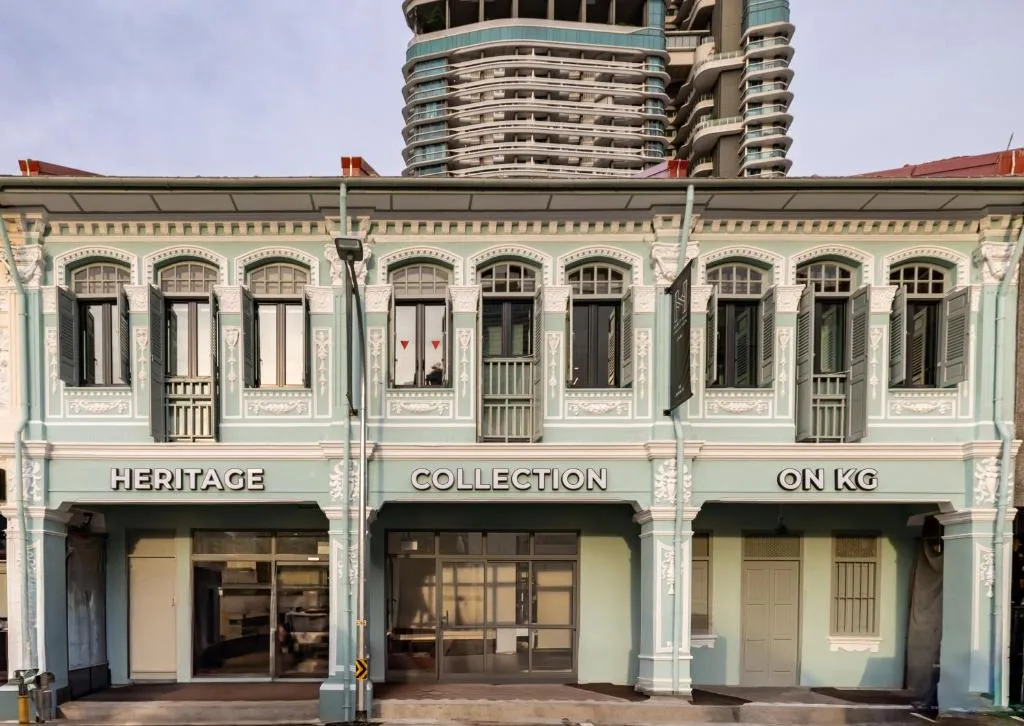
Heritage Collection on KG
9.4Superb · 375 ReviewsFree cancellationFree Wi-FiAir conditioningKitchenEntire Appartment
Singapore M Hotel
8.2Very good · 1555 ReviewsFree cancellationBreakfastPoolFree Wi-FiGymFamily rooms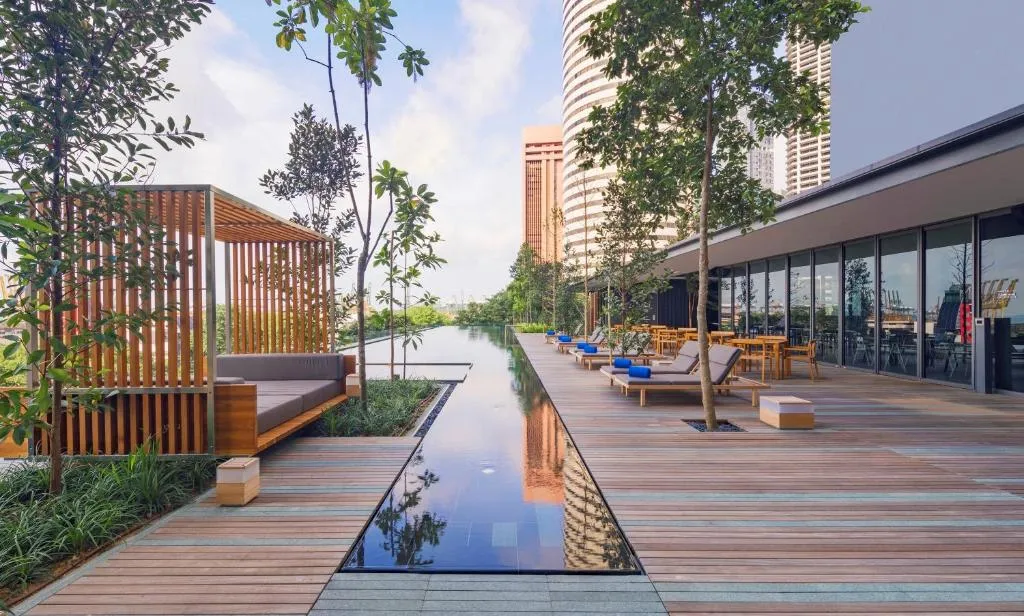
Dao by Dorsett
8.2Very good · 4,452 ReviewsFree cancellationAir conditioningBreakfastFree Wi-FiPoolGreat viewPrices are "from" prices per night. For reference: £1 ≈ €1.20 ≈ $1.34 (approx.)
Final Thoughts on Chinatown Singapore
Chinatown Singapore is one of our highlights in the city, and in our opinion it’s second only to Bangkok’s Chinatown. It’s busy and hot, and the service in some places is a bit brisk, but the energy is exactly what makes it fun.
If you only have a few hours, start with the MRT staircase, Pagoda Street and the Buddha Tooth Relic Temple, then grab a strong coffee at Nanyang Old Coffee. We’d go early for the quiet streets and the murals, take a lunch break at Maxwell and cool down at the City Gallery. Come back after dark if you can, because Club Street and Boon Tat Street feel like a different place at night.
Which stops are right for you really depends on how much time you have and how you feel about crowds. Ann Siang Road is the first one we’d skip if you’re short on time, though it’s the quietest corner for photos.
the best place to start