



Let’s talk straight: is Fes safe? We spent four nights in the Fes medina, and this guide covers what actually happened, what we got wrong and what we’d do differently.
Fes is safe for tourists, but it isn’t an easy city to relax in. We didn’t have anything stolen and never got into real trouble, but we were stared at most of the time and never felt totally safe either.
Within a few days our feelings got better, but overall we still felt unwelcome most of the time. Below you’ll find what happened, where we felt at ease, and what we’d do differently.

About the Authors
Toti and Ale
London couple, 50+ countries, 300+ guides
We are full-time content creators, travelling as slowmads, spending quality time in places we love the most. We run this and several other blogs from the best places in the world. This guide is all about our first-hand experience in Fes, Morocco. We enjoyed it but urged to warn travellers about Fes safety.
We've updated this guide to reflect our recent visit to Fes. All our guides are genuine, first-hand and experienced by ourselves with real-time notes taken on the spot. No AI!
Is Fes safe? Why we didn’t feel at ease all the time
Yes, Fes is safe, but not at first impression. When we arrived, the vibes weren’t right. We understood our way around a bit better every day, but night walks never worked for us. Overall, Fes was the place where I felt most uncomfortable during my entire trip to Morocco.
There was nothing particularly unsafe in Fes, and still we didn’t feel very safe. You’ll always be on the lookout, keeping a close eye on your belongings and watching your back. We’re used to travelling in Asia and we’d already been to Marrakech (which, by the way, feels safer), and we still found it hard to settle into Fes.
Fes isn’t like any other city in Morocco
We spent 40 days in Morocco, 21 of them with a rental car, from the Atlantic coast to the Atlas and the desert, and Fes is unlike any other city we explored. The beauty is on another level, and so is the feeling of being watched. If you’re planning the whole trip, our Morocco destination guides cover every stop we made.
If you’ve been to Marrakech (we ate our way through Derb Debachi there), you know a medina can be pushy. The vendors around Marrakech’s Mellah and spice souk were the most aggressive we met on the whole trip. In Fes it felt different, because it was less about being sold to and more about being looked at, and we’d prepared well before we got there.
Nothing bad really happened to us. A series of strange situations built that feeling, and we explain each one below so you can judge for yourself whether Fes is safe for you. Don’t take us wrong, we like Fes and still think it’s worth visiting (we cover that in is Fez worth visiting?), but you need to know what to expect.
Our arrival in Fes: the first walk set the tone
Fes came only two days into our road trip, and I was nervous. We’d read all the stories about parking drama, medina scams and theft, and in Rabat we hadn’t had any parking problem at all, so we weren’t ready for how quickly Fes would feel different.
We left the car in a secluded space behind our first riad. It was reserved for another riad, but nobody seemed to care when we asked about leaving it overnight, so we grabbed our backpacks and walked into the medina.
That’s when the staring started. People asked us, in Spanish and never in English, where our car was, even though they hadn’t seen us driving. When we said we had no car, a few men got insistent and aggressive and tried to follow us in our direction.
In situations like this we change our route many times, stop and go, never stay still, and head for the most crowded spot near us. It worked, but it was a rough welcome.
Finding the riad door (and who to trust)
Google Maps doesn’t have everything right in Morocco, and Fes was the worst for us. Our riad’s door (number 12) sat inside a very narrow, dark dead-end alley, and we got lost twice on the way.
A man carrying groceries helped at first, then started talking to other locals, and we felt they were more interested in who we were, our backpacks and our phones than in helping us. Unsolicited help in Morocco often comes with a request for money afterwards, so we kept refusing politely, double-checked the address and finally reached the door after phoning the riad’s staff.
You might also like
We Ignored the “Best Riad in Fes” Listicles and Stayed at Riad Tizwa Instead
Is the Fes medina safe during the day?
The tourist areas of Fes El Bali felt fine during the day. We didn’t have any bad encounters in the busy parts of the medina, and nobody asked us for anything or pushed us to buy in the henna and pottery square. Our days felt very different from our arrival.
Within a few days we understood Fes a bit more and got used to it. We learned which alleys felt okay (generally the ones with more shops and traffic), and a firm but polite “la shukran” (no thanks) is enough to clear most of the hassle.
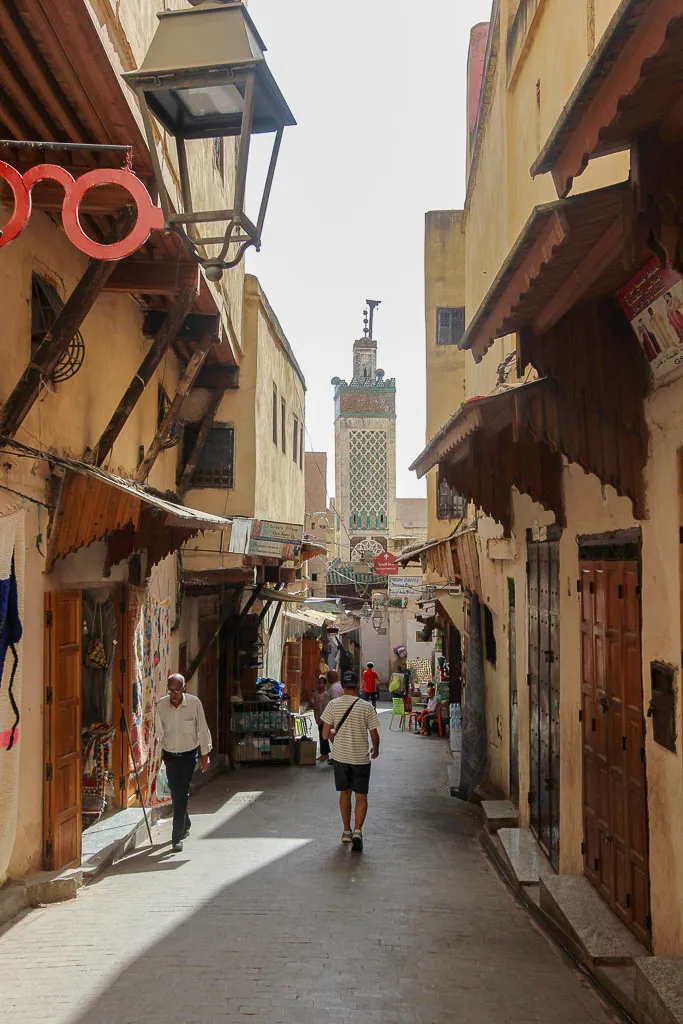
From the Blue Gate (Bab Boujeloud) the medina goes downhill, with Talaa Kbira on the left, Talaa Sghira on the right and a maze of passages between them. We walked both.
Talaa Kbira is the most picturesque, with more covered stretches, juice shops, cafes and leather shops, while Talaa Sghira is less crowded, has similar shops, and is steep on the way back up to the riad.
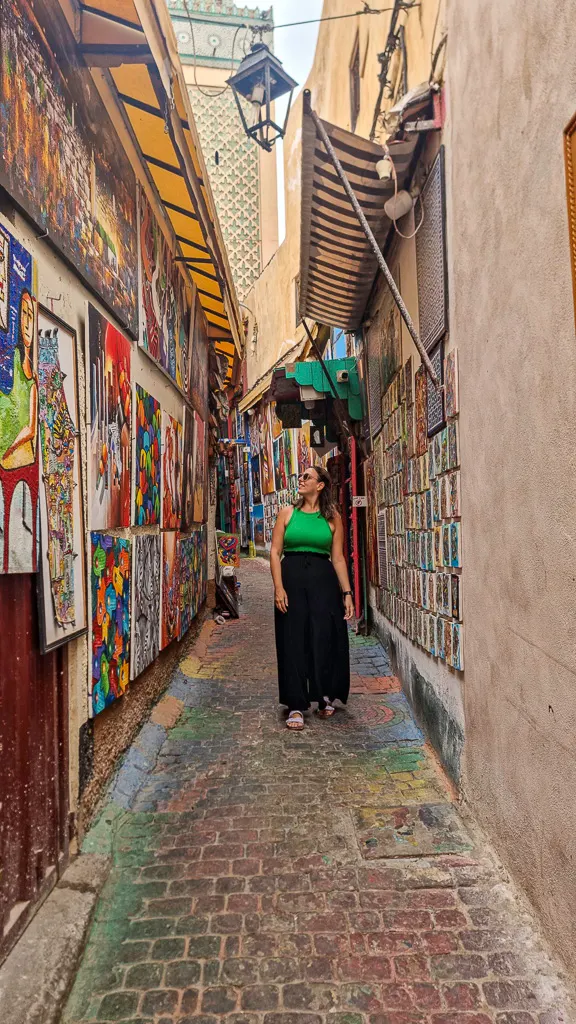
Foundouk Tazi, mostly ceramic shops, was our favourite part of the souk. Rainbow Street has handmade souvenirs and some paintings on leather, but the colours on the floor were very washed out when we went, and a few shops don’t allow photos or touching.
The Jewish quarter (the Mellah) behind the royal palaces reminded us of the shophouses in Singapore, with spice shops, home decor and almost nobody around.
Where we felt at ease
When we needed a break, three spots worked for us. At Al Oud we had a Berber coffee and a mint tea for 40 MAD together, with cats around and a view of people passing over the souk (even a donkey on a stroll).
In the square in front of it, Fez Fresh sells Nutella crepes for 20 MAD, and we went back the next two days mostly to pet a tiny cat called Kiki. Cafe Sagha in Sagha Square is mostly locals, and a fresh orange juice was 20 MAD each.
Where we felt watched
The staring was constant, especially at Ale, and most of the time we changed route to avoid bars full of men (a constant in Morocco, but especially in Fes). At the recently rebuilt Funduq Staouniyyin, locals stared as we walked in, so we took quick photos and moved on.
The main square by the Blue Gate felt odd to us too, a new square with rubbish all around and people staring. At one point we thought someone was following us, so we stopped, changed route and kept watch.


Madrasas: what we could and couldn’t visit
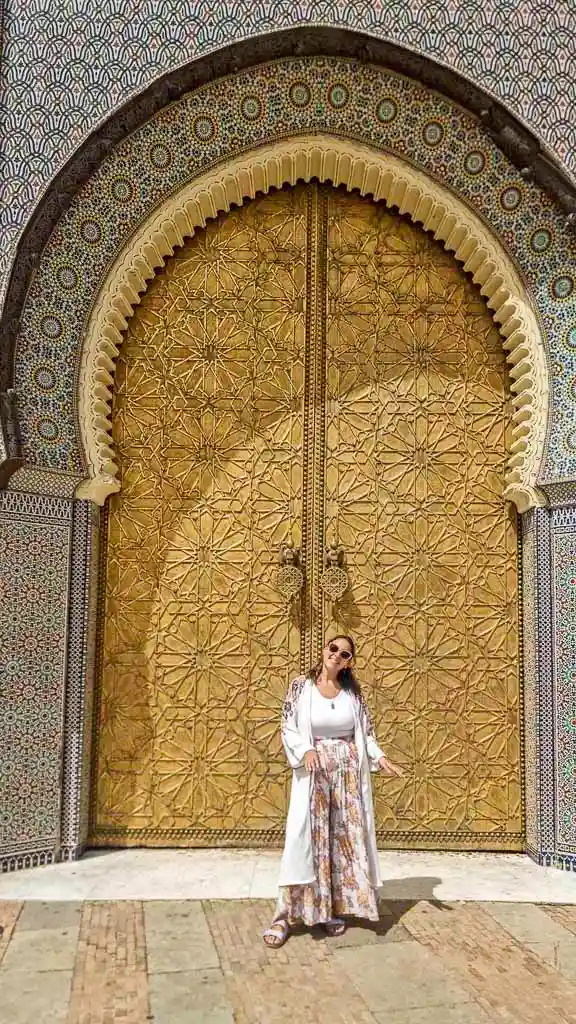
Madrasa Bou Inania was closed for prayer when we passed the day before (we learned that’s common, especially on Fridays). The next day the ticket was 20 MAD per person, cash only, and it was almost empty until a group of about 40 arrived within five minutes. We loved the quiet upper floors, where most guided groups don’t go.
We didn’t get inside Madrasa Al Attarine, which was high on Toti’s list. It’s only open to Muslims, but the man guarding the door was very kind and let us take a peek from the entrance. So we still got photos of the courtyard and the green tiles.
The tanneries: one of our best interactions in Morocco
Some locals genuinely wanted to chat, especially shopkeepers and guides near cultural spots, but they’re a minority. We had one of the best interactions of our whole Morocco trip at the Fes tanneries, where Hassan (14 years at the shop) and Muhammed (5 years) showed us around and told us their personal stories.
Mint leaves are offered at the entrance for the smell, but we skipped them because we had the mint inhaler we’d bought in Thailand. Behind the tanneries is the university, closed to non-Muslims, though a friendly guard let us lean in for a photo of the tiles. Here’s exactly how to find shop No.10 of the tanneries.
Is Fes safe at night?
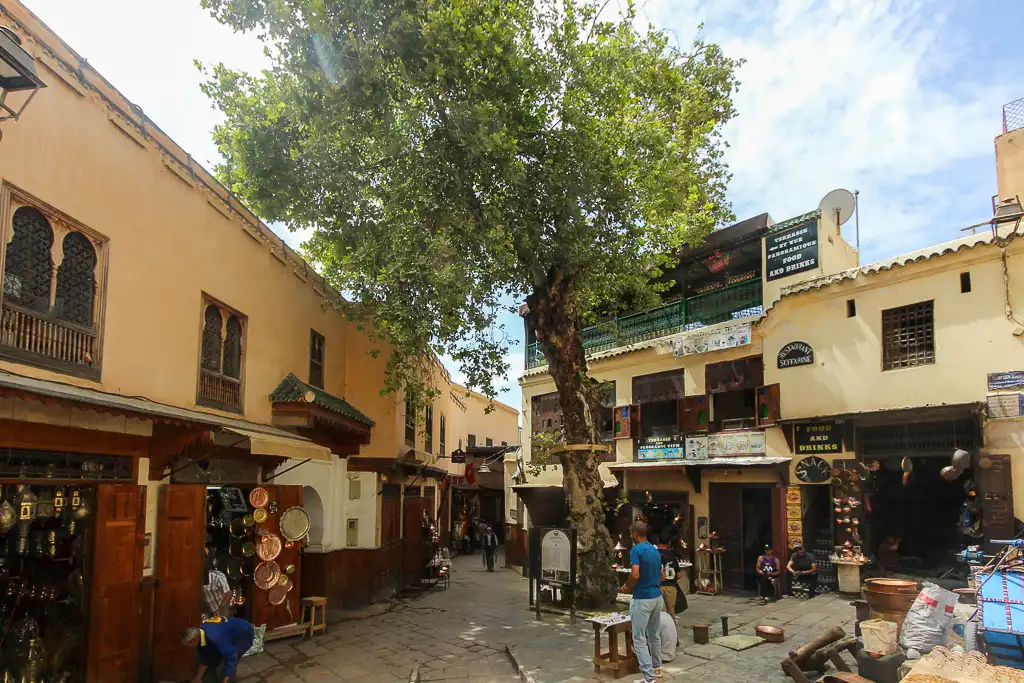
Fes isn’t a city we wanted to walk around at night. We were back at the riad by 9pm every night, mostly because most alleys have no lights, and if the mornings were already hard to read, the nights were off the map. We mostly avoided the medina after dark, and that meant planning dinner early.
One evening after dinner, a man standing at one of those bars full of men confronted Toti out of nowhere and said “You are a bad person” in Spanish. There was no context, just a weird attempt at intimidation. Toti answered with sarcasm, smiling, to avoid escalating, and we kept walking. It was nothing serious, but little things like this made us rethink how late we’d walk back from dinner.
If you ever feel followed, switch sides, pause and change direction. Paranoia? Maybe. But better to seem awkward than careless.
Is Fes safe for women and solo female travellers?
From our own experience, and from watching women in the crowds, we found that Fes isn’t the friendliest city for solo female travel, especially at night. The stares are relentless (they were constant for Ale), and the male-dominated bars and alleyways make it worse after dark.
A solo walk after sunset wasn’t on the cards for Ale, and honestly we wouldn’t send a friend wandering alone through Fes El Bali at night either.
During the day, stick to busier areas and ask for directions in shops rather than in the street. Being assertive and moving with intent helps. We have never seen police inside Fes El Bali, but there are always one or two tourist police cars outside the Blue Gate.
Parking and driving: is it safe to park a car in Fes?
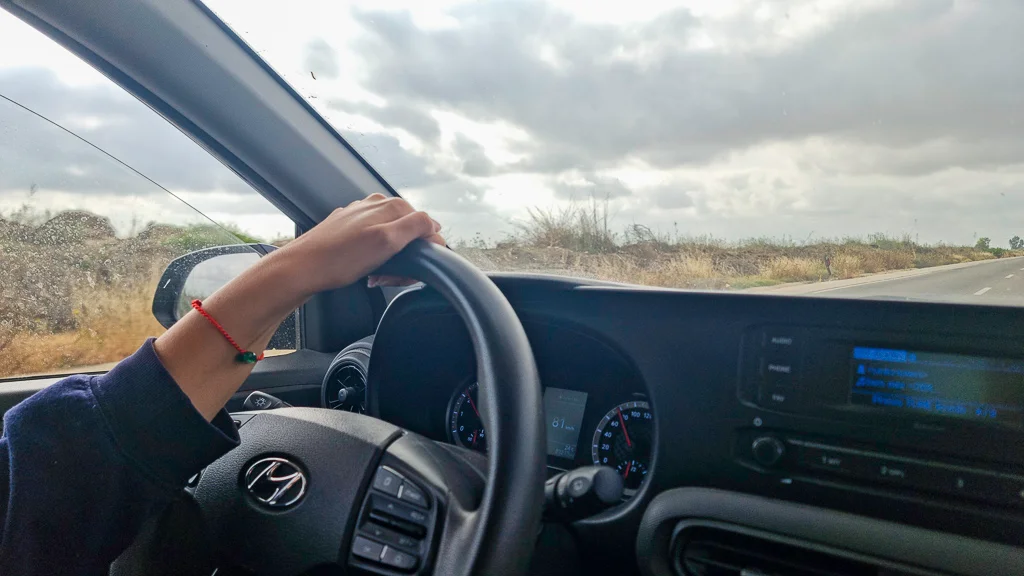
Yes, it’s safe to park in Fes if you use a guarded lot. Parking was the thing I worried about most, and I spent countless days reading online reviews and studying satellite maps. After all those reviews I was honestly horrified for our little Hyundai i10, which we called “Maroc taroc“.
Our first spot didn’t feel right because we feared for the car’s safety. So we moved to a guarded lot next to Al Oud cafe, in the medina area, with a gate and guards day and night. It cost 40 MAD per 24 hours, and we could leave the car for several days. Safety costs nothing, really.
That said, we had to go back on the second day to move the car, because kids play football around that lot and the ball kept flying over. We moved it to the smaller lot next to the exit and kept the car there for 4 nights without any drama. For the full picture on renting the car, police checkpoints and fines, read our guide to driving in Morocco.
Leaving Fes by car: the shortcut we regret
We left Fes around 11am, when the town was still quiet. Before leaving we withdrew cash at Al Barid Bank (Maroc Post), which as far as we know is the only bank that doesn’t charge a fee, and we filled the tank because some stretches have no fuel stations for 50 to 60 km.
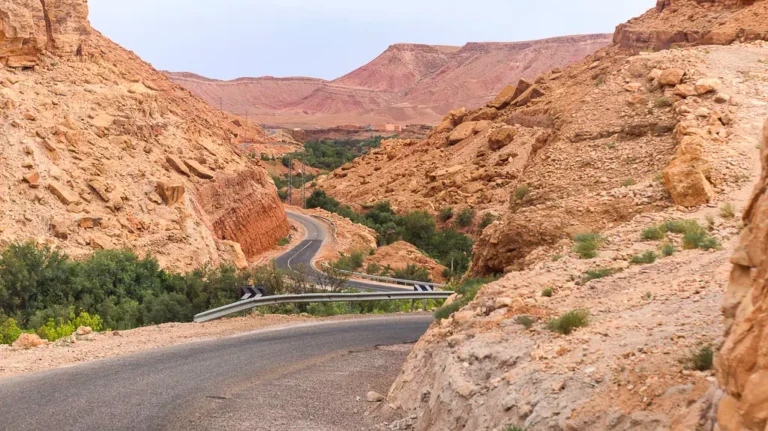
Then Toti picked road 5001 towards Chefchaouen, because he’d checked it would save about an hour. It went wrong after about 20 km. For 40 to 50 km there was no asphalt, only one lane, lorries and machines, and unbearable dust, and we were blocked for more than 20 minutes in the sun waiting for the machines to make space.
The scenery was incredible, but there was nowhere to stop even for a coffee, and the rest areas only appeared once we joined the N13. If you’re driving the same way, take the N13.
Do you need a guide in Fes?
A guide isn’t a must in Fes, but we’d book one for the first day if we went back. We had an amazing time exploring on our own, with all the risks and hassles, and at Bou Inania we sat in with a group just to pick up some history, which made us think a tour would have been really good.
A guide can also take the hassle out of the awkward interactions when you don’t know where to go or when you get lost in the medina. It’s the price of exploring Fes more freely. There’s a solid option for a guided Fes medina tour here, and Riad Tizwa also lists a cultural guide for 50 euros if you’d rather arrange it through your riad.
Tried, tested, and loved ❤️
More guides about Fez


Is it safe to venture off the main path in Fes?
As curious travellers, always looking for authentic experiences, we couldn’t leave without finding a few corners away from the main route. Venturing off path wasn’t easy, but we didn’t have any drama. So it’s safe, yet we were always on the lookout for what was around us.
We drove to a second viewpoint over the medina, which had a better view than the first. Locals there ask for parking money and send kids to sell juice and souvenirs, so we paid 5 MAD, but that’s up to you. Vans sell coffee from behind the boot, and a Berber coffee was about 7 MAD.
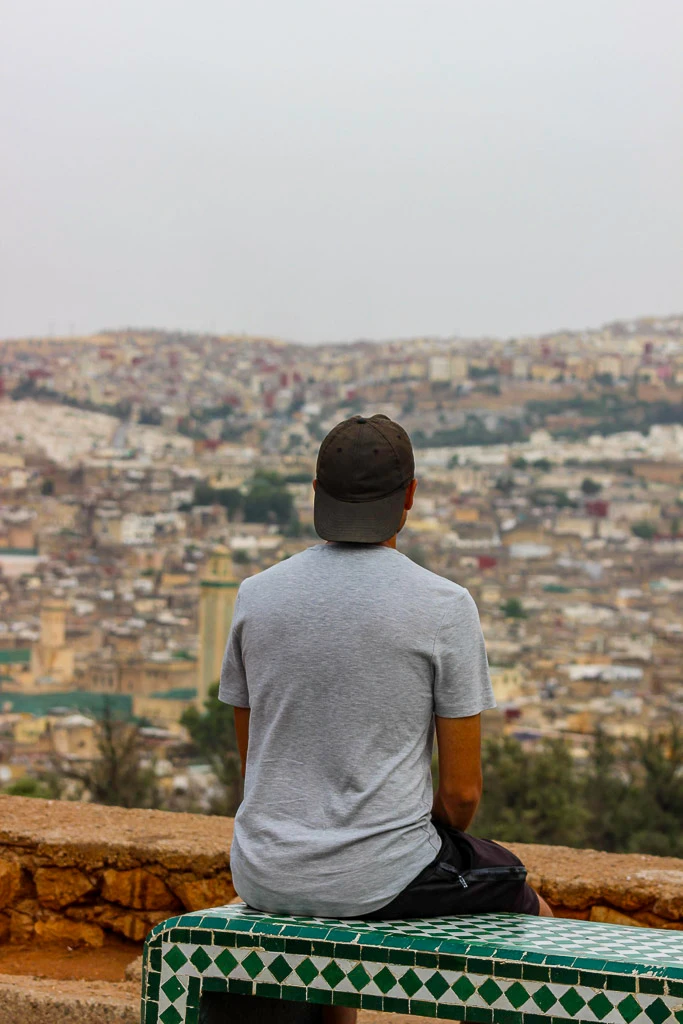

We also went to “new Fez”, to a shopping mall. Compared with the medina we felt at ease there, blending in perfectly, with no tourists around for miles. That was the point where I came up with a saying, and it’s only my opinion: “In Fes El Bali, they see tourists as money walking, that’s why they are more aggressive”.
Fes vs Marrakech: which one felt safer?
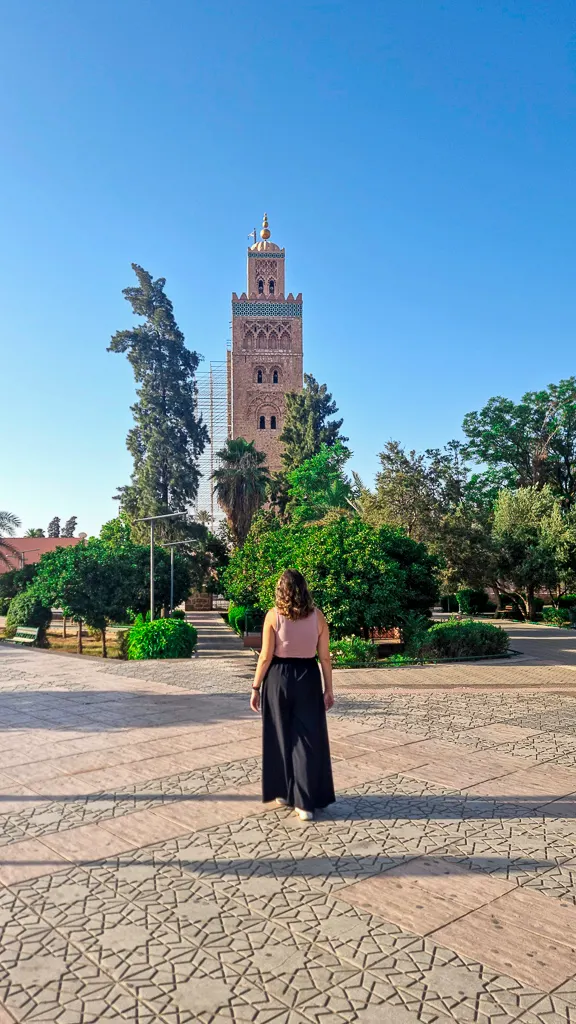
Marrakech felt safer to us, although it was pushier. Marrakech is more chaotic and its Mellah and spice-souk vendors were the most aggressive of the whole trip, but tourists blend into the crowd better there. In Fes you’re more visible, especially in Fes El Bali, and from our experience the stares and the pressure build up faster.
That said, nothing was stolen in either city, and our car survived four nights in Fes. In Marrakech we were followed just once, and thanks to the locals’ help the man left us alone. If you keep your wits about you, either city works, but don’t expect Thailand safety vibes. Our 10 days in Morocco itinerary shows how we’d fit both into one route.
Practical safety advice for visiting Fes
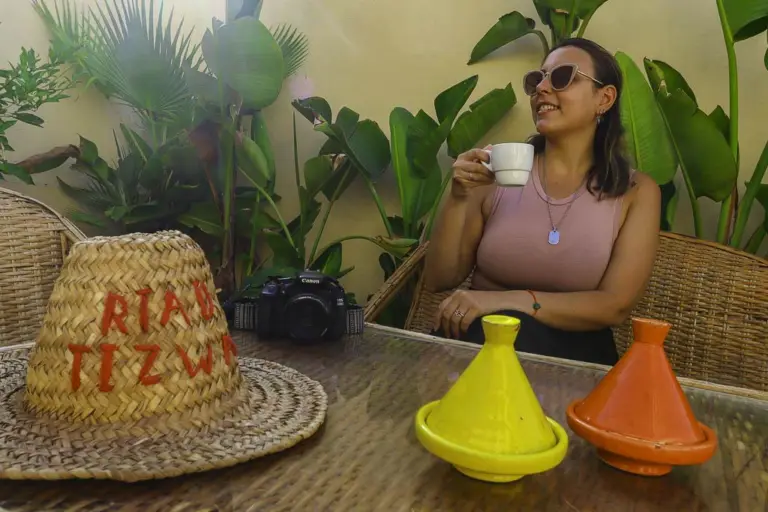
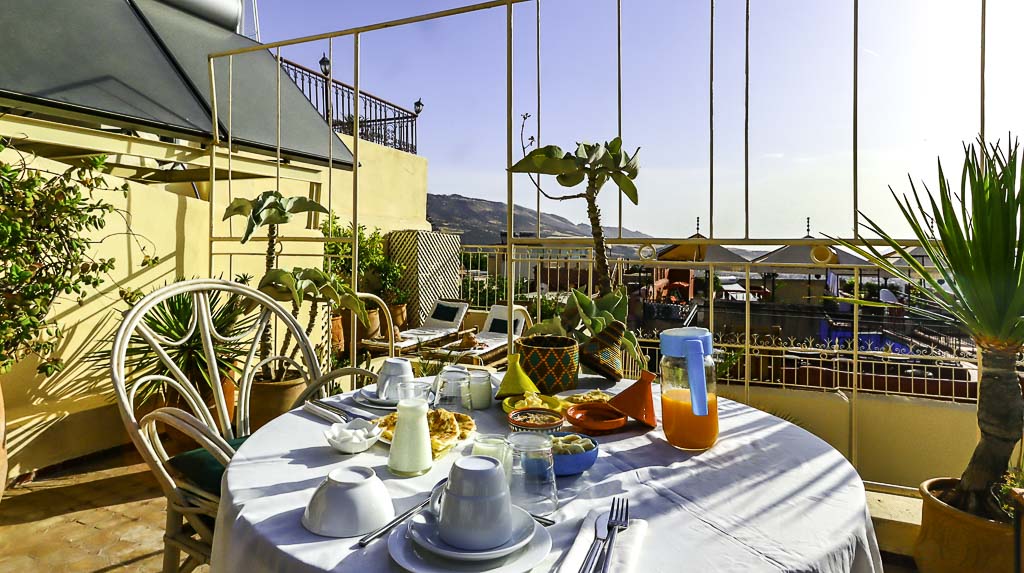
Book a riad with a reliable host and clear directions, because medinas are designed like escape rooms. Our second place, Riad Tizwa, welcomed us with Moroccan tea in the courtyard and was perfectly located and helpful.
- Don’t tempt fate: limit wandering in dark alleys at night, especially solo. We were back at the riad by 9pm every night.
- Use only guarded, official parking lots and budget for the 40 MAD per day fee. Your car insurance will thank you, and our Morocco driving guide has the rest.
- Walk your way: stay friendly but sceptical if someone offers too much “help”. Most times, a polite “no thanks” keeps things smooth.
- Download offline maps: the Wi-Fi won’t always work, and the medina labyrinth makes you lose sight of where you are. Find our guide to eSIM in Morocco if you’re concerned about connectivity.
- Carry small cash: walk with the money you need for the day and leave the rest at the riad. Try to break large notes when possible, and see our Morocco budget guide for what things cost.
- Mind your camera: don’t flash it around and be polite when taking photos, because some shops on Rainbow Street don’t allow them. We shared the spots we did enjoy in our Fes photo spots guide.
- Know what’s closed to non-Muslims: mosques and some other religious places have similar policies. We couldn’t go inside Al Attarine, and the university behind the tanneries was closed to us too.
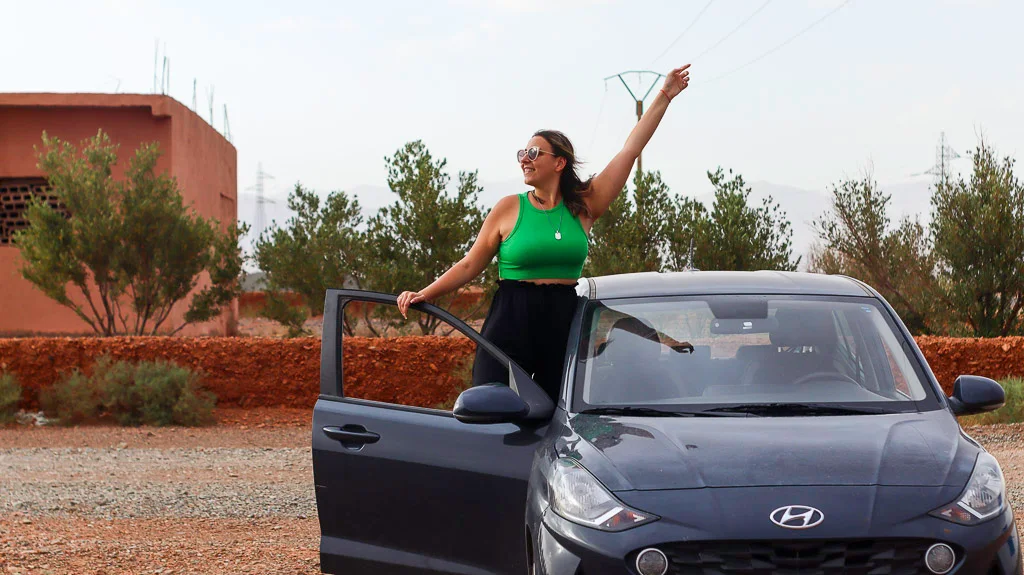
Get your insurance for Morocco
Because you never know what to expect, reliable travel insurance is always a good idea. We’re on SafetyWing and we’ve made two claims, both paid promptly with no questions asked: when our flight from Istanbul to Georgia was cancelled for bad weather, and when a delayed flight out of China made us miss our Kuala Lumpur connection.
We never needed it in Fes, but a car, a medina and a rental contract are three good reasons to have it. Ask for a quote here. We’re SafetyWing ambassadors, so that link is an affiliate link.
The final feeling: is Fez safe?
So, is Fes safe for tourists? For us, Fes was a puzzle with some rough edges. We managed without drama, but there were moments, usually after dark or when we were lost in the alley maze, where our guard went up. If you stay alert, ask your riad where it’s fine to walk, stay together, and book a guided tour when you’re in doubt, you’ll be fine. Just don’t expect coddling.
To be fair, the first walk was the roughest and our feelings got better within a few days. We still felt unwelcome most of the time though, and that’s the part I can’t ignore. Friends of ours rate Fes highly and some wanted to go back because they felt they hadn’t seen everything, so your experience might be different from ours.
Would we go back to Fes? Yes and no. We had an amazing time exploring Fes, even on our own, with all the risks and hassles. It’s a beautiful city, but seen once, I hardly find the motivation to go back. If you’re still deciding whether it belongs on your route, read is Fez worth visiting? before you book.
Plan the rest of your Morocco trip
- All our Morocco destination guides in one place
- The 10 days in Morocco itinerary and the mistakes we made
- Our road trip tips in driving in Morocco
- What it all costs in the Morocco budget guide
- Where we took our photos in the Fes photo spots guide
- Our honest verdict in is Fez worth visiting?
the best place to start